
 EN
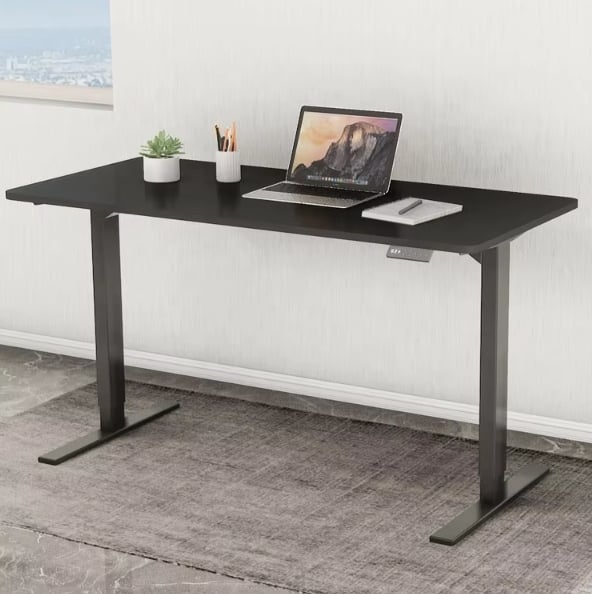
Commanding administrative hubs—such as plant manager suites, engineering project war rooms, hospital department offices, and high-volume customs brokerage stations—require expansive multi-surface layouts capable of carrying dense document archives alongside multi-screen workstations. Investing in an all-steel heavy duty office desk set delivers structural cohesion that lightweight modular laminate suites simply cannot sustain.
Structural Weaknesses of Lightweight Modular Desk Suites
Large L-shaped and U-shaped workstations experience complex torsional twisting forces at every corner joint whenever users swivel between surfaces or lean onto unsupported return wings.
Corner Seam Separation and Cantilever Wing Droop
In budget composite desk sets, return bridges frequently hang off main desks using short wood-screw mending plates driven into thin particleboard cores. Leaning onto the return corner—or clamping a heavy dual-monitor arm near the L-junction—tears screws loose, opening an unsightly gap that pinches cables and destabilizes the wing.
Credenza Shelf Bowing Under Archival Lever-Arch Binders
Matching storage credenzas in multi-piece suites routinely carry rows of packed A4 or Legal lever-arch binders, sample catalogs, and laser printer paper reams. Unreinforced thin shelves sag visibly within weeks, jamming sliding doors against bowed upper tracks.
Five Structural Advantages Inside a Heavy Duty Steel Desk Set
Engineering an entire multi-piece workstation suite out of heavy-gauge cold-rolled steel unlocks five distinct mechanical advantages across interconnected components.
|
Structural Feature |
Heavy Duty Suite Engineering |
Long-Term Workplace Advantage |
|
Interlocked Corner Footprint |
Bolted steel tie-channels uniting main desk + L-return |
Mutual perpendicular bracing eliminates frame wobble |
|
Box-Formed Credenza Shelves |
Triple-bent cold-rolled steel shelves + welded center ribs |
Zero shelf sag under dense rows of archival binders |
|
Load-Bearing Pedestal Cores |
Full-height welded steel pedestals anchored to aprons |
Supports heavy corner equipment and high-cycle filing |
|
Continuous Steel Wire Bays |
Enclosed structural steel cable troughs bridging wings |
Doubles as longitudinal stiffener while shielding cords |
|
Unified Epoxy-Polyester Skin |
Pre-treated 60–80 micron textured powder finish |
Uniform scratch, chemical, and humidity resistance |
1. Perpendicular L- and U-Footprint Self-Bracing Rigidity
When a heavy-gauge steel return bridge bolts rigidly at a ninety-degree angle into a main steel desk subframe via thick steel gusset plates and M8 machine fasteners, each wing braces the other against lateral sway. That interconnected footprint forms a rock-solid structural anchor across open floors without requiring wall attachment.
2. Rib-Reinforced Credenza Shelving That Carries Real Archive Weight
Companion steel credenzas and overhead hutches inside a heavy duty office desk set utilize cold-rolled SPCC shelves folded into box channels along front and rear edges, backed by spot-welded underside stiffener ribs. Adjustable steel shelf clips lock positively into punched vertical pilasters to support heavy reference libraries safely.
3. Heavy-Cycle Ball-Bearing Pedestals Integrated Into Suite Corners
Instead of resting desktop wings on spindly single post legs, heavy duty suites incorporate structural steel box-box-file and lateral file pedestals directly beneath outer suite ends. Three-section steel ball-bearing slides ensure smooth access even when drawers hold puluhan kilograms of hanging folders.
4. Dual-Purpose Structural Cable Troughs Spanning Multi-Wing Layouts
Deep cold-rolled steel wire management channels bolted beneath both main and return worktops serve two functions simultaneously: routing power bricks and Ethernet harnesses cleanly between the credenza and monitors while acting as rigid longitudinal box beams that prevent center-span desktop deflection.
5. Industrial-Grade Corrosion and Impact Resistance Across Every Piece
Every desk panel, pedestal drawer, and credenza door passes through unified multi-stage chemical degreasing, conversion coating, and thermal powder curing. Founded in 1992, Luoyang Huawei Office Furniture Co., Ltd. was the first factory in the Luoyang office furniture industry to pass third-party factory inspection and introduce mail-order packing—producing heavy-duty steel desks, file cabinets, and custom OEM suites engineered for multi-decade commercial service.
Authoritative Testing and Facility Safety Benchmarks
Facility engineers specify heavy duty desk suites around established structural and safety standards:
- ANSI/BIFMA X5.5 & X5.9: Confirms interconnected desk wings pass concentrated perimeter proof loads while companion credenzas pass shelf deflection, sliding-door cycle, and anti-tip stability criteria.
- ISO 9227 & ISO 2409: Validates salt-spray corrosion resistance and cross-cut coating adhesion across all suite components.
- OSHA 1910 & NFPA 101: Supports ergonomic multi-surface reach zones, burr-free hemmed cable ports, and non-combustible steel construction in high-occupancy administrative buildings.
Practical Installation, Inspection, and Upkeep Guidance
Proper field assembly ensures interconnected heavy duty suites perform as a single monolithic structure.
Sequencing Multi-Wing Suite Assembly on Uneven Subfloors
Position all suite pedestals, credenza bases, and desk frames in final floor locations before tightening inter-unit ganging bolts. Use a four-foot spirit level across both the main top and return top to dial in threaded steel leveling glides, confirming sliding credenza doors glide plumb without drifting open on sloped concrete.
Annual Inspection Points for Executive and Operations Suites
Once a year, check ganging tie-plate bolts beneath L-junctions after building floor settlement, vacuum dust from sliding credenza bottom tracks and ball-bearing pedestal slides, and verify heavy laser printers remain positioned directly above pedestal-supported suite zones.
Frequently Asked Questions
How does bolting a steel L-return to a main desk improve overall stability?
Connecting two perpendicular steel desk frames via heavy-gauge under-surface tie-plates creates an L-shaped geometric footprint that resists horizontal racking forces from both front-to-back and side-to-side directions simultaneously, making an interlocked steel suite far stiffer than two freestanding tables pushed together.
What shelf weight capacity features should buyers look for in matching steel credenzas?
Verify that companion credenza shelves use at least 0.7 mm to 0.9 mm bare SPCC cold-rolled steel with triple-bent front/rear box flanges and at least one full-length welded underside omega stiffener rib, supported by heavy stamped steel pilaster clips rather than plastic pins.
Can heavy duty U-shaped steel desk sets be disassembled and moved to new offices?
Yes. Unlike glued or wood-screwed laminate executive suites that splinter around corner joints during disassembly, knock-down heavy duty steel suites unbolt cleanly at every captive machine-thread insert and ganging bracket, allowing facility teams to relocate and reassemble suites repeatedly without losing rigidity.
Where should heavy office printers sit on a multi-piece steel desk set?
Place high-mass laser multifunction printers, labelers, or document scanners over the end of the return wing supported directly by a structural steel pedestal—or atop the matching low steel credenza—so dynamic paper-tray vibration transfers straight down vertical steel walls into the floor.
Do sliding-door or hinged-door credenzas work better in tight office desk sets?
In compact private offices or dense supervisor cubicles, steel credenzas equipped with smooth ball-bearing sliding doors or tambour shutters save valuable aisle clearance behind the operator’s task chair, allowing staff to access binders without rolling completely out of the U-shaped workstation zone.
How does mail-order packaging protect large multi-piece heavy duty desk sets?
Factories partition heavy duty suites into balanced modular flat-pack cartons—packing desktops, leg frames, pedestals, and credenza panels separately with high-density honeycomb cushioning, PE interleaf sheets, and reinforced corner armor—preventing heavy steel sub-assemblies from crushing each other during freight handling.
Table of Contents
- Structural Weaknesses of Lightweight Modular Desk Suites
-
Five Structural Advantages Inside a Heavy Duty Steel Desk Set
- 1. Perpendicular L- and U-Footprint Self-Bracing Rigidity
- 2. Rib-Reinforced Credenza Shelving That Carries Real Archive Weight
- 3. Heavy-Cycle Ball-Bearing Pedestals Integrated Into Suite Corners
- 4. Dual-Purpose Structural Cable Troughs Spanning Multi-Wing Layouts
- 5. Industrial-Grade Corrosion and Impact Resistance Across Every Piece
- Authoritative Testing and Facility Safety Benchmarks
- Practical Installation, Inspection, and Upkeep Guidance