
 EN
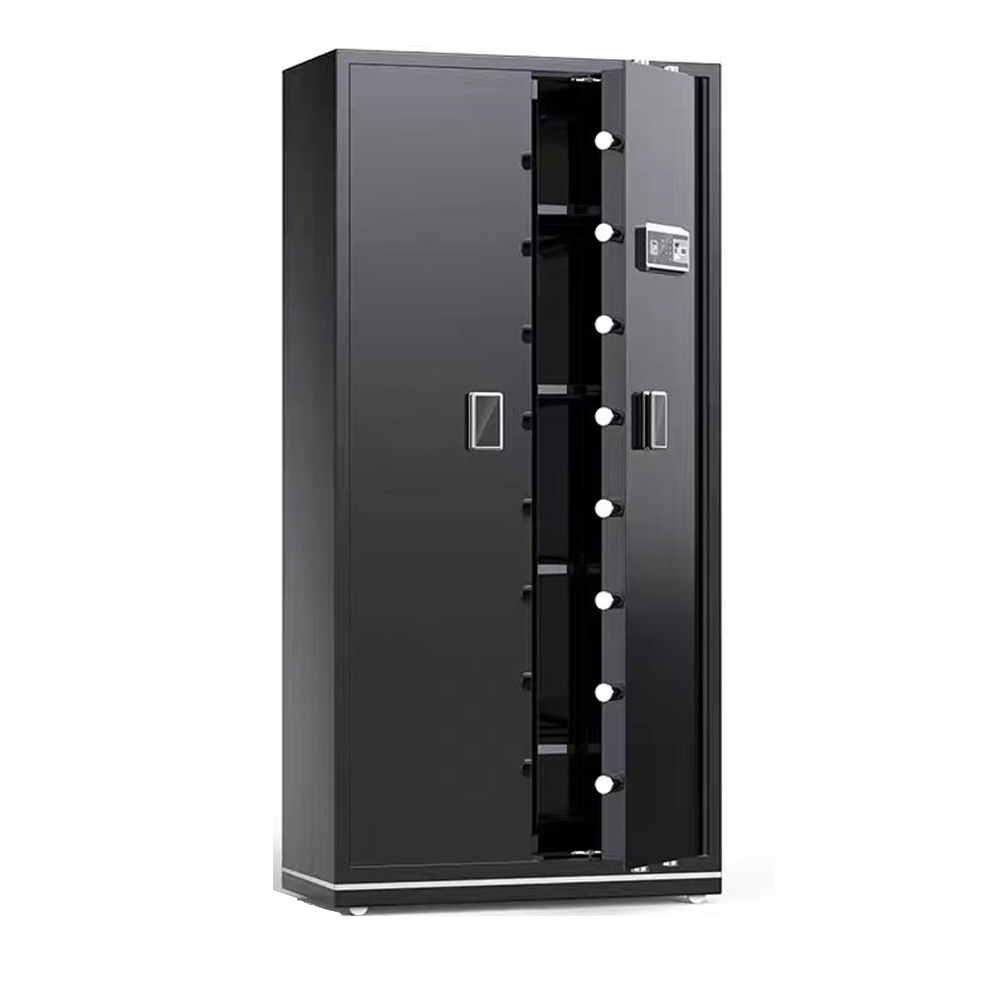
Blast-Resistant Design for Uncompromised Containment Integrity
Physics of Overpressure Mitigation in Secure Safe Enclosures
A secure safe must manage two distinct blast effects: incident overpressure and reflected pressure. When a shockwave strikes a rigid surface, reflected pressure can reach two to eight times the incident overpressure—depending on charge type and angle—creating extreme strain rates that can tear welds or split door seams in conventional steel enclosures. Effective overpressure mitigation begins with controlled elastic deformation: the outer shell flexes within its yield limits, converting kinetic energy into strain energy. Door gap geometry, dynamic sealing systems, and strategically placed reinforcement ribs redirect blast load along the frame rather than through the locking mechanism. Internal air volume also plays a role; smaller unvented compartments experience faster pressure decay due to internal wave reflection and interference. The objective is not full shockwave elimination but strategic delay and attenuation before energy reaches the contents. High-mass composite liners, symmetrical bolt patterns, and continuous weld seams minimize stress concentration. Independent blast testing in 2023 confirmed that enclosures with engineered, intrusion-resistant pressure-release paths reduce peak internal overpressure by 30–50% compared with fully sealed units.
UL 752 Level 10 vs. ASTM F2329: Real-World Blast Performance Comparison
UL 752 Level 10 and ASTM F2329 address fundamentally different threat vectors—and conflating them risks critical protection gaps. UL 752 Level 10 is a ballistic standard focused exclusively on projectile penetration resistance, typically validating performance against .50 BMG armor-piercing rounds. ASTM F2329, by contrast, evaluates structural integrity under blast overpressure and primary fragment retention, with test protocols adapted from perimeter security and trash receptacle applications. A UL 752 Level 10–rated door may stop a high-velocity round yet catastrophically fail during a close-proximity explosion if the frame dislodges or the door slab rotates under impulse loading. Likewise, an ASTM F2329–compliant panel may retain structural continuity after a pressure pulse but offer no meaningful resistance to ballistic penetration. The table below highlights key distinctions:
| Test dimension | UL 752 Level 10 | ASTM F2329 |
|---|---|---|
| Primary threat | .50 BMG armor-piercing projectile | Blast overpressure and primary fragment retention |
| Failure mode evaluated | Penetration depth and through-hole formation | Structural displacement, rupture, fragment escape |
| Relevant secure safe element | Door, lock side, body wall | Frame anchoring, seam integrity, venting path |
| Real-world limitation | Does not certify explosion containment | Does not certify ballistic penetration resistance |
For high-risk applications, dual certification is non-negotiable. Attackers often combine tactics—using ballistic tools first to weaken structural elements, then explosives to exploit those weaknesses—so reliance on a single standard creates dangerous false confidence.
Composite Liner Integration: Enhancing Shockwave Absorption in Modern Secure Safe Designs
Composite liners significantly elevate shockwave absorption beyond what monolithic steel can achieve. Rather than depending solely on mass, modern secure safes integrate fiber-reinforced layers—commonly aramid or ultra-high-molecular-weight polyethylene—between the outer steel shell and inner cavity. During a blast, the steel deforms first, distributing load laterally; the composite liner then undergoes controlled delamination, dissipating kinetic energy as fracture energy and reducing spall. This process suppresses back-face deformation and captures secondary fragments that would otherwise breach the storage zone. Some advanced designs further incorporate ceramic tiles or energy-absorbing foam cores to flatten the pressure-time curve. Unlike steel, composites also provide lower thermal conductivity—offering incidental fire insulation after blast-induced ignition. Independent laboratory reports from 2023 show hybrid steel-composite panels reduce transmitted impulse by up to 40% versus equivalent-thickness steel alone. While higher cost and post-blast repair complexity are tradeoffs—fiber layers often require replacement, whereas steel may be inspected and retained—the performance gain makes composite integration one of the most effective weight-efficient upgrades in contemporary blast-resistant design.
Dual-Threat Resistance: Forced Entry and Ballistic Protection in a Single Secure Safe Structure
A heavy-duty secure safe must be engineered for convergence—not separation—of attack profiles. Forced entry (FE) relies on sustained mechanical force (prying, drilling, cutting), while ballistic threats deliver localized, high-velocity impact. In practice, these threats interact: ballistic strikes compromise weld integrity and frame rigidity, creating exploitable weaknesses for subsequent forced entry. Dual-threat testing therefore measures how containment holds under combined stress—delivering a far more realistic assessment of delay, deterrence, and residual integrity than either rating alone.
How FE/BR Ratings Translate to Measurable Attack Delay and Deterrence
Forced entry (FE) and ballistic resistance (BR) ratings quantify distinct physical domains—but together they form a practical security metric. FE evaluations, such as those aligned with ASTM F1233, apply standardized sequences of prying, impact, and cutting to both door and body. BR standards like UL 752 classify resistance to specific calibers—from handgun rounds to .50 BMG—under defined shot placement and velocity conditions. A secure safe certified to both ASTM F1233 (e.g., Class III) and UL 752 Level 8 delivers layered defense: it resists multiple rifle impacts and delays tool-based penetration for several minutes. That tested delay directly translates to deterrence—lengthening the attacker’s operational window, increasing noise and visibility, and raising the likelihood of detection or intervention. Specifiers should therefore prioritize side-by-side comparison of tested attack minutes, tool sets applied, and protected calibers, not just nominal rating labels.
Why UL 687 Alone Falls Short—The Critical Gap in High-Risk Secure Safe Certification
UL 687 remains a valuable benchmark for burglary resistance—but it is not a substitute for ballistic or blast certification. The standard validates resistance to mechanical tool attack only, measuring net working time to achieve entry via specified methods. It does not evaluate projectile penetration through walls or doors, interior spalling from ballistic impact, or structural separation between door and frame after repeated high-energy hits. As a result, a secure safe passing UL 687 may still succumb rapidly to rifle fire—or collapse under combined ballistic and forced entry assault. For high-value assets, relying solely on UL 687 overestimates real-world protection. Dual-threat certification—explicitly combining FE and BR validation—is essential to close this scenario-based gap.
Massive Structural Weight as a Foundational Passive Security Layer
The 1,200+ lb Threshold: Engineering Immobility to Prevent Theft-by-Relocation
Crossing the 1,200 lb threshold transforms a secure safe from portable container to immovable fixture. At this mass, carry-out theft demands coordinated effort—typically two to three personnel plus hydraulic jacks or pallet jacks—dramatically increasing time, labor, noise, and detection risk. Structural weight functions as passive dead load: dense steel (~490 lb/ft³) and reinforced concrete fill (~150 lb/ft³) anchor the unit against floor displacement. When installed on a load-bearing slab or reinforced foundation, the mass resists sliding and tipping even during aggressive forced entry attempts. For context, a 24-inch square footprint imposes ~300 psf floor loading—nearly eight times the 40 psf typical for residential wood-frame construction—underscoring the need for proper structural support. This level of immobility delivers robust theft-by-relocation deterrence without dependence on alarms, surveillance, or active monitoring systems.
Strategic Material Selection: Steel, Concrete, and Hybrid Systems for Long-Term Secure Safe Integrity
Yield Strength, Thermal Stability, and Weldability Tradeoffs in Heavy-Duty Secure Safe Fabrication
Material selection for heavy-duty secure safes balances three interdependent properties: yield strength, thermal stability, and weldability. High-yield steel plates (50–80 ksi) resist prying and ram attacks effectively, but increased strength often reduces ductility and elevates heat-affected-zone cracking risk during welding. Concrete contributes compressive strength and thermal mass—slowing internal temperature rise during fire exposure—but requires embedded steel reinforcement to manage tensile stresses. A 2023 industry analysis found hybrid steel-concrete systems deliver 30% greater blast deformation resistance than comparably priced all-steel enclosures, without compromising forced-entry delay.
Fabricators optimize this balance through precise thermal control: preheat, interpass temperature, and low-carbon-equivalent filler metals (≤ 0.45 CE) maintain weld integrity while preserving yield strength above 50 ksi. Thermal stability is especially critical in fire-rated applications—structural steel loses ~50% of its yield strength at 600°C, whereas concrete’s insulating mass buffers interior components. Though hybrid systems add fabrication complexity and weight, they represent the current best practice: weldable high-yield steel for attack-facing surfaces, reinforced concrete for thermal and compressive resilience, and composite liners for targeted shockwave absorption.
FAQ
Why is dual certification necessary for secure safes?
Dual certification ensures that a secure safe can handle both ballistic and blast threats effectively. Many attackers use combined methods, such as explosives following ballistic attacks, to exploit weak points in safes. Without dual certification, safes may fail to protect assets under real-world conditions.
What is the significance of the mass threshold in secure safes?
A secure safe exceeding 1,200 lbs is extremely challenging to relocate without heavy equipment. This immobility serves as a passive deterrent, reducing the risk of theft-by-relocation and reinforcing its security.
What is the role of composite liners in blast-resistant safes?
Composite liners help absorb and dissipate blast energy, reducing the impact transmitted to the safe’s contents. They provide effective shockwave mitigation while minimizing weight compared to steel-only designs.
Why does UL 687 fall short for high-risk applications?
UL 687 evaluates burglary resistance but does not test for ballistic or blast protection. A safe meeting UL 687 may fail under high-energy attacks, highlighting the importance of additional certifications for comprehensive security.
How do material choices impact secure safe design?
Material selection balances yield strength, thermal stability, and weldability. Hybrid systems using steel, concrete, and composite liners optimize blast resistance, forced-entry delay, and long-term durability. These combinations maximize protection without compromising structural integrity.
Table of Contents
- Blast-Resistant Design for Uncompromised Containment Integrity
- Dual-Threat Resistance: Forced Entry and Ballistic Protection in a Single Secure Safe Structure
- Massive Structural Weight as a Foundational Passive Security Layer
- Strategic Material Selection: Steel, Concrete, and Hybrid Systems for Long-Term Secure Safe Integrity