
 EN
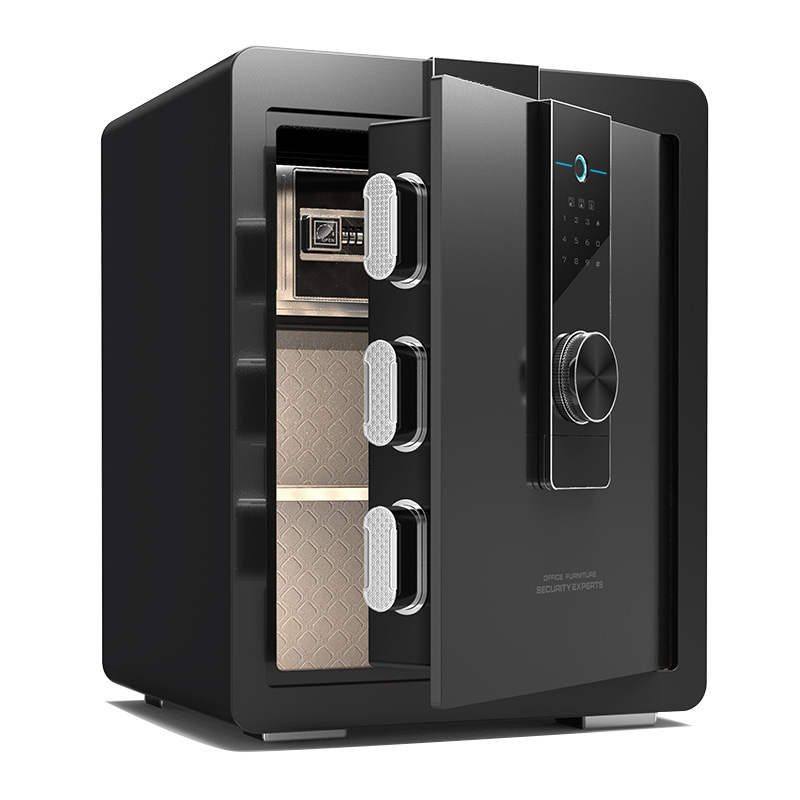
Core Construction: Why Material Integrity Defines a True Quality Safe
Material integrity separates a durable safe from a steel box. For B2B buyers, construction specifications matter more than exterior finish or marketing language.
Steel Gauge, Weld Quality, and Reinforced Anchoring Points
A quality safe begins with thick, consistent steel. Commercial units typically use 10- to 12-gauge steel bodies—10-gauge measures approximately 0.1345 inches (3.42 mm); higher-security models may employ 7-gauge plate at 0.1793 inches (4.55 mm). But gauge alone is insufficient. Continuous MIG or laser welds along door frames and body seams eliminate exploitable gaps—unlike spot welds, which leave intervals vulnerable to prying and wedging under sustained force. Equally critical are reinforced anchoring points: factory-installed anchor holes with integrated steel backing plates distribute attack force across a broader surface area, significantly increasing resistance to pry-bar leverage. Thin, unbacked holes can tear open under standard 36-inch prying pressure. B2B procurement teams should require a full construction spec confirming that the safe body, door, and anchor points meet the same material integrity standard—ensuring no single element becomes the weak link.
UL 687 (Burglary) and UL 72 (Fire) Certifications: What They Actually Guarantee
UL 687 certifies burglary resistance through standardized, timed tool attacks using defined hand tools—including pry bars, punches, and carbide drills—measured in net working time. Labels like “TL-15” or “TL-30” indicate the door or body resisted a skilled technician’s attack for 15 or 30 minutes, respectively; actual elapsed time may be longer due to setup and pauses. UL 72 certifies fire resistance for records and media, subjecting the safe to furnace temperatures up to 1,700°F (927°C) for one or two hours while verifying interior temperatures remain below Class 350 (paper), Class 150 (magnetic media), or Class 125 (film) thresholds. These certifications reflect repeatable, independently verified test conditions—not absolute invulnerability. Unannounced factory inspections by UL ensure ongoing compliance. Buyers must verify that the certification label is current and matches the exact model number, as certification applies only to the tested configuration—not all sizes, modifications, or production batches.
Security Intelligence: Locking Systems Aligned with Business Risk Levels
A quality safe locks not just against intrusion but against operational friction. The right locking system maps directly to how often authorized staff need access, the sensitivity of stored assets, and the likelihood of insider misuse. Rather than defaulting to complexity, B2B buyers should treat lock selection as part of a broader access-control strategy.
Biometric, Electronic, and High-Security Mechanical Locks — Strengths and Limitations
Each lock family addresses distinct operational needs. Biometric locks bind access to individuals—eliminating shared codes and reducing tailgating—but require maintenance in dusty or humid environments and demand reliable backup credentials. Electronic locks support PINs, cards, and time-delay functions while generating audit trails; however, they depend on stable power and routine software updates. High-security mechanical locks offer proven drill and manipulation resistance without electricity, yet lack time-stamped logs and introduce risk through key or combination distribution.
| Lock type | Strengths | Limitations |
|---|---|---|
| Biometric | No shared codes; fast individual recognition; strong accountability | Sensor wear; false rejects; enrollment and template management |
| Electronic | Audit logs; time delays; dual control; scalable user codes | Power dependency; keypad wear; software updates |
| High-security mechanical | No power needed; proven drill and manipulation resistance | No audit trail; slower access; key/combination distribution risk |
Hybrid designs—such as an electronic lock with a mechanical key override—offer resilience and speed where appropriate. The optimal choice follows the facility’s documented risk profile, not budget constraints alone.
Managing Access in Dynamic Teams: Scalability and Audit Trail Needs
Employee turnover, temporary staff, and multi-shift operations make static credentials a liability. A scalable locking system supports role-based permissions, instant credential revocation, and timestamped audit logs showing who opened the safe and when. In regulated sectors, this traceability helps satisfy compliance mandates and accelerates incident investigations. Buyers should prioritize locks that integrate natively with existing HR or physical access-control platforms—so when building credentials are disabled, safe access ends automatically. Dual custody and time-delay features add essential layers for high-value assets, preventing unilateral access during routine operations. Audit trails also deter internal theft by reinforcing accountability. For multi-site deployments, centralized management reduces programming overhead across locations. When evaluating a commercial safe, confirm the lock scales seamlessly from five to fifty users without requiring hardware replacement.
Installation Reality: Anchoring as the Non-Negotiable Layer of a Quality Safe
Bolt-Down Engineering, Pry Resistance, and Structural Integration for Commercial Spaces
A quality safe is only as secure as its mounting. European standard EN 1143-1 assumes all burglar-resistant safes up to 1,000 kg are anchored—and test results presume fixed installation. A Grade III safe placed loosely in a corner loses most of its rated pry resistance compared to one bolted into reinforced concrete or solid masonry. Mechanical anchors—or chemical anchors where substrate integrity is uncertain—create multiple, distributed defense points. Installers should drive bolts through factory-provided anchor holes into structural substrates aligned with the building’s load path. This integration prevents tipping, dragging, or rotation—tactics attackers use to exploit seam weaknesses. Without proper anchoring, even UL-certified steel fails prematurely.
Asset-Centric Protection: How a Quality Safe Secures More Than Just Cash
Optimized Internal Layouts for Cash, Documents, Digital Media, and Valuables
A quality safe protects diverse assets only when internal configurations match their physical and environmental needs. Adjustable shelves accommodate cash trays and ledgers; lockable drawers secure deeds, IDs, and sensitive documents; and media-rated compartments shield hard drives and SSDs from thermal damage during fire exposure. Valuables coverage often exceeds cash ratings by tenfold—e.g., £2,000 cash coverage may extend to £20,000 in jewellery or digital backups (2023 industry benchmark). Thoughtful drawer and compartment segregation reduces unauthorized access while enabling authorized staff rapid retrieval—balancing security with workflow efficiency.
Total Value Assessment: Beyond Price — Certifications, Insurance, and Lifecycle Cost of a Quality Safe
How Under-Specifying Anchoring or Certification Increases Long-Term Risk and Cost
A quality safe is a lifecycle investment—not a line-item expense. Under-specifying anchoring or skipping third-party certification may reduce the initial quote, but it introduces recurring liabilities. Uncertified units frequently fail insurer requirements, triggering premium hikes or claim denials after loss events. Poorly anchored safes enable rapid removal, shifting legal and financial responsibility squarely onto the business. Over time, replacement costs, forensic audits, regulatory penalties, and reputational harm far outweigh upfront savings. Buyers should compare certified protection costs against probable loss exposure. Investing in rated construction, professional bolt-down, and verifiable compliance reduces total cost of ownership—and keeps insurance coverage intact.
FAQ
What steel gauge is recommended for commercial safes?
Commercial safes typically use 10- to 12-gauge steel, with higher-security models employing 7-gauge steel for enhanced resistance.
What do UL certifications guarantee for safes?
UL 687 guarantees burglary resistance for timed tool attacks, while UL 72 certifies fire resistance, ensuring interior safety from high furnace temperatures.
What are the benefits of electronic locks over mechanical locks?
Electronic locks offer audit logs, time delays, dual controls, and scalability, but they depend on stable power and require regular software updates.
How does anchoring improve safe security?
Anchoring a safe prevents tipping, dragging, or rotation, maximizing rated pry resistance and ensuring its effectiveness in resisting attacks.
Why is certification important when sourcing a safe?
Certification ensures compliance with insurance requirements, reduces liability risks, and confirms the safe's tested performance under stringent conditions.
Table of Contents
- Core Construction: Why Material Integrity Defines a True Quality Safe
- Security Intelligence: Locking Systems Aligned with Business Risk Levels
- Installation Reality: Anchoring as the Non-Negotiable Layer of a Quality Safe
- Asset-Centric Protection: How a Quality Safe Secures More Than Just Cash
- Total Value Assessment: Beyond Price — Certifications, Insurance, and Lifecycle Cost of a Quality Safe
- FAQ