
 EN
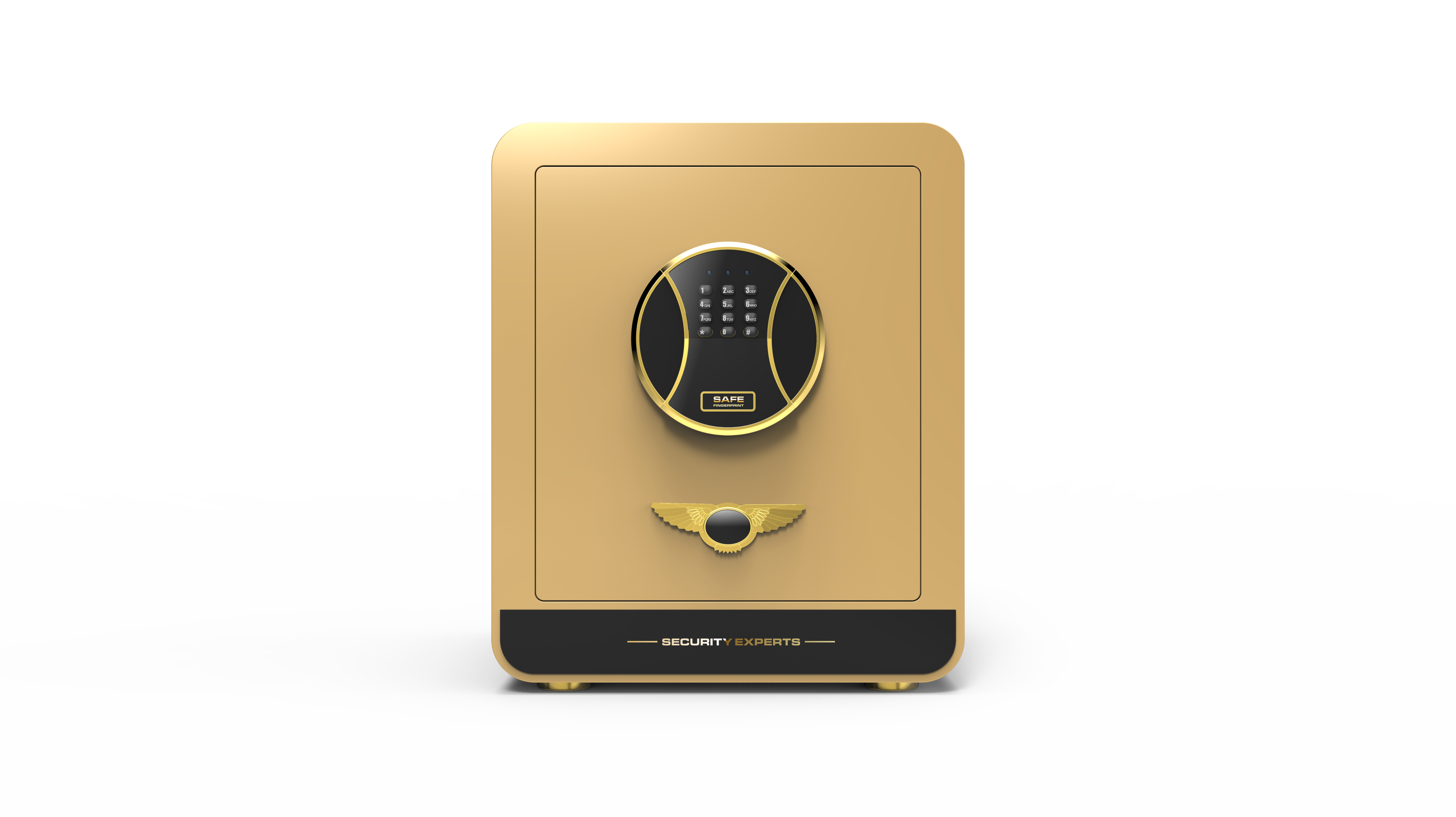
A locksmith called out to a branch office found a combination safe dial that had been drilled clean through. The cabinet was still locked, because a small spring-loaded device behind the lock had fired and blocked the boltwork on its own. The enclosure had done its job; the interesting part was what sat between the dial and the bolts. A combination safe is judged by that protected zone as much as by its steel thickness. Five structural details decide whether an attack on the code input leaves the door shut.
The protected zone behind the dial
On a combination safe, the code device is the most visible part, which makes it the most likely target. Its mounting decides what happens next.
When the input is the weakest link
Un axonometro vel un fascio di tasti transita per la porta, e tale passaggio è inevitabile. Ciò che conta è ciò che sta dietro: una piastra antitrivella, una guaina intorno all’axonometro, e una barriera tra l’ingresso e il meccanismo di chiusura. Per una cassaforte a combinazione, chiedere di vedere il montaggio della serratura su un disegno sezionale anziché su un campione finito, e verificare che ogni foro eviti un ritorno piegato o una saldatura portante. Una cassaforte a combinazione pesante mantiene il meccanismo del codice all’interno dell’involucro protetto, con aperture progettate nella fase di formatura invece che praticate alla fine della linea.
Quinque particularia structurae quae inspici debent
Ogni dettaglio di una cassaforte a combinazione può essere osservato su un campione o su un disegno, e ciascuno modifica ciò che accade durante un attacco o durante un normale cambio di codice.
Piastra antitrivella e axonometro guainato
In safe cum combinatione, lamina resistentis ad perforationem post discum vel clavium protegit corpus clavis et axem ubi per ostium transit. Quaere laminam continuam ad conformationem ostii fixam, non parvam lavacram, et tubulum quod axem in linea tenet ut fasciculus rotarum vel connexio clavium a disco ipso non oneretur. Interroga quomodo lamina retinetur et num serviri potest sine perturbatione tegumenti bullae. In safe cum combinatione in area communiter usitata, haec particula decernit utrum input perforatum sit molestia an ianua aperta.
Cur relocker separatim agit
In una cassaforte a combinazione, un ri-blocco è un meccanismo a molla che si attiva se la serratura viene colpita, forata o estratta, bloccando il sistema di chiusura indipendentemente da ciò che fa il dispositivo originale della combinazione. Chiedere dove è posizionato, cosa lo attiva e come viene resettato dopo un intervento di manutenzione autorizzato. Verificare che sia meccanicamente indipendente dal quadrante e dal suo cavo specifico; altrimenti, un singolo impatto potrebbe disabilitare entrambi. Un ri-blocco non è visibile in una fotografia del prodotto, quindi richiederne la descrizione nel disegno tecnico e una nota nelle istruzioni per la manutenzione. È proprio questo meccanismo a spiegare perché un danneggiamento dell’ingresso non implica automaticamente un danneggiamento dell’armadio.
Isolamento del sistema di chiusura dal quadrante
In a combination safe, the code device must release the bolts, not bear their load. Seek a reinforced lock seat, a clear interface between the lever or solenoid and the boltwork, and rod guides that maintain bolt alignment with their strikes. Inquire whether the bolts engage on both the hinge side and the opening side. A UL 768 listing applies only to the combination lock as a component and does not address this interface; therefore, request documented cycle testing of the fully assembled door. A combination safe that operates smoothly on the bench may still bind after one thousand openings if the boltwork is performing alignment duties.
Where the change key enters
In una cassaforte combinata con un gruppo di ruote meccaniche, è necessaria una chiave di modifica per reimpostare il codice, e il punto di accesso ad essa deve essere raggiungibile da una persona autorizzata senza esporre lo stack di ruote. In un’unità elettronica, l’equivalente è il comando di reset e il percorso di sovrascrittura. Chiedere se il punto di accesso si trova dietro la porta, come è coperto e se la reimpostazione lascia una traccia visibile. Un foro per la chiave di modifica praticato attraverso un rivestimento costituisce un punto debole e un invito all’improvvisazione. Inserire la procedura di reset, la regola sulla custodia della chiave e la revisione del disegno nella stessa scheda di consegna.
Pannelli a filo, non tastiera montata in superficie
A control panel standing proud of a combination safe door catches on bags, trolleys and cleaning equipment, and it gives a lever to pull against. Look for a recessed or flush-mounted panel with a gasket, a covered cable passage and a connector that is strain-relieved inside the door. Check that cut edges around any passage are fully coated, with adhesion and corrosion results naming the method, such as ISO 2409 with ISO 9227 exposure. NFPA 70 applies where a powered keypad is wired in, and ANSI Z535.4 covers the label that explains code reset and override.
Documents that back up the structure
Standards separate the lock, the enclosure and the site, so the file needs more than one sheet.
Asking for reports that name the assembled door
A lock listing under UL 768 informs a buyer only about the code mechanism. Enclosure performance is covered by a separate standard: UL 687, EN 1143-1, EN 14450, and UL 72 each address a distinct threat exposure, and the quotation must specify which one applies. Look for ISO/IEC 17025 accreditation of the testing laboratory and the exact assembly revision stated in the test report. Consistency of the hardplate across production batches falls under ISO 9001; ISO 2859-1 governs sampling upon goods receipt. On site, OSHA 29 CFR 1910.176(b), NFPA 1, NFPA 101, and ANSI Z535.4 define remaining safety duties, while REACH and RoHS apply to materials.
Inspecting the same points during service
Aperi ianuam tutelae combinationis et inspice fixationem clavis e parte interiori: lamina continua, axis allinatus, transitus tectus funiculi et nullus connexor laxus. Constitue novum codicem, aperi et claude ter, deinde reconstitue eum et annota mutationem ad identitatem operatoris. Remove granula ab orlo rotulae aut clavium, purga sigillum cum detergente leni et repara damna superficiei in flexura reditura antequam rubigo invadat. Verifica ut clavis praeteritoria adhuc sit obsignata in loco ubi schedula traditionis indicat. Tutela combinationis robusta, quae super his quinque particularibus aedificatur, suam politiam codicum retinet utilis, quod est pars quae inspectioni pure mechanicae saepe fugit.
Quaestiones Frequenter Rogatae
Cur axis indiget tubulo et lamina dura?
In safe cumulatus, discus aut clavis electronicus per ostium transire debet, et ista transitio est manifestum scopum perforationis. Placca continua resistentis ad perforationem post inputum locata corpus clausurae protegit, dum tubus axem in linea tenet ut fasciculus rotarum aut connexio non onus disci sustineat. Roga ut tibi monstratur fixatio in schemate sectionis et inspice ut quodlibet foramen evitet reditum plicatum aut iuncturam portantem onus.
Quid relocker vere facit?
Est instrumentum a mola actum post clausuram quod, si inputum perforatur, perforatur, aut extrahitur, incipit agere, impediens operam bullae independentem ab originali machina codicis. Roga ubi situm est, quid id excitet, et quomodo servitium legitimum id restituat. Inspecta ne id eundem cereum aut coniunctionem cum disco habeat. Relocker est cur inputum laesum non statim significat arcam apertam.
Num UL 768 comprehendit interfaciem operis bullae?
No. UL 768 applies to the combination lock as a component. The lock seat, rod guides, strikes and the interface between the lever or solenoid and the bolts need their own documentation, ideally a cycle test on the assembled door. A smooth-feeling sample can still bind after a thousand openings if the boltwork is doing the alignment work.
How should code reset access be designed?
On a mechanical wheel pack the change key needs an access point that is reachable by an authorised person without exposing the wheel stack; on an electronic unit the equivalent is the reset control and override route. Look for a covered, recessed point rather than a hole through a trim. Put the reset procedure, key custody rule and drawing revision in one handover sheet.
Why is a flush control panel better?
A panel protruding from the door snags bags and cleaning tools and offers a lever for pulling against. Seek a recessed or flush-mounted panel equipped with a gasket, a covered cable pathway, and a strain-relieved connector inside the door. Verify that all cut edges are fully coated; ISO 2409 and ISO 9227 test reports must specify the coating method applied. NFPA 70 governs powered keypad wiring.
What shall a service inspection document?
A new code set, three complete open-and-close cycles, a verified reset, plus the date and name of each person performing a change. Inspect lock mounting from inside the enclosure; remove grit from around the dial or keypad; wipe the seal with a pH-neutral cloth; and retouch coating chips at folded edges. Confirm the override key remains sealed in the location indicated on the handover sheet.