
 EN
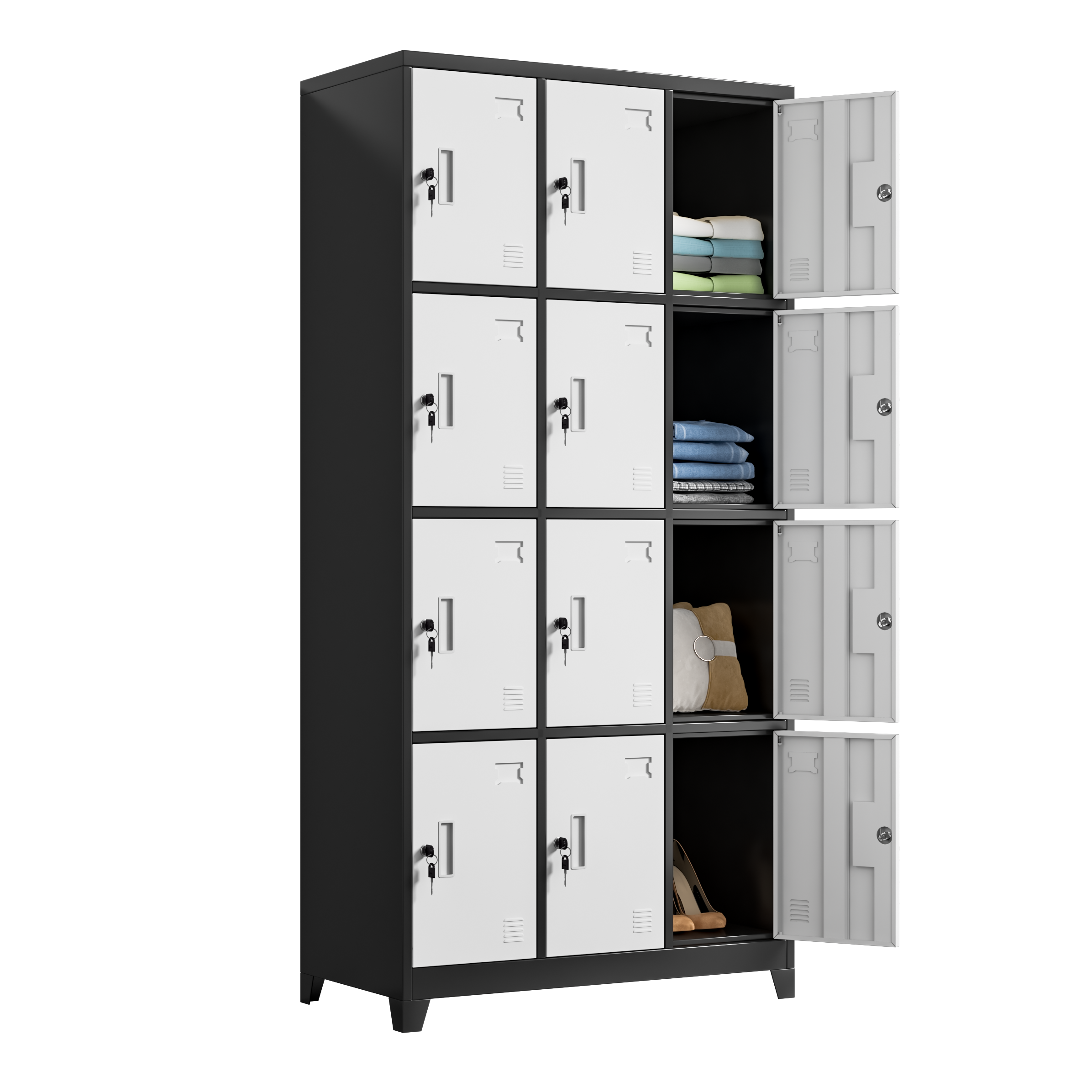
On a walkthrough of a gym changing area, two long banks stood side by side yet behaved differently. Doors on one row had begun to droop, so latches missed their strikes and users learned to lift a corner before closing. The neighboring row, installed at the same time, still shut with one push. Nothing in the room explained the split except how each steel heavy duty locker was built. Pressing a sagging door, watching the hinge knuckle, and looking along the plinth turned a maintenance complaint into a structural question. That comparison is the starting point for judging a cabinet meant for years of daily cycling.
Two Gym Locker Banks, Two Different Outcomes
Where the First Door Began to Droop
In litore vetere, pendulum coepit ex parte clausurae armarii robusti, ubi clavus est. Unaquaeque ianua est cantilever, quae ex uno margine pendet, itaque lamina cardinis onus totum sustinet in omni motu; et si utens super ianuam apertam incumbit, onus acutum additur. Post multos usus, articulus cardinis abrumpitur, foramina scruorum dilatantur, et angulus liber deorsum cadit, donec clavus non adstringit suum adversarium. In proxima ordine, idem motus angulos adinplevit. Actio utilis fuit ut ianuae pendulae notarentur et linea cardinis inspiceretur, non autem clavis accusaretur.
Legere Articulum Cardinis Post Menses Usus
Un nodulo usato racconta una storia diversa da un telaio piegato. Se la piastra della cerniera rimane piatta e il gioco lungo il lato della cerniera è uniforme, il difetto risiede nel perno o nei fori delle viti. Se il gioco si allarga verso l’alto, il telaio è deformata, spesso perché la base poggia su un pavimento irregolare. Premi l’angolo libero e osserva se l’intera unità si muove, per distinguere un problema di cerniera da un problema di zoccolo. Registra il tutto per ogni porta, poiché una serie di armadietti pesanti raramente presenta guasti uniformi.
Perché piccoli errori di allineamento diventano guasti
Come un colpo mancato diventa un chiavistello usurato
Once the latch misses its strike, users compensate. They lift, push harder, or slam the door, and each workaround adds load to the hinge and the latch plate. A cam lock that once turned freely begins to bind because the door no longer sits square. A door that will not stay closed leaves belongings exposed. Catching the first sagging door early prevents the habit from spreading. Specify the latch and strike alignment as an acceptance point, not an afterthought, for a heavy duty locker.
What an Uneven Floor Does to a Bank
A tall bank rarely meets a perfectly flat floor. Without a leveling foot or a continuous base plinth, one end of the carcass twists, and that twist shows up later as a door that binds at the top. The base does two jobs: it ties the vertical panels into one box and lets an installer take the twist out before the doors are hung. On the gym walkthrough, the aligned row sat on a plinth with adjustable feet, while the sagging row rested directly on the slab. That single detail, easy to miss in a catalog photo, explained much of the difference between two heavy duty locker banks.
Five Structural Choices That Resist Sag
A Folded Edge and Rib Stop Deflection
Quinque optiones structurales dividunt duas series. Primae duae in ipso ostio resident. Reducere laminam in marginem plicatum transformare potest laminam flaccidam in scatulam subtilem, et adhaerere costam refortificantem post cutem rigiditatem addit ubi calceus imponitur. Utraque resistentiam ad flectionem augent sine multo addito pondere. Lamina plana quae latum spatium transversat ut mola se habet; lamina plicata et costis refortificata eandem vim per plures partes metalli diffundit. Ideo armarium robustum, quod ad usum cotidianum cyclorum paratum est, solidum sentitur, ubi armarium levis flexibile est.
Cardines, Soldatura Punctiformis, et Basis Aequata
The remaining three choices sit in the carcass. A hinge leaf welded to a square frame spreads load along a longer line than a leaf screwed into thin sheet. A jig-built, spot-welded frame keeps the opening true, so the latch keeps meeting its strike after cycling; the rhythm of weld marks is the clue. A leveled base plinth removes the twist an uneven floor would feed into that frame. Together these details turn a heavy duty locker from a box of panels into a structure that holds its geometry. ANSI/BIFMA X5.9 cycle testing is where such claims get checked.
When a Durability Claim Needs a Document
Four Documents, Four Different Questions
ANSI/BIFMA X5.9 est la norme naturelle pour le test cyclique derrière une revendication de durabilité, couvrant l’ouverture/répétition de porte, la charge sur étagère et la stabilité du cadre. ISO 9001 soutient la routine reproductible de gabarit et de soudage qui maintient le caisson bien carré. OSHA 29 CFR 1910.176 traite de la fixation d’un meuble haut contre le basculement. NFPA 101 concerne les allées dégagées, donc une rangée de casiers robustes ne doit pas rétrécir un itinéraire utilisé pour évacuer. Chaque document répond à une question différente, et une revendication structurelle n’acquiert de sens que lorsqu’elle est liée à la norme appropriée.
Acheter un casier robuste : demander l’épaisseur de la charnière, le motif de soudure, le détail des nervures, la base ou les pieds réglables, ainsi que la norme nommée derrière toute revendication de durabilité. Demander un échantillon fabriqué sur les outillages de production, puis appuyer au centre de sa porte et observer le long du socle avant de le comparer à la rangée livrée.
Inspectione armarium robustum adveniens: verificare ut quaelibet fores quadrata sint, ut scruae cardinum bene teneantur, ut vestigia soldaturae rhythmum repetibilem sequantur, et ut plinthus aequus sit. Aperire et claudere omnes fores, et notare omnem clavem quae non adstringat suum locum. Notare observationes per numerum foris, ut patens fiat schematismus.
Uso armarium robustum: distribuere pondus per mensas potius quam appensum gravia instrumenta in foribus, ancorare bancum altum secundum dispositionem necessariam, et tenere vias apertas pro exitu. Assignare compartimenta ut unus usor non oneret unicum spatium nimis, et claudere fores penitus potius quam sinere eas requiescere contra onus.
Conservatio armarium robustum: constringere scruas cardinum et verificare pedes aequationis in programma regulari, reficere loca ubi coaterium abrumpitur antequam metallum nudum diffundatur, et inspicere laminas clavium pro signis usurae. Rerectare fores pendentes cito, substituere articulum usum potius quam cogere, et reaequare plinthum si pavimentum moveatur.
Quaestiones Frequenter Rogatae
Q: Cur fores armarium incipit pendere post menses usus?
A:A door is a cantilever hung on one edge, so the hinge carries its weight on every swing. Repeated cycling, damp gear stored inside, and users leaning on an open door wear the knuckle and widen screw holes. If the base sits on an uneven floor, the frame can rack as well. Mark which doors droop, watch the hinge gap, and press the free corner to tell a hinge fault from a plinth fault.
Q: What does a cycle test under ANSI/BIFMA X5.9 actually check?
A:It addresses strength and durability of storage units, so repeated door operation, shelf load, and frame stability fall under it. A cycle test does not judge a single sample by looks; it asks whether the structure keeps its geometry after repeated use. Ask which parts of the standard a supplier references and how the test unit was built. A claim tied to a named test is easier to verify than a general statement about toughness.
Q: How does a reinforcement rib change door behavior?
A:A flat panel spanning a wide opening deflects at the center, like a spring. Bonding a rib behind the skin, or returning the sheet into a folded edge, raises bending resistance without much extra mass. The same impact then spreads across more metal, so the latch stays aligned and the hinge sees less shock. Press the door center on a sample and compare it with an unribbed panel to feel the difference directly.
Q: When should a hinge be replaced rather than adjusted?
A:Adjustment suits a leaf that is still flat and a frame that still sits square; shimming a foot or tightening screws may be enough. Replacement makes sense when the knuckle is worn, screw holes have widened, or the leaf itself has cracked. Check the gap along the hinge side first. If it stays even, the hardware is the issue. If it widens toward the top, the carcass has racked and a new hinge alone will not hold.
Q: Which base detail helps on an uneven floor?
A:A continuous base plinth with leveling feet does the most good. It ties the vertical panels into one box and lets an installer remove the twist before the doors are hung. Without it, one end of a tall bank carries the load differently and doors begin to bind later. On a sample, look for adjustable feet and a plinth that runs the full width, not just four isolated pads.
Q: How can a buyer compare two banks without a laboratory?
A:Use paired, repeatable observations. Open and close each door, watch the hinge gap, press the free corner, and look along the plinth with a straight edge. Mark which doors miss their strike and whether the whole unit moves under a gentle push. Compare a sample built on production tooling with the delivered units. A Luoyang plant with 30,000 square meters of production space can describe its jig and weld routine in writing.