
 EN
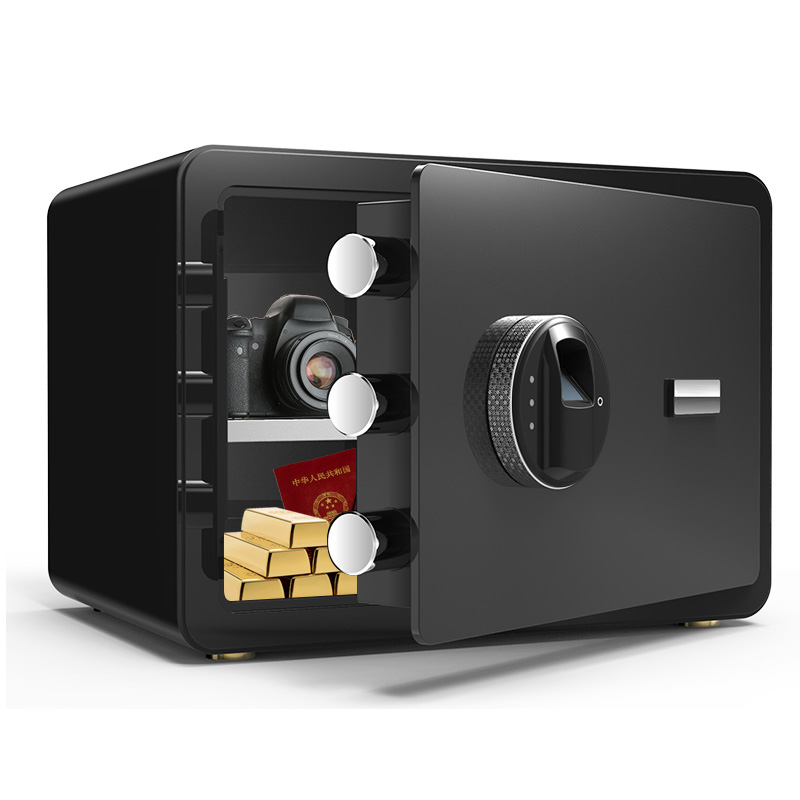
A retail group ordered small safe units for the back office of every branch, then discovered that the standard document wallet used by its stores would not fit through the door opening. The external dimensions on the quotation were correct. Nobody had asked for the clear internal width, shelf height or the space the boltwork takes up. A small safe is bought for a restricted footprint, which means every millimetre of the inside is contested between the door, the barrier layer and the locking mechanism. Sourcing one well is mostly about replacing a catalogue size with a usable dimension and a fixing plan.
Where compact orders go off track
A smaller enclosure removes the slack that a large cabinet gives a buyer. Two problems tend to be discovered too late.
A size that fits the room but not the contents
For a small safe, ask for a section drawing with clear internal width, depth and height, the shelf positions and the space taken by the door assembly when it is open. Compare those with the actual items going inside: document wallets, media cases, key bundles, till cassettes or prescription pads. Where a fire class is claimed, the insulated barrier and the intumescent seal eat into the internal volume, so the usable box is smaller than the outer shell suggests. A small safe that has to be packed to its absolute limit is also hard to audit, because retrieving one item means moving everything else. Put the intended contents list into the order.
Treating weight as a fixing method
Unitas compacta facile tolli potest, quod aliud est periculi genus quam armarium altum. In parvo armario, foramina ancorae accessibilia in basi aut in tabula posteriori quaerenda sunt, cum lamina renfortis post unumquodque, et methodus ancorandi, quae in quolibet relatio de aestimatione describitur, petenda est. Parvum armarium, quod sub mensa laxum stat, furto sublato possit auferri una cum contentis suis. Fabrica loca punctorum fixationis et kitum suppeditat; installator fastigia ad lignum, cementum aut lapides reapse eliget. NFPA 70 monitio est ut antequam sub mensa perfoditur, servitia inspiciantur, et electio fixationis in dossiero loci annotanda est.
Legere structuram in minore scala
Armarium in parvum armarium redigere non omnes partes aequaliter minuit. Structura ex se ipsa iudicanda est.
Reversa plicata, rebates et linea clausurae
A small safe door has less panel width to resist twisting, so a folded return along all four edges does more for stiffness than extra thickness. Ask whether the door sits in a rebated frame, since a flat overlap leaves a straight prying gap, and check the strike pockets and the plate behind the cylinder. Cold-rolled sheet is formed, welded and then coated; request adhesion and corrosion results with the method named, such as ISO 2409 cross-cut adhesion alongside ISO 9227 salt spray, and confirm that folded edges are fully covered. A small safe should still close with one finger after a season of daily use, and that behaviour comes from the forming rather than the finish.
Locks, liners and the space they consume
For a small safe, decide the locking approach before the internal layout is fixed. A resettable combination lock to UL 768 suits sites with staff turnover, while a keyed system needs a documented master key schedule and spare key custody. A three-point bolt assembly improves resistance but takes room along the door edge, so it belongs in the section drawing. A lift-out liner protects contents from banging against the steel and makes cleaning possible; check that it does not block the boltwork. Where an electronic lock is fitted, ask for the battery bay position and the low-battery indication. Every one of these choices changes the usable internal space on a small safe.
Standards that belong in the order
Standards separate furniture stability, security rating and site duties, which is exactly the mix a compact unit sits in.
Placing ANSI/BIFMA X5.9, UL 72 and NFPA 1 in the file
ANSI/BIFMA X5.9 et EN 14073-2 cum EN 14073-3 praebent normas stabilitatis, fortitudinis et securitatis pro mobiliis recondendi, quae pertinent ubi arca parva in aut sub opertorio ponitur. Expositio igni regitur ab UL 72, ingressus coactus ab UL 687 aut EN 1143-1, usus levis ab EN 14450, et mechanismus codicis ab UL 768. Roga tabulam quae nomen modelli citati designat, editam a domo probatoria quae accreditationem ISO/IEC 17025 habet. In locis, NFPA 1 et NFPA 101 regulant positionem et exitum, NFPA 70 clavium electricarum, et OSHA 29 CFR 1910.176(b) reconditionem stabilem. Imagines titulorum sequuntur ANSI Z535.4; REACH et RoHS finitionem continent.
Ubi ISO 9001 et ISO 2859-1 loca constantia servant
Repetibilitas dimensionum internarum, schematis foraminum ancorarum et modeli clausurae est res ISO 9001; pete schemam regulatam cum numero revisionis et registro inspectionis ex vere batch. ISO 2859-1 praebet rationabilem planum pro examinando adveniente, quod magis valet in deployment multi-situs quam in una expeditione. Adde specificationem scriptam pro impachetando cum experimento ordinis parcellarum, quia arca parva saepe mittitur ut unum cartonem ad singulam ramum. Huawei Furniture, fabricator mobilium aereis Luoyangensis conditus anno 1992, primum introduxit impachetationem per ordinem postalem in suam industriam localem, quae experientia est quae apparet in schemate cartonis potius quam in photographia producti.
Folium situs pro singula ramo
Write one small safe sheet with the clear internal dimensions, the intended contents list, the anchor point locations, the fixing guidance for common substrates, the lock model and key or code schedule, the asset numbering rule and the drawing revision. Require written approval before any change to the door, liner or lock. At goods-in, open cartons from several pallet positions, measure the clear internal width against the sheet, place one real document wallet inside and close the door, then check the anchor holes are reachable with the unit in position. Record which fasteners were used at each site. A small safe program built on that sheet is easy to repeat in a new branch, because the dimensions and the custody rule already exist.
Quaestiones Frequenter Rogatae
Which dimensions should be on the specification?
Pro unum parvum tutum, clare indicare internam latitudinem, profunditatem et altitudinem, positiones scaphiorum, spatium quod occupat apparatus ostii aperti, et ipsum ostium aperiens. Solae dimensiones externae pauca dicunt de capacitate utibili, praesertim ubi barriera igni-resistens et sigillum expansivum inter cuticulas sunt. Ponere listam contentorum intentorum in ordine et experiri unum verum exemplar intra specimen obsignatum antequam cetera pars copiae mittatur.
Num unitas compacta adhuc ancorandam habet?
Ita. Minor clausura facilius auferri potest quam armarium plenae altitudinis. Rogare foramina accessibilia pro anchoris cum lamina renforti post singula et methodum ancorandi descriptam in quolibet raportu de classificatione. Fabrica loca et kitum suppeditat; installer fastigia pro vero substrato eligit et ante perforationem servitia inspicit. Electio fixationis in archivo loci notatur.
Quae normae ad unitatem sub opere collocatam pertinent?
ANSI/BIFMA X5.9 et EN 14073-2 cum EN 14073-3 continent stabilitatem, fortitudinem et securitatem mobiliorum ad conservandum. UL 72 tractat classes durationis adversus ignem; UL 687 et EN 1143-1, resistentiam ad attacca; EN 14450, levia mobilia secura in classibus S1 et S2; UL 768, seras combinationis. NFPA 1 et NFPA 101 spectant ad positionem et vias effugiendi; ANSI Z535.4, ad titulos ad usum auctoribus.
Quomodo serra eligitur?
Decide ante quam dispositio interna definitur, quia mechanismus spatium occupat. Serra combinationis reconfigurabilis ad normam UL 768 apta est ubi frequens mutatio personarum fit; systema clavibus necessitat schedulam clavis principalis et custodiam clavium reservatarum scripto. Apparatus tres-boltorum resistentiam augere potest, sed spatium consumit prope oram ostii. Ubi serra electronica utitur, quaere positionem loci bateriarum et indicium bateriarum exsiccatarum.
Quid in tabula pro diffusionibus multis in sedibus continetur?
Clara dimensiones internas, contenido previsto, ubicaciones de puntos de anclaje, guía de fijación para sustratos comunes, modelo de cerradura y programa de llaves o códigos, numeración de activos y revisión del dibujo. Requiere aprobación por escrito antes de cualquier sustitución. Al recibir mercancía, medir el ancho libre, colocar un artículo real en su interior, cerrar la puerta y confirmar que los orificios de anclaje sean accesibles con la unidad en posición.
Quae documenta a suppeditatore petenda sunt?
Dibujo controlado con número de revisión, lista de materiales que nombre los modelos de cerradura y bisagras, registro de inspección de un lote real y cualquier informe de calificación con el código exacto del modelo. Verificar la acreditación ISO/IEC 17025 del laboratorio, añadir declaraciones REACH y RoHS para el recubrimiento y los componentes electrónicos, y solicitar el dibujo de empaque junto con su prueba de tránsito. Conservar una muestra sellada en cada extremo