
 EN
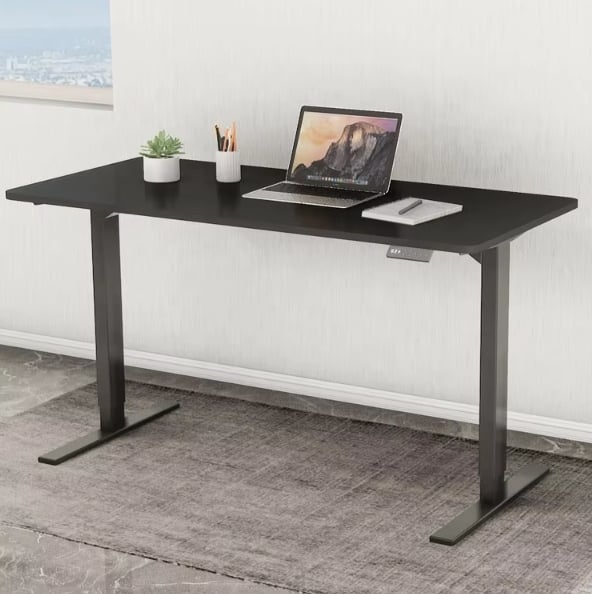
On a routine floor check, a facilities technician stops at a sit-stand workstation in daily use for years. A memory preset has stopped responding. The technician opens the underside tray, unplugs a single connector, slides out the failed control box and seats a replacement from the spare shelf. The column, linear actuator and cable routing stay untouched. Such scenes explain why serviceability shapes repeat orders. An electric height adjustable table proves its worth years after delivery, when a worn part can be repaired in place rather than scrapped.
Where A Fleet Reveals Its Weak Points After Years Of Use
Logging Failures Instead Of Replacing Frames
A maintenance log reads like a parts list. Across a floor of sit-stand desks, entries repeat: a preset lost, a control box swapped, a handset reseated. Frames, columns and linear actuators rarely appear. That is the argument for modular components in an electric height adjustable table, where parts are ordered separately. A maker in Luoyang, founded in 1992 and working across 30,000 square meters with a monthly output of 10,000 pcs, stocks spare control boxes as standard items.
On The Spare Shelf: Control Boxes, Handsets And Looms
A replaceable control box matters only if the surrounding parts stay put. When the control box, handset and cable loom share a fixed connector layout, a swap is mechanical: unplug, release the fixings, seat the new unit, restore the saved heights. No rewiring, no change to the cable routing. For an electric height adjustable table, memory presets survive the repair and the desk returns to the same stroke limits, so fleet downtime is measured in minutes rather than weeks.
Why Sealed Components Turn Small Faults Into Full Replacements
What Happens When The Control Box Is Not Replaceable?
Risk shows up when a design treats the drive and the control electronics as one sealed assembly. A failed preset then takes the whole desk out of service, because the part cannot be separated from the frame. Replacement means a fresh unit with a different finish and another round of assembly, and the old steel becomes scrap. For buyers comparing lines, the question is how a single fault is contained years later, when no original spare exists.
Fewer Replacements, Longer Frame Life
Standardising the control box across a product line turns the spare shelf into a short, predictable list. The frame, column and linear actuator, built from cold-rolled steel sheet through laser cutting, CNC bending and spot welding, keep working while only the electronics rotate out. That is why a well-documented line earns repeat orders: the expensive structure is retained.
How Stroke, Presets And Cable Routing Age Together
How A Fixed Stroke Protects The Linear Actuator
A linear actuator wears most at the ends of its stroke, where the load reverses. The control box stores the upper and lower bounds, so a desk driven to the stops every cycle ages faster than one settling at saved heights. Memory presets return a user to a known position instead of nudging against the end stop, and anti-collision sensing cuts power if the desktop meets an obstacle. Over years, that logic protects the welds of an electric height adjustable table.
The Cable Routes That Outlive The Electronics
Cable routing is the part of a sit-stand desk a technician studies on every service call. Leads need a slack loop that follows the moving frame and clips that hold the loom clear of the lifting column, with grommets that stop edges cutting insulation over repeated cycles. When the electric height adjustable table is built with a fixed cable channel, a control box swap does not disturb the wiring. The steel frame, finished through degreasing, phosphating and electrostatic powder coating before curing, keeps those routes aligned.
Standards, Checklists And The Case For Modular Design
Standards That Govern Safe, Repeatable Repairs
Written service procedures lean on several families of references. ISO 9001 frames a quality management system behind consistent batches, and ISO 45001 addresses occupational health and safety. ANSI/BIFMA X5.5 covers desk and table products, ANSI/BIFMA G1 addresses height adjustability ergonomics, and ANSI Z535.4 covers product safety signs and labels. OSHA 29 CFR 1910 Subpart S addresses electrical safety, while OSHA 29 CFR 1910.147 covers control of hazardous energy, the lockout and tagout step before a control box is opened. NFPA 70, the National Electrical Code, frames wiring practice, and NFPA 101 covers egress routes.
Buying an electric height adjustable table: ask the supplier to name each modular component and confirm that the control box, handset, linear actuator and cable loom are orderable as separate parts. Request the stroke limits, the memory preset count and a written description of the cable channel, and check that spare units are stocked rather than made to order. Custom orders per customer plan or sample keep replacements matched, and safety labels under ANSI Z535.4 and load test records should be supplied.
Inspecting each unit on arrival: run every desktop through its full stroke and back, then save and recall a memory preset to confirm the control box stores it. Check that the cable loom has a slack loop and that clips hold it clear of the lifting column. Verify that the control box is reachable without dismantling the frame and that its label lists a part reference. Confirm the frame sits level on its leveling feet and that the powder-coated finish is even after the curing oven.
Using the desk day to day: set memory presets to comfortable sitting and standing heights so daily changes stop short of the stroke limits, and keep the desktop clear of obstacles that would trigger anti-collision sensing. Train staff to let a cycle finish before reversing direction, because repeated hard reversals load the linear actuator. Keep the under-desk cable channel free of loose adapters. Log any preset that drifts or any hesitation in travel, since an early note gives the technician a clear target.
Maintaining the fleet over time: schedule a yearly pass over the cable routing, connector seating and leveling feet, and keep a small stock of the replaceable control boxes and handsets. Before any box is opened, follow the lockout and tagout sequence that OSHA 29 CFR 1910.147 describes, isolating power so the actuator cannot move. After a swap, restore the stroke limits and memory presets and cycle the desk under load to confirm frame stability. Record the part reference in the maintenance log.
Frequently Asked Questions
Q: How often should a control box be replaced on an electric height adjustable table?
A: There is no fixed interval, because service life depends on daily cycles and how close the desk runs to its stroke limits. A practical signal is behaviour rather than a calendar: presets that drift, a handset that hesitates, or a unit that fails to store a saved height. When those appear, a replaceable control box lets a technician swap the unit and restore the settings in a single visit, keeping the frame and actuator in place.
Q: What makes a control box replaceable rather than built in?
A: A replaceable control box sits in its own housing with a standard plug and documented part reference, separate from the frame, column and linear actuator. The cable loom connects through a fixed layout, so a swap needs no rewiring and no new holes. Because the memory presets and stroke limits are stored in the box, a technician restores them after fitting the spare and the desk returns to the same travel range.
Q: Do memory presets survive a control box swap?
A: Presets are held in the control box, so they do not automatically carry over to a replacement unit. The service step is to re-enter or reload the saved heights, then cycle the desk through its stroke to confirm the limits. A line with documented presets and a clear handset routine makes this quick, and it is a chief reason buyers favour a modular electric height adjustable table over a sealed assembly with no field settings.
Q: Why does cable routing matter at repair time?
A: Cable routing decides whether a control box change is a clean swap or a rewiring job. When leads run through a fixed channel with a slack loop and clips clear of the lifting column, the wiring stays untouched while the box comes out. Tidy routing also protects insulation over years of travel, so the electric height adjustable table keeps a predictable service path instead of hiding a brittle loom behind the frame.
Q: Which standards cover servicing a powered desk?
A: Several references apply. OSHA 29 CFR 1910.147 covers the control of hazardous energy, the lockout and tagout step before a box is opened, while OSHA 29 CFR 1910 Subpart S addresses electrical safety. NFPA 70, the National Electrical Code, frames wiring practice. ISO 9001 frames consistent production of spare parts, ISO 45001 addresses worker safety, and ANSI/BIFMA X5.5 with ANSI/BIFMA G1 covers desk products and height adjustability.
Q: Is a modular frame worth specifying for a large order?
A: For a fleet, modular construction keeps the frame, column and linear actuator in service while the wearing electronics rotate out as stocked spares. That limits the variety of parts on the shelf and shortens each repair to a single workstation visit. Buyers specifying an electric height adjustable table line for many desks gain a predictable maintenance path, because the same control box, handset and cable loom fit across the order and remain available years after installation.