
 EN
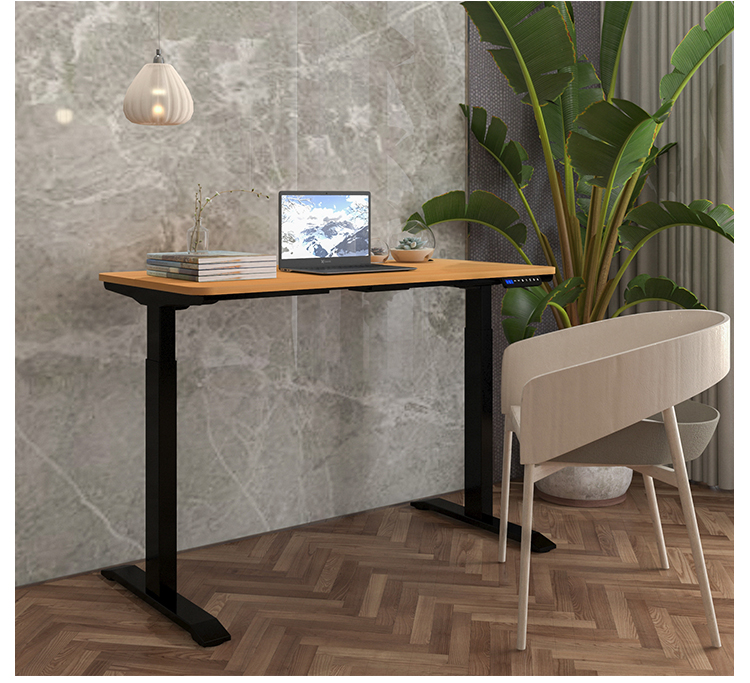
Standard off-the-shelf workstations buckle quickly when placed inside 24/7 logistics dispatch rooms, plant engineering offices, testing laboratories, or multi-monitor trading floors. Commissioning a heavy duty custom office desk engineered around real equipment loads transforms workstations from disposable consumables into multi-decade facility assets.
Operational Hazards of Under-Engineered Workstations
When facility buyers force standard light-commercial desks to carry industrial diagnostic gear, multi-screen arrays, or heavy paper archives, structural fatigue shows up fast.
Lateral Frame Sway and Fastener Loosening
Thin tubular legs bolted directly to a thin worktop without corner gussets act like pendulums whenever operators shift chairs or bump pedestals. Repetitive micro-sway ovalizes screw holes in thin sheet metal until the entire desk racks sideways under load.
Delamination and Moisture Swelling in Hybrid Environments
Workstations near loading docks, shop-floor offices, or humid coastal zones absorb ambient moisture and oil mist. Standard particleboard cores swell around edge seams, popping laminate skins loose and pulling cam-lock inserts straight out of softened wood fibers.
Five Structural Advantages Engineered Into Heavy Duty Custom Desks
Tailoring structural geometry specifically for demanding commercial environments yields five measurable engineering improvements over mass-market office tables.
|
Structural Advantage |
Engineering Mechanism |
Operational Payoff |
|
Gusseted Box-Section Frame |
Thick-walled steel tubes + welded triangular corner plates |
Eliminates lateral sway under multi-monitor setups |
|
Load-Matched Top Ribs |
Custom-spaced steel omega stiffeners beneath work surface |
Supports heavy printers, test rigs, and clamp arms |
|
Integrated Steel Pedestals |
Load-bearing pedestal shells tied into main crossbeams |
Doubles structural vertical support and storage capacity |
|
Armored Edge Geometry |
Multi-fold safety return flanges along all perimeter edges |
Resists hand-truck bumps and eliminates sharp burrs |
|
Industrial Finish System |
Chemical phosphating + thick-film textured powder coat |
Repels humidity, solvents, and daily surface abrasion |
1. Gusseted Steel Subframes That Stop Lateral Racking
Heavy duty custom frames pair closed rectangular cold-rolled steel tubing or multi-fold C-channel legs with welded corner gussets and deep steel modesty beams. Triangulating the joint between vertical leg columns and horizontal aprons channels lateral shear forces straight into the floor rather than flexing fastener heads.
2. Custom-Positioned Under-Surface Stiffener Grids
Because OEM engineers know exactly where heavy desktop plotters, industrial scales, or quad-monitor VESA poles will sit, reinforced steel channels and backing plates are welded directly beneath high-stress mounting zones—eliminating localized surface denting.
3. Structural Load-Sharing File Pedestals
Instead of hanging flimsy add-on drawers from thin brackets, heavy duty custom designs integrate full-height cold-rolled steel pedestals into the load path. Three-section heavy ball-bearing slides keep deep file drawers gliding smoothly even when packed front-to-back with technical manuals.
4. Multi-Fold Box-Return Edges and Impact Resistance
Precision CNC press brakes fold steel panel perimeters into triple-bent hollow return flanges. Multi-fold edges multiply bending stiffness exponentially compared to single-bent sheet metal while shielding office staff from sharp undersides.
5. Sealed Pre-Treatment and Textured Epoxy-Polyester Coating
Full immersion or spray pre-treatment coats internal and external steel surfaces prior to electrostatic powder curing, guarding hidden cavities against rust. Founded in 1992, Luoyang Huawei Office Furniture Co., Ltd. leverages experienced fabrication workers, third-party inspected workshops, and mail-order grade protective packing to deliver custom heavy-duty steel desks built to buyer blueprints worldwide.
Aligning Heavy Duty Custom Builds With Safety Codes
Heavy-load commercial furniture must satisfy objective engineering benchmarks. ANSI/BIFMA X5.5 structural protocols validate both functional distributed loads and concentrated proof loads along desk perimeters, confirming frames remain operational and tip-free. Storage pedestals integrated into the workstation align with ANSI/BIFMA X5.9 stability and cycle criteria.
Additionally, non-combustible all-steel desk construction supports facility fire-load reduction goals aligned with NFPA commercial building risk assessments, while rounded edge radii and stable leveling feet satisfy OSHA 1910 workplace hazard prevention principles.
Specifying, Inspecting, and Maintaining Heavy Duty Desks
Getting maximum longevity out of custom steel workstations starts with accurate load profiling before fabrication begins.
Defining Load Profiles and Floor Conditions Up Front
Calculate total static equipment weight plus dynamic leaning force before finalizing steel gauge specs. For uneven industrial concrete floors, specify oversized steel-stem leveling glides with wide nylon bases rather than light plastic plugs.
Periodic Inspection Checklist for High-Intensity Workstations
Every twelve months, facility technicians should inspect monitor-pole through-bolts, clean paper lint and shop dust from telescopic ball-bearing drawer runners, and verify floor levelers remain evenly loaded across all leg contact points.
Frequently Asked Questions
What steel thickness is recommended for a heavy duty custom office desk?
For high-intensity commercial or shop-floor administrative workstations, structural leg columns and main crossbeams typically utilize 1.0 mm to 1.5 mm cold-rolled steel tubing or formed channels, paired with 0.8 mm to 1.0 mm desktop skins and pedestal shells reinforced by welded internal stiffener ribs.
How do custom steel desks handle heavy multi-monitor mount clamps?
Standard thin-edged desks deform when C-clamps tighten down under multi-screen torque. On a custom heavy duty steel desk, engineers either build a reinforced box-channel rear edge or laser-cut dedicated grommet through-bolt holes backed by thick steel under-plates that anchor multi-monitor poles rock-solid.
Are all-steel custom desks cold or noisy for daily office typing?
Modern commercial steel desks overcome both concerns through composite engineering. Acoustic damping pads bonded underneath the steel top eliminate hollow metallic sound, while micro-textured matte powder coatings—or optional high-pressure laminate worktop inserts mounted onto heavy steel underframes—provide warm tactile comfort.
Can heavy duty custom desks be built in knock-down format for export?
Yes. Heavy-gauge steel components use precision-machined interlocking wedge joints, heavy M8 hex bolts, and riveted steel nutserts rather than permanent bulky frame welds. Knock-down engineering lets heavy duty workstations pack flat into reinforced mail-order cartons without losing assembled rigidity.
How do heavy duty steel desks perform in humid or coastal facilities?
When cold-rolled steel undergoes thorough alkaline degreasing, rust removal, conversion coating, and full electrostatic epoxy-polyester curing—verified against ISO 9227 salt spray standards—heavy duty steel desks resist swelling, mold growth, and delamination that rapidly ruin wood-composite desks in coastal environments.
What maintenance keeps heavy duty pedestal drawers sliding smoothly?
Avoid spraying sticky silicone or WD-40 solvents onto ball-bearing drawer tracks, as wet oils attract abrasive dust grit. Simply vacuum track channels dry once a year and apply a tiny dab of clean white lithium or PTFE synthetic grease onto the inner ball-race bearing cages if needed.