
 EN
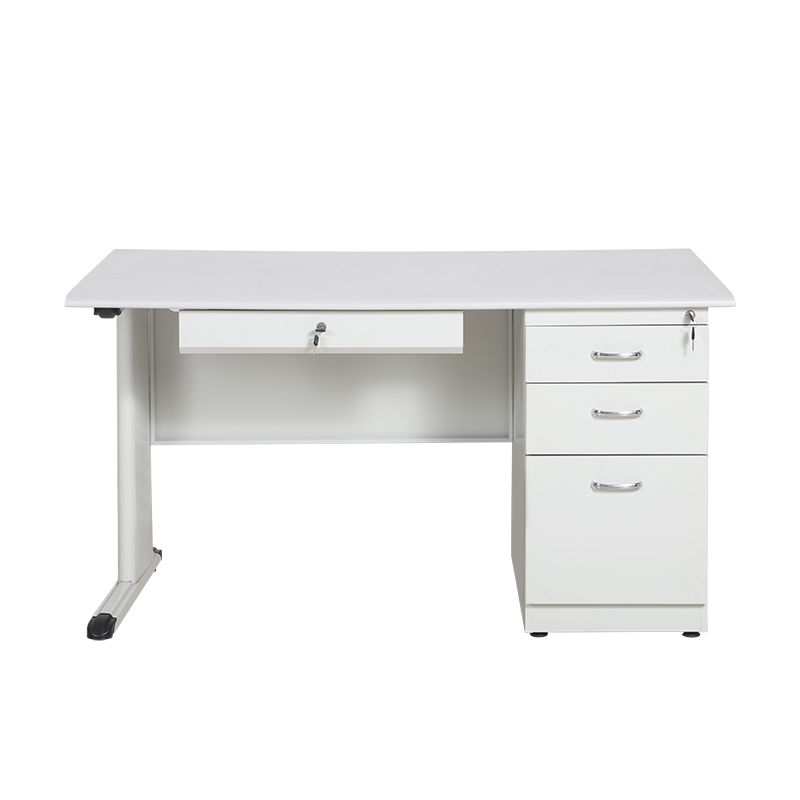
Tailored OEM Engineering for Custom Office Desk Projects
Standard catalog workstations rarely solve the spatial and technical constraints of specialized B2B environments—such as dispatch control centers, medical laboratory intake bays, university computer labs, or private-label furniture brands launching proprietary lines. Executing a successful custom office desk project hinges on disciplined OEM engineering that translates architectural concepts into manufacturable, flat-pack steel assemblies.
Expensive Bottlenecks in Poorly Managed Custom Desk Orders
Commissioning custom furniture from workshops that rely on manual layout marking rather than parametric CNC tooling creates severe downstream headaches for project contractors and brand importers.
Misaligned Bolt Patterns During Jobsite Installation
When a factory hand-drills prototype gussets or modifies dimensions without updating 3D sheet-metal bend allowances, mounting holes shift by two or three millimeters. On a two-hundred-seat commercial installation, field crews waste days reaming steel holes by hand while tenant move-in deadlines slip.
Retrofitted Cable Cutouts That Slice Data Wiring
Cutting raw power and Ethernet ports into steel modesty panels without rolled hems or snap-in ABS grommets leaves razor-sharp burrs. Vibration and desk movement gradually slice through Cat6 network jackets and monitor power cords, creating electrical shorts and IT downtime.
Inside the End-to-End OEM Steel Desk Engineering Workflow
Mature steel furniture factories manage custom orders through structured design-for-manufacturing (DFM) stages that protect dimensional accuracy and unit economics.
|
OEM Engineering Phase |
Core Technical Deliverable |
Buyer Advantage |
|
1. DFM & 3D CAD Modeling |
Exploded sheet-metal SolidWorks/AutoCAD drawings |
Catches bend-radius clashes before cutting steel |
|
2. CNC Laser & Turret Punch |
Sub-millimeter hole and louver positioning |
Zero expensive hard-die fees during prototyping |
|
3. Robotic & Fixture Welding |
Dedicated clamping jigs for legs and stiffeners |
Identical squareness across multi-container runs |
|
4. Custom Color & Texture |
RAL/Pantone matched electrostatic powder coats |
Exact alignment with corporate brand guidelines |
|
5. Tailored Carton Design |
Custom-cut EPS/honeycomb mail-order pack layout |
Safe direct-to-branch or e-commerce fulfillment |
Sheet-Metal Bend Allowance and Knock-Down Tab Geometry
Converting a customer sketch or physical sample into a knock-down steel desk requires calculating exact K-factors for cold-rolled SPCC steel bends. Experienced structural engineers replace bulky welded joints with interlocking wedge slots and captive nut fasteners, shrinking carton thickness by over sixty percent without sacrificing lateral stiffness.
Integrating Specialized Power, CPU, and Privacy Modules
Custom commercial briefs often demand recessed flip-top power troughs, ventilated lockable CPU cages for public-facing kiosks, perforated acoustic steel privacy screens, or reinforced mounts for industrial label printers. Designing punch patterns directly into CNC turret programs produces smooth, burr-free ventilation louvers and UL-compatible power module cutouts.
Prototyping Without Prohibitive Stamping Tooling Delays
By pairing fiber laser cutting with CNC press brakes during the sampling stage, an experienced factory builds a fully functional steel prototype within days. Founded in 1992, Luoyang Huawei Office Furniture Co., Ltd. combines an in-house design team and veteran fabrication staff with third-party audited production lines and pioneering mail-order packing capabilities—enabling buyers to validate custom samples from drawings or physical models before scaling to mass production.
Regulatory and Structural Compliance for Bespoke Designs
Customizing dimensions must never compromise structural safety. Every bespoke desk span and cantilever leg configuration should be engineered around ANSI/BIFMA X5.5 concentrated and distributed load thresholds so extended 1800 mm or 2000 mm worktops resist center deflection.
Facilities operating under ISO 9001 document every engineering change order (ECO) so repeat reorders two years later match the original batch down to individual drawer slide screw holes. Furthermore, OSHA ergonomic knee-clearance zones and NFPA electrical cord routing precautions guide how engineers position under-desk wire management trays away from foot traffic and pinch points.
Best Practices for Submitting OEM Briefs and Managing QC
Clear technical communication at project kickoff accelerates sampling and eliminates costly revisions.
What to Include in an OEM Technical Request for Quotation
Provide target external dimensions (width, depth, height), anticipated equipment load on the desktop, drawer configuration (box/box/file vs. file/file), preferred RAL color code and gloss level, target order volume, and final distribution method—whether palletized LTL contract delivery or individual parcel courier fulfillment.
Maintaining Custom Steel Workstations Post-Deployment
Keep spare touch-up paint pens, extra serialized lock cores, and hardware packs on hand for large corporate campuses—reputable OEM partners include a percentage of spare fasteners and leveling glides in every container. Inspect custom cable grommet inserts annually to ensure snaps remain seated tightly.
Frequently Asked Questions
What technical files do factories need to start a custom office desk project?
Buyers can submit 2D AutoCAD drawings, 3D STEP/IGES models, architectural spec sheets, or even annotated dimensional sketches and physical competitor samples. An experienced factory CAD team converts initial concepts into detailed shop drawings showing exact steel gauges, weld locations, knock-down seams, and internal drawer clearances for buyer sign-off.
Do custom steel office desks always require expensive stamping molds?
Most custom commercial steel desks do not require costly hard stamping dies. Modern fiber laser cutters, CNC turret punches, and multi-axis CNC press brakes fabricate custom panels, ventilation slots, and cable ports with high precision, reserving dedicated stamping dies only for specialized embossed logos or massive recurring volumes.
How are custom brand colors matched in electrostatic powder coating?
Buyers specify standard international RAL or Pantone color codes along with surface texture preferences such as smooth matte, fine sand texture, or wrinkle finish. Powder formulation labs produce physical sprayed steel color swatches cured at production oven temperatures so buyers can verify exact shade and sheen under office lighting.
Can oversized custom steel desks still ship in flat-pack cartons?
Yes. Structural engineers segment wide L-shaped workstations, multi-person benching frames, and reception desks into modular sub-assemblies—separating pedestals, leg frames, cross-rails, and split or reinforced tops into manageable flat cartons that pass pallet or parcel weight limits while assembling rigidly on-site.
How do engineers prevent long custom steel desktops from bowing in the middle?
For extended spans exceeding 1600 mm without a center support pedestal, engineers increase longitudinal crossbeam depth, step up cold-rolled steel wall thickness on the perimeter apron, and weld additional full-length hat-section stiffener channels beneath the worktop to pass ANSI/BIFMA X5.5 deflection criteria.
How should buyers protect proprietary custom desk designs when working with an OEM?
Establish a clear Non-Disclosure and Non-Circumvention Agreement (NNN/NDA) prior to sharing proprietary 3D CAD files, specify exclusive tooling ownership for any custom-molded plastic trims or stamped parts in the purchase agreement, and partner with established, third-party-inspected manufacturers with multi-decade export track records.