
 EN
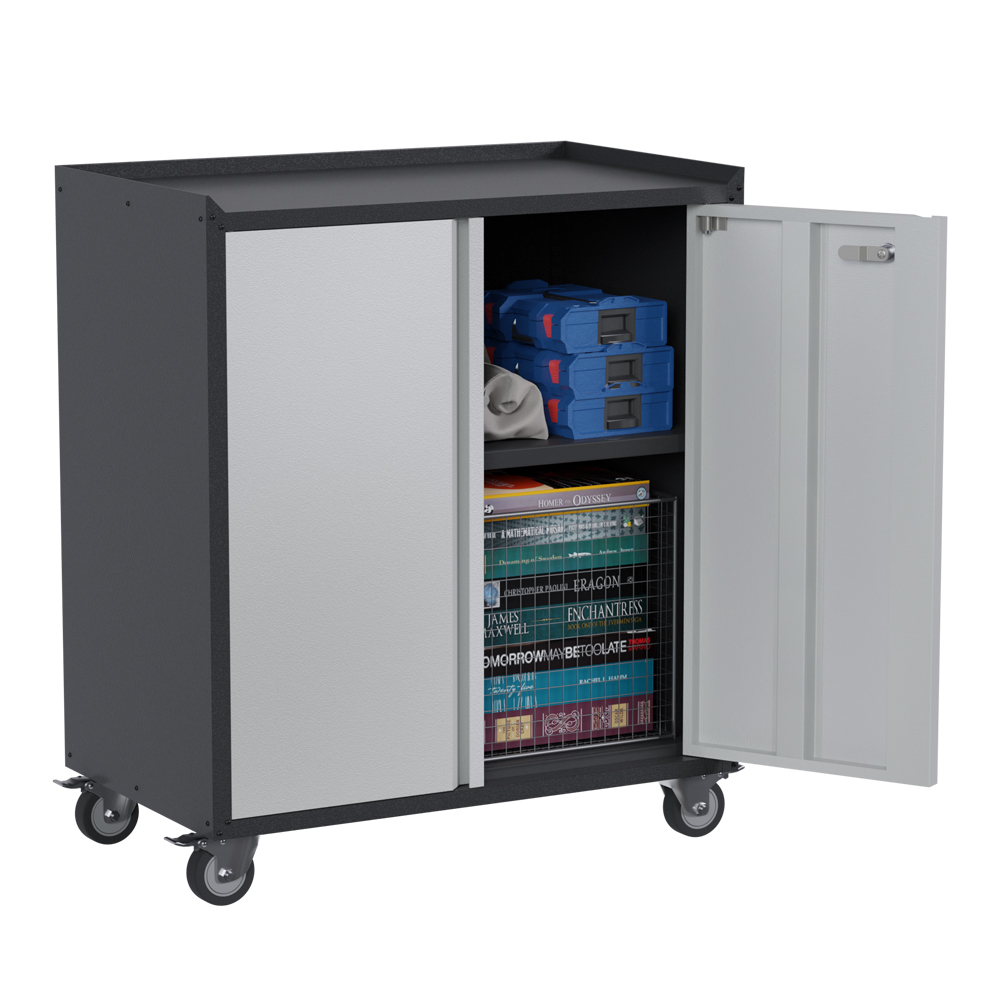
Unmatched Durability: Steel Gauge, Welding, and Load Capacity
14–18 Gauge Steel Construction for Long-Term Structural Integrity
Steel gauge is inverse to thickness: a 14-gauge panel is about 0.075 inches thick, while an 18-gauge panel measures close to 0.048 inches. That difference directly affects how a heavy-duty metal cabinet for garage handles daily loads, heat, and vibration. Thicker 14-gauge steel resists bending and buckling when filled with cast-iron tools, paint cans, and power equipment. Mid-range 16-gauge material balances stiffness with manageable weight—ideal for uprights and side panels in larger cabinets that must remain stable without excessive floor pressure. Even 18-gauge sections perform reliably when folded and hemmed into rigid structural channels, such as back panels or door skins.
| Gauge | Approx. Thickness | Structural Role in Garage Cabinets |
|---|---|---|
| 14 gauge | 0.075 in (1.9 mm) | Highest stiffness for top caps, shelf decks, and lower base frames |
| 16 gauge | 0.060 in (1.5 mm) | Balanced strength for uprights and side panels under mixed loads |
| 18 gauge | 0.048 in (1.2 mm) | Lighter back panels and door skins where brake-formed beads add rigidity |
Together, these gauges form an integrated load path—transferring weight from shelves through uprights to the base—preventing localized deformation. Buyers should verify that full door frames—not just cosmetic skins—use 14–18-gauge steel, since thin veneer panels can appear robust while failing under concentrated loads. This intentional gauge strategy supports long-term flatness and consistent drawer alignment.
Precision Welded Seams and Reinforced Corners Resist Fatigue and Deformation
A heavy-gauge shell is only as durable as its joints. Precision welded seams—especially continuous fillet welds along shelf supports and side panels—distribute stress evenly across the cabinet body. Unlike intermittent spot welds that concentrate force at discrete points, continuous welds inhibit micro-cracking under repeated loading. Reinforced corners provide a second line of defense: internal gussets and folded corner caps brace the structure where bending moments peak. When heavy objects shift during drawer operation or garage vibration, these reinforcements limit racking and preserve square door openings. High-quality fabricators also grind and clean weld zones before powder coating to eliminate stress risers from slag or spatter. This integrated approach resists fatigue deformation over thousands of open-close cycles—particularly critical for tall units, where even slight lean creates asymmetric loads. For a garage cabinet holding dense tool collections, welded corner reinforcements mean fewer loose hinges, less sagging, and longer service life without retorquing fasteners.
2,500-lb Total Load Rating: Why It Matters for a Heavy Duty Metal Cabinet for Garage
A 2,500-lb total load rating indicates the cabinet’s frame, shelves, and base can safely support roughly the weight of a small vehicle engine plus a full toolbox. This number matters because garage storage rarely distributes weight evenly: tool chests, ammunition boxes, and paint cans create concentrated point loads. A verified 2,500-lb rating reflects thicker shelf decks and reinforced uprights designed to prevent punch-through and sag. However, buyers should confirm whether the rating applies to static conditions only—or includes dynamic loads from drawer operation. Total ratings assume even distribution across labeled shelf locations; stacking weight against a single shelf or hanging items from a door sharply reduces local capacity. Choosing a cabinet with this upper-range rating provides headroom for future tool expansion, seasonal equipment, and accidental overloads—without compromising door alignment or structural integrity.
Engineered Stability: Weight Distribution and Reinforcement Systems
A metal cabinet for garage must manage shifting loads from power tools, seasonal gear, and heavy hardware without racking, sagging, or losing drawer alignment. True stability comes not from panel thickness alone—but from internal reinforcement systems that distribute weight through the frame.
Cross-Bracing and Internal Gusseting for Dynamic Load Management
Cross-bracing and internal gusseting redirect stress away from outer panels and into the cabinet’s corner structure. In daily use, drawers open one at a time while upper shelves remain fully loaded—creating uneven, eccentric loads. Without reinforcement, repeated cycles can cause side panels to bow and welded joints to crack. Internal gussets stiffen the connection between the back panel and vertical rails, while diagonal cross-bracing ties rear corners into a triangular truss. This reduces lateral sway and keeps shelf mounting points aligned under shifting weight. Dynamic load testing simulates thousands of open-close cycles with off-center loads—and cabinets built with this system show significantly less deflection, maintain squareness longer, and operate smoothly even when a full-extension drawer carries 100+ lb. For a heavy-duty garage cabinet, this support preserves frame rigidity as tools are rearranged frequently and loads shift front-to-back.
Full-Extension Drawer Rails Rated for 150 lb Each—Built for Daily Garage Use
Full-extension drawer rails rated for 150 lb per drawer allow complete access to items at the back without kneeling or removing everything. In a garage, those drawers may hold sockets, power tools, or dense fastener bins. While the 150-lb rating reflects uniform static load, real-world use includes slamming, uneven content, and constant open-close cycles. Heavy-gauge ball-bearing slides with double- or triple-stage telescoping rails distribute load across multiple raceways—reducing point stress on mounting screws and preventing sag at full extension. The rating also delivers a practical safety margin: a drawer loaded with 80–100 lb of hand tools still opens smoothly and resists bounce when closed. Equally important, the rails must stay parallel under load. Reinforced drawer fronts and side panels help the cabinet body maintain rail alignment—so daily use doesn’t gradually loosen the slide mechanism or cause binding.
Corrosion Resistance and Environmental Resilience in Garage Settings
A metal cabinet for garage use faces moisture, humidity, temperature swings, and occasional exposure to road salt or chemicals. Unlike wood, which can warp or swell in damp conditions, powder-coated steel retains its shape and structural integrity. The powder coating acts as a barrier against rust, oxidation, and scratches—making it suitable for high-traffic home garages and workshops. For more demanding environments, secondary processes such as galvanization further improve resistance to corrosion and wear. These treatments help the cabinet maintain smooth drawer operation and clean surfaces over years of seasonal change. Because garages often lack climate control, materials must tolerate condensation from vehicles, wet equipment, and rapid heating or cooling. A corrosion-resistant heavy-duty cabinet reduces the need for frequent repainting or replacement—and keeps stored tools and supplies protected. This environmental resilience directly supports the structural advantages discussed earlier: stable steel panels, reinforced corners, and high load capacity remain effective only when the surface is shielded from moisture and chemical attack.
Secure Anchoring and Seismic-Ready Structural Safety
Integrated Anchoring Points and 3,000+ lb Lateral Force Resistance
A heavy-duty metal cabinet for garage environments needs more than a flat base to remain stable under side loads. Integrated anchoring points let installers bolt the cabinet directly to a reinforced concrete slab or wall—creating a fixed connection that resists shifting during vibration, impacts, or seismic activity. In seismic-prone areas, lateral forces can push unanchored storage sideways or cause tipping. Cabinets with reinforced hold-down points, diagonal bracing, and embedded steel plates distribute these forces along the load path instead of concentrating stress at a single weld. A 3,000+ lb lateral force resistance rating indicates the cabinet has been tested to withstand strong horizontal loads without separating from its anchors or deforming the frame. This anchoring strategy aligns with structural safety practices outlined in RMI and ANSI standards—and reduces collapse risk in garages where heavy equipment or frequent movement increases instability.
Long-Term Value: How Structural Advantages Reduce Lifetime Ownership Costs
A heavy-duty metal cabinet for garage often carries a higher initial price than a light-duty unit—but life-cycle costing reveals why that investment pays off. Structural advantages fundamentally change the long-term equation. Welded steel frames, reinforced corners, and high load ratings reduce early failure. Fewer failures mean lower repair costs and less risk of damaging expensive tools or parts. Budget cabinets tend to flex, lose door alignment, or fail under repeated garage loads—and many require replacement far sooner than their heavy-duty counterparts. A well-built cabinet can last a decade or more with routine use—potentially replacing two or three lower-cost units over the same period.
| Cost Factor | Light-Duty Cabinet | Heavy-Duty Cabinet |
|---|---|---|
| Initial cost | Lower | Higher |
| Expected service life | Shorter | Longer |
| Replacement frequency | Higher | Lower |
| Maintenance and repair | More frequent | Less frequent |
| Risk of stored item damage | Higher | Lower |
Avoiding repeated replacements also saves time and labor. A stable, long-lasting cabinet keeps garage storage safer and more predictable. Over a 10- to 15-year ownership period, the heavy-duty unit typically delivers a lower total cost—not just through durability, but through more reliable day-to-day performance.
FAQ
What steel gauge is best for a heavy-duty garage cabinet?
It depends on the cabinet’s application. A 14-gauge steel provides maximum stiffness for top caps and shelf decks, while 16-gauge offers a balance of strength and weight for side panels. Even 18-gauge works well in back panels or door skins when reinforced properly.
Why are precision welded seams important for durability?
Precision welded seams distribute stress evenly, reducing the risk of deformation and fatigue. Continuous fillet welds are superior to spot welds as they prevent micro-cracking under repeated loads, ensuring longer structural integrity.
What does a 2,500-lb load rating mean?
The rating indicates that the cabinet can safely support up to 2,500 pounds of evenly distributed weight. However, it’s important to ensure that the rating applies to dynamic as well as static loads for real-world use.
How do cross-bracing and internal gussets improve stability?
These reinforcements distribute loads away from outer panels to the corner structure, reducing bowing and maintaining shelf alignment under heavy or shifting weight.
What features make a garage cabinet corrosion-resistant?
Powder-coated steel is the primary defense against rust and scratches. Additional treatments like galvanization offer enhanced protection against moisture, temperature swings, and chemicals, making it ideal for garage environments.
Table of Contents
- Unmatched Durability: Steel Gauge, Welding, and Load Capacity
- Engineered Stability: Weight Distribution and Reinforcement Systems
- Corrosion Resistance and Environmental Resilience in Garage Settings
- Secure Anchoring and Seismic-Ready Structural Safety
- Long-Term Value: How Structural Advantages Reduce Lifetime Ownership Costs
- FAQ