
 EN
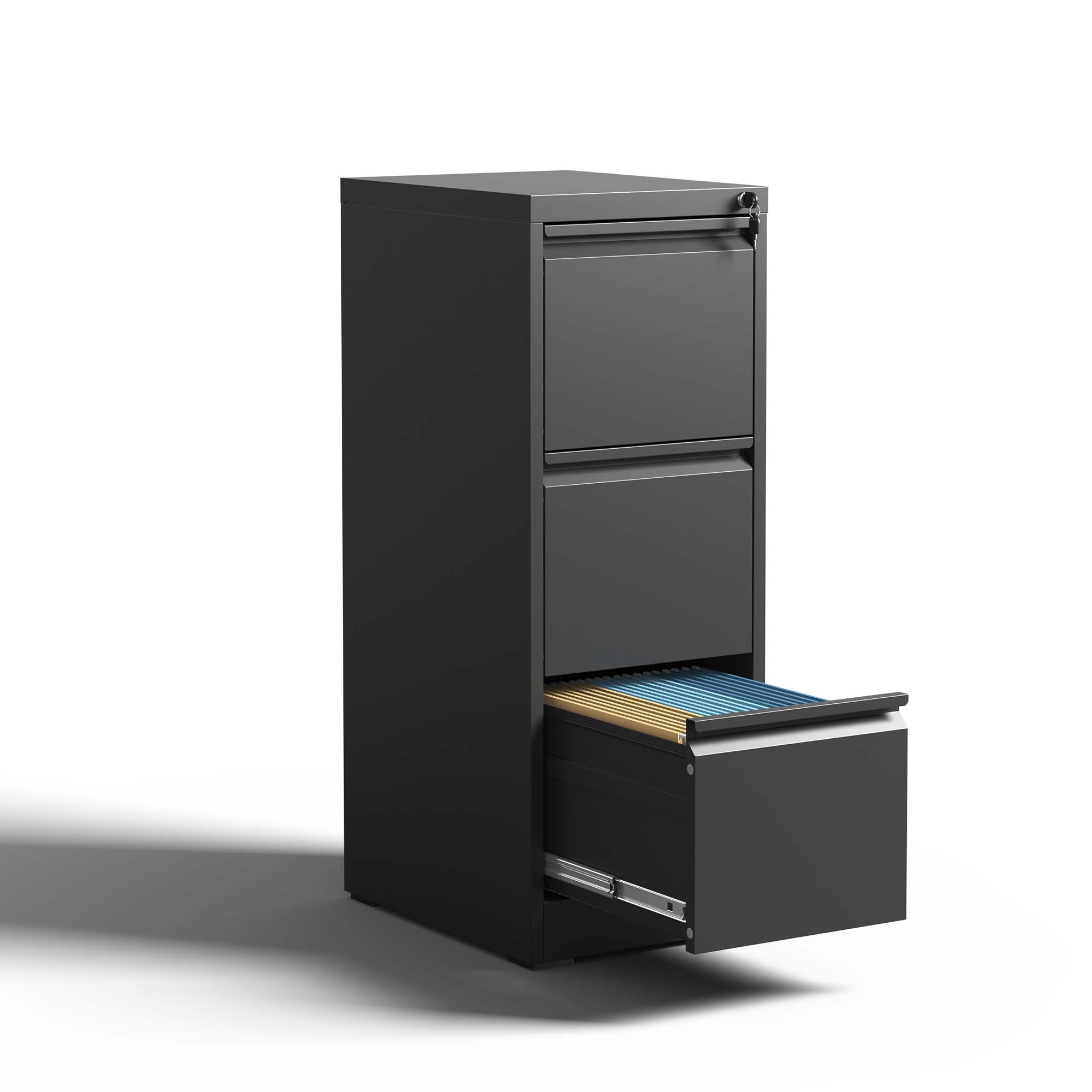
Maximized Load Capacity in Minimal Footprint
How vertical load-path engineering and high-gauge steel deliver rigidity per square inch
A narrow vertical cabinet achieves its impressive load-bearing capacity not through sheer mass, but through precision engineering that directs weight efficiently. The core principle is a direct, vertical load path: each shelf’s weight transfers straight down through reinforced side panels to the floor, minimizing torsional stress and lateral sway. This is fundamentally different from wider, lower enclosures where longer cross-members introduce bending moments that compromise stability.
High-gauge steel enables this rigidity within a compact footprint. Thick, cold-rolled steel—typically ASTM A1008 grade—for the cabinet’s vertical members resists deflection under heavy loads without requiring a deep, space-consuming frame. The result is exceptional strength density: a significant amount of stable storage capacity concentrated in a remarkably small floor area, often requiring less than half the footprint of conventional systems to handle an equivalent weight. This design philosophy directly addresses the challenge of storing heavy, dense items in facilities where every square foot is at a premium, turning spatial constraints into a managed resource rather than a limiting factor.
14-gauge vs. 16-gauge steel performance under 200-lb distributed loads in narrow vertical cabinet designs
The choice of steel gauge is a decisive factor in long-term performance. While both 14-gauge (≈0.075") and 16-gauge (≈0.060") steel are common, their structural behavior diverges sharply under load. Consider a standard 36-inch-wide shelf loaded with a 200-pound distributed load—a common benchmark for dense industrial storage.
| Performance Factor | 14-Gauge Steel Performance | 16-Gauge Steel Performance |
|---|---|---|
| Calculated Deflection | Significantly lower; maintains flatness under load, preventing items from shifting or rolling. | Noticeable deflection; shelf may develop a slight but permanent sag over time, especially at full capacity. |
| Practical Rigidity | Remains robust with minimal lateral movement, preserving the cabinet’s plumb alignment. | Increased lateral sway is possible as the thinner side panels flex more readily under transferred weight. |
| Safety Margin | Higher ultimate tensile strength provides a substantial buffer against unexpected overloads or impacts during loading. | A smaller safety margin means the shelf is operating much closer to its yield point, increasing the risk of catastrophic failure. |
This comparison underscores that opting for 14-gauge steel is not merely about marginal thickness—it delivers a structural foundation that fundamentally changes how the unit resists and manages heavy, distributed loads daily.
Material Integrity and Joint Strength for Long-Term Stability
Cold-rolled steel thickness and deflection control across 72-inch narrow vertical cabinet spans
Material integrity begins with the right steel specification. In a narrow vertical cabinet, cold-rolled steel must balance weight with the structural demand of a 72-inch unsupported span. Rigidity under load is governed by the moment of inertia—a geometric property that grows exponentially with thickness. Upgrading from 16-gauge (0.0598”) to 14-gauge (0.0747”) steel yields a 95% increase in stiffness before any additional forming. For a 150-lb distributed load centered on a 72-inch shelf, maximum deflection drops from 0.155 inches (16-gauge) to 0.080 inches (14-gauge)—well within the L/300 serviceability limit (0.240”) recommended for storage furniture. Yet the thinner gauge leaves virtually no safety margin for dynamic forces, such as a tool dropped onto a loaded shelf. Leading manufacturers therefore specify 14-gauge or thicker cold-rolled steel (often ASTM A1008 grade) for the cabinet body to maintain drawer and door alignment over a decade of daily use.
Welded corner joints: fatigue resistance advantages over bolted assemblies (per ASTM F2057-22)
The method of joining cabinet components determines how stress flows through the entire structure. A narrow vertical cabinet with welded corner joints behaves as a unified frame; a bolted assembly remains a collection of connected parts. Because weld metal shares the same yield strength as the parent steel (commonly 50 ksi), a continuous fillet weld creates a load path with no micro-movement under shear. In contrast, a bolted connection relies on friction—and once the service load exceeds the slip-critical threshold, the joint shifts, transferring load to the bolt shank in bearing. This cycle gradually elongates holes and loosens fasteners.
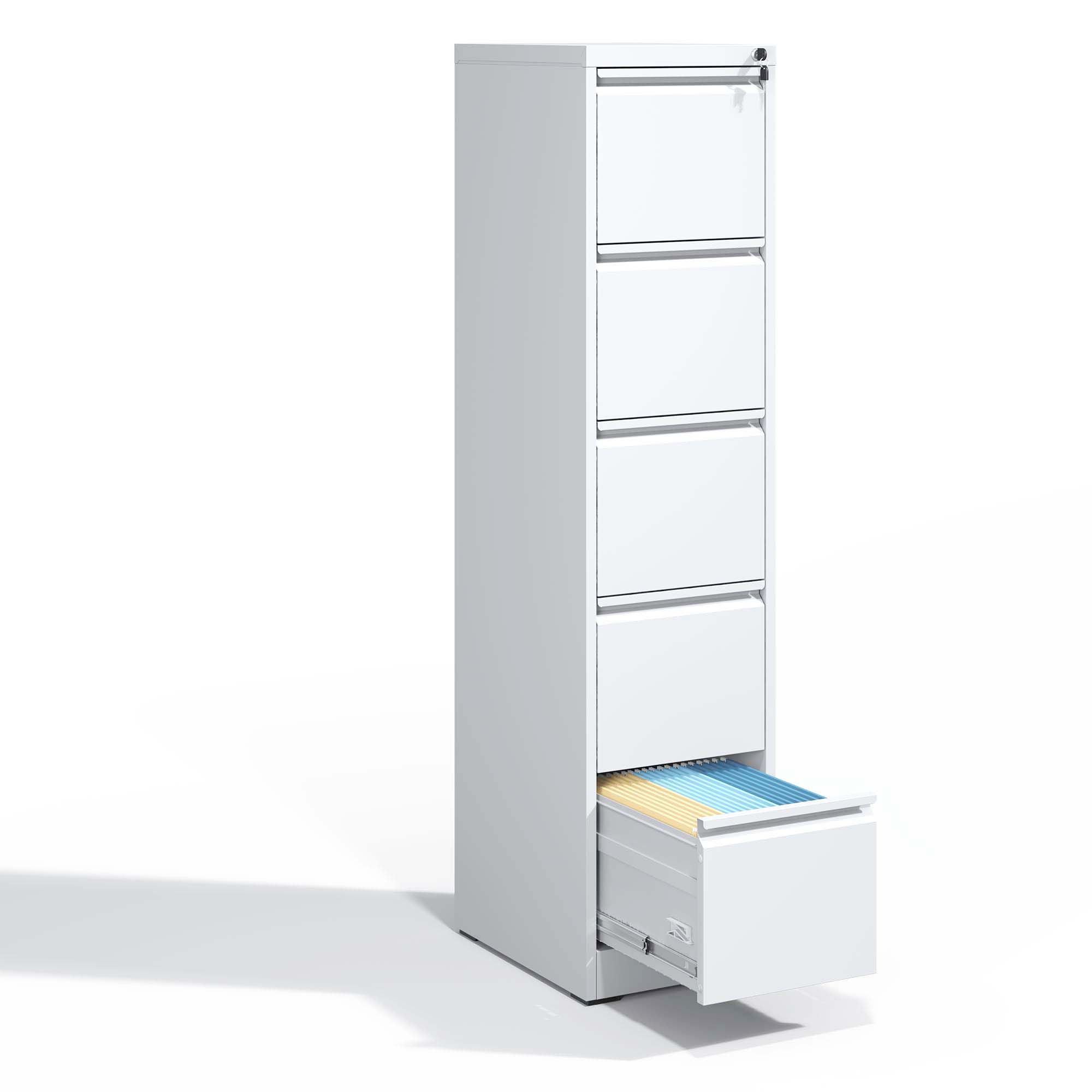
Testing under ANSI/BIFMA X5.9-2019—which informs ASTM F2057-22 safety requirements—confirms this divergence:
| Joint Type (ASTM A1008 Steel) | Initial Lateral Stiffness (lb/in) | Stiffness After 2,500 Load Cycles | Squeaking/Rattle Rating (SAE J2809) |
|---|---|---|---|
| Continuous Weld (GMAW) | 14,200 | 14,100 (−0.7 %) | 9.2/10 (Noise-Free) |
| 3-Bolt Flange (Grade 5) | 11,800 | 8,900 (−24.6 %) | 6.8/10 (Occasional Rattle) |
The welded assembly retains 99.3% of its original stiffness after simulated years of door openings and side-loading because the heat-affected zone does not introduce a slip plane. The bolted joint’s 24.6% stiffness loss correlates directly with audible rattles and measurable loss of racking resistance. For a floor-supported cabinet subject to daily vibration and occasional impact, this fatigue resistance prevents the gradual degradation that compromises both feel and safety.
Floor-Supported Mounting: The Optimal Load Transfer Strategy for Narrow Vertical Cabinets
When a narrow vertical cabinet sits directly on the floor, its weight and payloads transfer through the full cabinet base into the building slab—bypassing bolted wall anchors that can become stress concentrators. This vertical load path eliminates the bending moments that develop in wall-hung units, where the cabinet acts as a cantilever pulling against the wall. A floor-supported design transforms the floor into the primary bearing surface, keeping the center of gravity low and within the cabinet’s footprint. Without relying on stud strength or anchor pull-out ratings, the assembly achieves uniform compression across the base—an inherently more stable condition under heavy or uneven loads. For narrow vertical cabinets that must store dense items in tight spaces, this ground-based mounting strategy removes the single-point-failure risk of a wall connection while maintaining full-height rigidity.
Vertical Reinforcement Systems That Prevent Shelf Sag and Frame Distortion
Back-panel bracing and integrated stiffener channels: achieving 42% less sag (UL 962 validated)
A narrow vertical cabinet stores heavy items in a condensed footprint, which concentrates the bending moment on each shelf. The back panel acts as a structural shear plane, resisting the parallelogram distortion that occurs when a loaded frame begins to lean. Without this bracing, even a welded steel box will twist under unbalanced loads; the back panel transfers racking stress from the midpoint to the stiffer vertical corner posts. Integrated stiffener channels—formed or welded along the shelf’s underside—create a shallow truss that dramatically increases the section modulus without consuming usable headroom.
These two systems work in tandem: the back-panel bracing arrests global frame twist, and the stiffener channels prevent localized shelf buckling under point loads. Testing to UL 962—the benchmark for household and commercial furnishings—demonstrates that this combination achieves 42% less shelf deflection compared to flat, unbraced panels. The reduction translates directly to lower long-term material fatigue, preserving both alignment and load rating across thousands of open-and-close cycles. This validation assures operators that the unit maintains structural safety without compromise.
Engineered Anti-Tipping Safety Through Hardware Integration and Center-of-Gravity Control
A narrow vertical cabinet demands precise control of its center of gravity to counteract the inherent instability of a tall, compact footprint. The design lowers the effective mass centroid by positioning heavier stored items toward the base and integrating a weighted floor plate. This passive stability pairs with active hardware features: factory-installed wall-mount brackets and dual floor-anchor points create a rigid connection that halts forward rotation. Under a 50-pound horizontal pull test (ASTM F2057-22 protocol), the anchored structure maintains equilibrium without permanent deformation. For high-traffic environments, these redundant anti-tip measures transform a slim-profile cabinet into a fail-safe storage solution that protects both personnel and inventory.
FAQ
What is the primary advantage of vertical load path engineering in narrow cabinets?
The primary advantage of vertical load path engineering is the efficient transfer of weight directly down through reinforced side panels to the floor. This minimizes torsional stress and lateral sway, allowing for greater load capacity within a compact footprint.
Why is high-gauge steel better for narrow vertical cabinets?
High-gauge steel, like 14-gauge steel, provides superior rigidity and resistance to deflection under heavy loads compared to thinner gauges such as 16-gauge steel. It offers long-term durability and safety margin, reducing the risk of structural failure under high stress and dynamic loads.
How does cold-rolled steel improve the stability of a narrow vertical cabinet?
Cold-rolled steel ensures consistent material integrity and greater stiffness. For example, upgrading to 14-gauge steel nearly doubles stiffness compared to 16-gauge steel, significantly reducing deflection and keeping the cabinet stable under heavy distributed loads.
Why are welded corner joints preferred over bolted assemblies?
Welded corner joints behave as a unified frame and offer higher fatigue resistance compared to bolted assemblies, which are prone to loosening over time. Welded joints retain their stiffness and eliminate micro-movements, leading to better long-term stability and fewer maintenance requirements.
What role does back-panel bracing play in narrow vertical cabinets?
Back-panel bracing acts as a structural shear plane, preventing frame distortion and leaning under load. It transfers racking stress to stiffer corner posts, enhancing global frame stability in conjunction with integrated stiffener channels that reduce shelf sag.
How does floor-supported mounting improve cabinet stability?
Floor-supported mounting allows the cabinet’s weight and its contents to transfer directly into the building slab, avoiding stress on wall anchors. This design lowers the center of gravity and minimizes the risk of tipping or frame distortion.
Table of Contents
- Maximized Load Capacity in Minimal Footprint
- Material Integrity and Joint Strength for Long-Term Stability
- Floor-Supported Mounting: The Optimal Load Transfer Strategy for Narrow Vertical Cabinets
- Vertical Reinforcement Systems That Prevent Shelf Sag and Frame Distortion
- Engineered Anti-Tipping Safety Through Hardware Integration and Center-of-Gravity Control
-
FAQ
- What is the primary advantage of vertical load path engineering in narrow cabinets?
- Why is high-gauge steel better for narrow vertical cabinets?
- How does cold-rolled steel improve the stability of a narrow vertical cabinet?
- Why are welded corner joints preferred over bolted assemblies?
- What role does back-panel bracing play in narrow vertical cabinets?
- How does floor-supported mounting improve cabinet stability?