
 EN
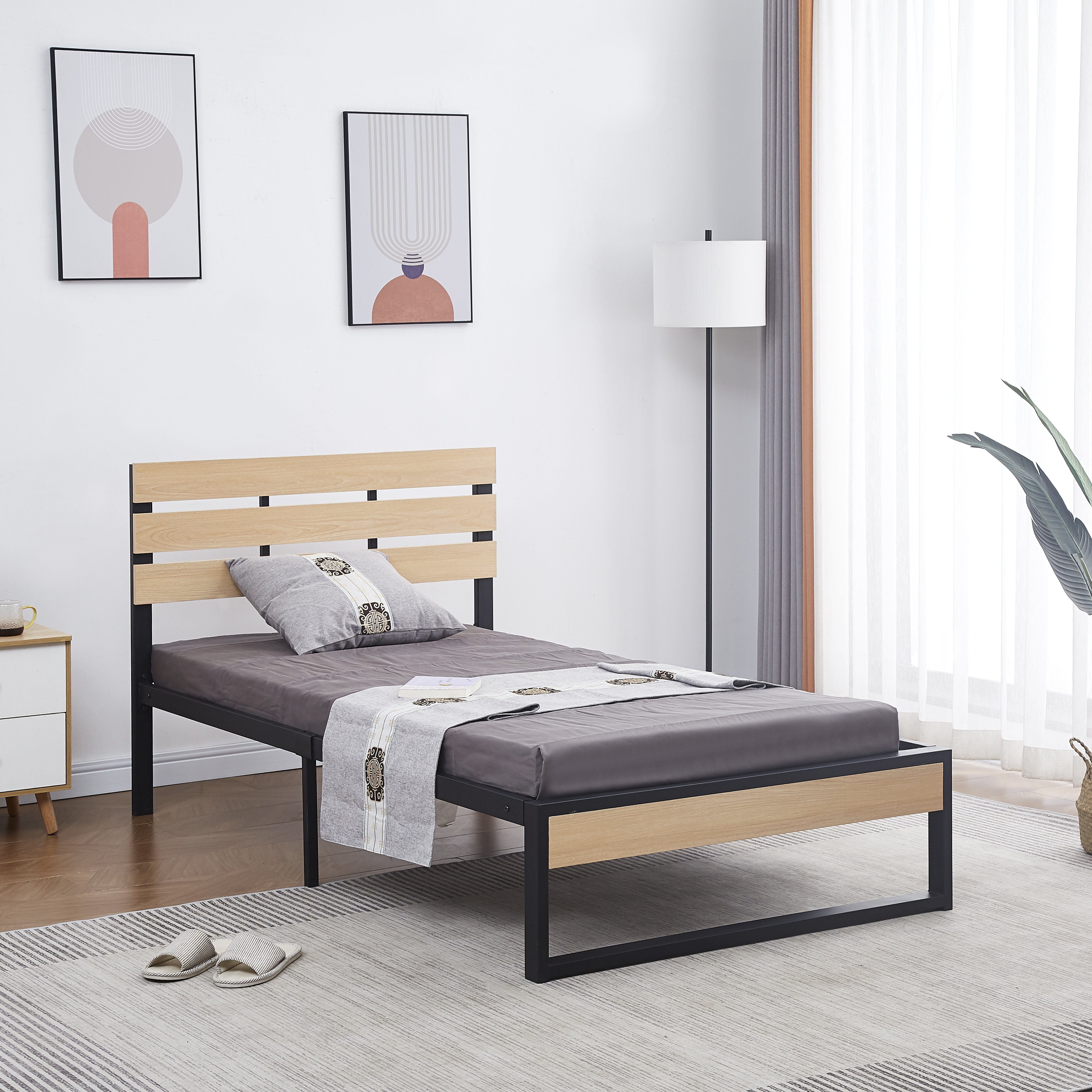
Unmatched Weight Capacity and Long-Term Durability
Supporting Up to 1,200 lbs: Engineering Behind the Load-Bearing Strength of a Single Metal Bed
A heavy-duty single metal bed achieves a 1,200 lb weight capacity through three core engineering decisions. First, the main side rails use thick-walled tubular steel—typically ASTM A500 Grade B—which resists bending under concentrated loads. Second, a center support beam or legs run head-to-foot, dividing the span and preventing slat flexing. Third, welded and bolted hybrid joints lock corners and cross members, minimizing movement that leads to fatigue. Under load, force transfers from the deck to vertical legs and then to wide floor glides, which distribute pressure evenly and protect hard surfaces.
Closely spaced metal slats—2 to 3 inches apart—provide continuous, sag-free mattress support, especially critical for memory foam and hybrid models. Unlike wood slats (prone to cracking at knots) or composite slats (susceptible to creep), metal maintains consistent rigidity. Engineers verify this performance with static load tests exceeding 450 kg (990+ lbs), ensuring a meaningful safety margin above real-world use—including edge sitting, movement, or temporary storage. This integrated load path keeps stress away from fasteners and prevents progressive deformation over time.
15+ Year Structural Lifespan: Why Powder-Coated Tubular Steel Outperforms Wood and Composites
Powder-coated tubular steel delivers a 15+ year structural lifespan by resisting the primary failure modes of wood and composites. Wood loses moisture, warps, splits, or attracts pests; composites soften in humidity and creep under sustained load. Tubular steel absorbs no moisture, retains dimensional stability, and withstands repeated stress without degradation. Its fused polymer powder coating acts as a durable barrier against oxygen and moisture—preventing red rust and edge corrosion. Industry-standard salt-spray testing (ASTM B117, 2022) requires 1,000+ hours of exposure with no significant rust formation. The coating also outperforms wet paint in scratch resistance, preserving aesthetics across dry and humid environments.
Steel’s high fatigue strength keeps joints tight over time, and bolted connections can be retightened during routine maintenance—a feature wood frames lack. This eliminates the hidden cost of replacing cracked particleboard, sagging wood slats, or warped composites. Fully recyclable at end of life, powder-coated tubular steel delivers long-term value: while wood and composites often show visible sag, creaking, or breakage within five to seven years, a quality single metal bed remains structurally stable and acoustically neutral for more than a decade.
Silent, Stable Performance Through Rigid Structural Design
Creak-Free Rigidity: How Bolted-Welded Hybrid Joints Enhance Frame Integrity
Silent stability comes from combining welded joints at primary load paths—where movement causes most squeaks—with torque-controlled bolts at secondary connections. Welding eliminates microscopic shifting in corners and center rails; bolts provide controlled clamping force across modular points, resisting the loosening common in wood and composite frames as temperature and humidity fluctuate. A 2023 comparative failure analysis found hybrid steel connections retained 98% of initial clamp load after 20,000 load cycles—versus over 50% loss in conventional wood joints. Because force transfers through continuous steel—not isolated screw holes—stress concentration around brackets is minimized. The result is a frame that stays acoustically neutral through repeated repositioning, mattress changes, or daily use.
Vibration Control via Optimized Cross-Bracing and Floor Contact Distribution
Lateral movement—not vertical load—is the leading cause of wobble and transferred vibration. Diagonal cross-bracing triangulates the base frame so horizontal forces (from tossing, edge sitting, or entering the bed) resolve as axial tension and compression in the braces, rather than bending in side rails. A 2024 structural dynamics review showed such bracing reduces lateral deflection by ~40% compared to unbraced tubular frames of equal weight. Equally important is floor contact: wide, non-slip pads spread reaction force over a larger area, preventing point loading on uneven floors. This distribution dampens high-frequency vibrations before they reach the sleeping surface, allowing motion to decay quickly without room resonance. The outcome is a stable, quiet platform—even under active movement.
Premium Material Science: ASTM-Grade Steel in Every Single Metal Bed
Wall Thickness, Yield Strength, and Tensile Performance of ASTM A500 Grade B Tubular Steel
Heavy-duty single metal beds rely on ASTM A500 Grade B cold-formed welded tubular steel—a material engineered to balance high strength with practical weight and manufacturability. Main rails typically use 16-gauge (1.5 mm) to 14-gauge (1.9 mm) wall thickness; high-stress zones like corner gussets and center supports may reach 2.0 mm to resist denting, local buckling, and weld-zone fatigue.
ASTM A500 Grade B specifies a minimum yield strength of 46 ksi (315 MPa) and tensile strength of 58 ksi (400 MPa). This means the steel returns elastically after loads well beyond normal use—and avoids sudden failure under overload. Compared with lower-grade furniture steel (often 30–36 ksi yield), Grade B provides roughly 25–35% greater elastic capacity at the same cross-section. The result is superior alignment retention, resistance to sag and twisting, and measurable structural superiority over thinner commercial steel, wood, or composite alternatives.
Space-Smart Structural Efficiency for Compact Living
A single metal bed maximizes usable space in compact rooms through its narrow profile and clean engineering. Standard twin dimensions (39" × 75") avoid bulky wooden headboards, footboards, and thick side rails. Vertical clearance under the deck commonly reaches 12–14 inches—enough for rolling bins, low-profile drawers, or vacuum bags instead of wasted dead space. This footprint suits studios, dormitories, guest rooms, and small bedrooms.
The load path is optimized into vertical legs and horizontal side rails—eliminating the need for wide corner posts or thick bed ends. Powder-coated tubular steel achieves high daily strength in a compact cross-section, supporting full mattress-and-occupant loads without the visual or physical bulk of wood or upholstered frames. Because the steel frame resists flex under stored weight, items slide smoothly beneath without catching—reducing reliance on extra wall shelves or floor cabinets.
Adaptable Assembly Without Sacrificing Structural Stability
Modular Reinforcement Points and Seamless Integration Options (e.g., Headboard or Under-Bed Storage)
Adaptability is built in—not added on. Heavy-duty single metal beds feature pre-welded brackets and self-locating slots at key reinforcement points, enabling secure attachment of headboards or under-bed storage modules without drilling new holes. Each connection is reinforced at the joint, so accessories add function—not weakness. Tolerance-controlled slot-and-tab alignment speeds assembly and prevents misalignment. And because attachments use bolted connections—not adhesives—components can be swapped, upgraded, or removed over time. This design preserves full structural rigidity while supporting evolving needs: changing room layouts, shifting storage demands, or updating headboard styles—all without compromising daily stability.
FAQ
What is the weight capacity for a heavy-duty single metal bed?
A heavy-duty single metal bed has a weight capacity of up to 1,200 lbs due to engineering features such as thick-walled tubular steel side rails, center support beams, and welded and bolted joints.
How long does a single metal bed last?
With powder-coated tubular steel construction, a single metal bed can provide a structural lifespan of 15+ years, far surpassing wood or composite beds in durability.
Are single metal beds noiseless?
Yes, single metal beds are designed for silent stability, utilizing bolted-welded hybrid joints and optimized cross-bracing to minimize creaking and vibrations.
Can single metal beds accommodate under-bed storage?
Absolutely. These beds commonly provide 12–14 inches of vertical clearance under the deck, making them ideal for storing bins, drawers, or other items in compact living spaces.
Are heavy-duty single metal beds environmentally friendly?
Yes, they are fully recyclable and avoid common issues like moisture absorption and pest damage found in wooden frames. Their durability also reduces waste over time.