
 EN
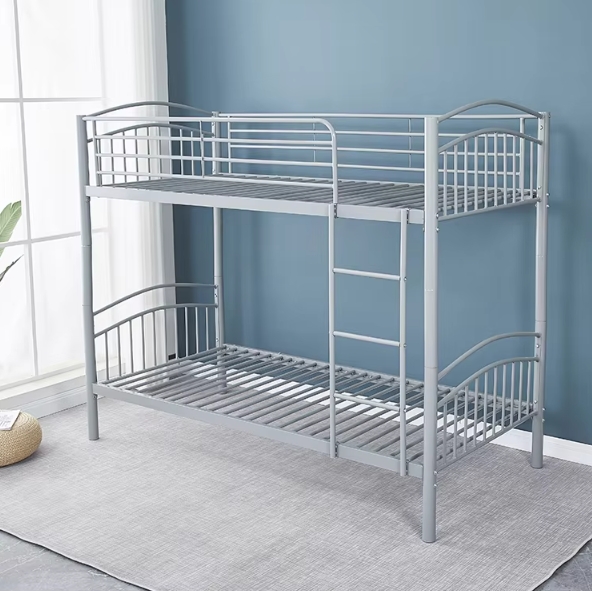
Why B2B Buyers Are Prioritizing Foldable Metal Beds
For B2B buyers, foldable metal beds have emerged as a practical, scalable alternative to fixed bed platforms—especially in space-constrained or rapidly deployable environments. Two interlocking drivers fuel this shift: surging demand from high-turnover sectors like hospitality and emergency response, and measurable engineering advantages—particularly the strength-to-weight efficiency of cold-rolled steel frames.
Rising Demand in Hospitality, Emergency Response, and Modular Housing
Procurement teams are increasingly specifying foldable metal beds across three high-growth commercial segments. Hospitality operators use them for overflow guest rooms, seasonal staff housing, and flexible dormitory configurations—replacing permanent bed platforms with adaptable, storage-efficient alternatives. Emergency response agencies rely on them for rapid deployment into shelters, field clinics, and disaster-relief units where speed and portability outweigh aesthetics. Modular housing developers integrate foldable frames to reduce furnished-unit weight, simplify onsite assembly, and lower logistics costs per unit.
A 2024 industry analysis projects the global foldable bed market to grow at a 4.5% compound annual growth rate (CAGR) through 2033—reaching $2.5 billion from $1.6 billion in 2023. Crucially, this growth is not driven by residential buyers alone: commercial procurement accounts for a substantial and growing share. Steel-based foldable designs support standardization across multi-site programs, reducing SKU complexity while meeting fluctuating occupancy needs. In time-sensitive applications—like pop-up shelters or seasonal lodging—deployment speed often carries equal or greater weight than unit cost, making consistent, durable metal frames a strategic advantage.
Engineering Benefits: Cold-Rolled Steel Frames for Durability and Portability
Cold-rolled steel delivers a superior balance of structural integrity and transport efficiency compared to wood, plastic, or hot-rolled alternatives. The cold-rolling process enhances dimensional precision and surface finish—enabling tighter weld tolerances and more reliable folding joints. That consistency directly translates to fewer field failures and lower warranty claims in volume deployments.
Metal beds are projected to represent 21.0% of total metal furniture revenue by 2025—a trend reflecting strong commercial preference for stable, long-life bedding in institutional and hospitality settings. Cold-rolled steel also resists moisture absorption, termites, and warping—critical for humid storage, temporary shelters, or mobile units transported via truck or trailer. When finished with a minimum 60 μm powder coating, frames gain robust scratch and corrosion resistance, extending service life across repeated folding, stacking, and transit cycles. Thinner wall profiles—enabled without compromising load capacity—further reduce shipped weight and per-unit freight expense.
Buyers should still verify documented performance: request third-party static load reports, impact test results, and clearly stated maximum user weight ratings (e.g., 150 kg, 200 kg). Never accept vague descriptors like “heavy duty” in place of numeric, test-backed evidence.
How to Evaluate Reliable Foldable Metal Bed Suppliers
Certification & Compliance: ISO 9001, EN 1725, and Load Capacity Documentation
Supplier evaluation begins with verifiable documentation—not marketing claims. Request current ISO 9001:2015 certification to confirm adherence to controlled processes for welding, assembly, and final inspection. For European markets or hospitality projects, EN 1725 compliance signals that the frame has undergone standardized safety, strength, and durability testing specific to beds.
Load capacity documentation must be equally rigorous: ask for third-party static load reports, impact test results, and explicit maximum user weight ratings. Credible suppliers will provide photos or videos of test setups—and specify whether testing was conducted at 150 kg, 200 kg, or higher. Avoid vendors who omit numeric benchmarks or use undefined terminology. Confirm certificates match the factory name on your quotation, and verify that critical subcomponents—including locking hinges and casters—are covered under the same quality management system.
Critical Quality Checks: Weld Integrity, Powder-Coating Thickness (≥60μm), and Fold Mechanism Lifespan
After reviewing documentation, physical inspection separates dependable suppliers from one-off performers. Weld integrity is foundational: joints at hinge points, cross braces, and leg mounts must show uniform, fully penetrated beads—free of cracks, porosity, or spatter. For high-volume orders, request macro-etch or sectioning reports to validate internal weld quality.
Powder-coating thickness must meet or exceed 60 μm on all visible surfaces and edges. Thinner coatings degrade rapidly in humid or high-contact environments. Use a calibrated gauge during pre-shipment inspection—and require salt-spray test evidence showing ≥72 hours without red rust formation.
For the fold mechanism, prioritize suppliers who document cycle testing: 5,000–10,000 open/close cycles is standard; 10,000+ is preferable for hospitality-grade durability. Look for replaceable bushings or reinforced pivot plates—indicators of thoughtful longevity design. Confirm the locking latch engages with audible or tactile feedback, and that the folded unit remains stable during simulated transport vibration. These three checks—weld quality, coating thickness, and mechanical cycle life—are stronger predictors of real-world reliability than price alone.
Optimizing Cost and Order Terms for Foldable Metal Bed Procurement
MOQ vs. Unit Cost Reality: When 500-Unit Orders Deliver Comparable Value to 1,000-Unit Batches
Many procurement teams assume larger MOQs automatically yield the lowest per-unit cost—but 2024 sourcing audits reveal a different reality. For standard cold-rolled steel foldable beds, shared setup costs—laser cutting, robotic welding fixture calibration, and powder-coating line changeovers—are largely amortized by the first 300–400 units. Beyond that threshold, material and labor dominate the cost structure, narrowing the price gap between 500- and 1,000-unit batches to just 3–5%.
That modest premium can be offset through tangible operational savings: reduced warehousing fees, lower inventory carrying costs, and faster cash conversion. In practice, two 500-unit releases against a 1,000-unit annual blanket order often deliver comparable landed cost—while improving forecast agility and mitigating overstock risk. Always request tiered pricing at 250, 500, and 1,000 units to map the supplier’s true cost curve before committing.
Logistics, Compliance, and Import Readiness for Foldable Metal Beds
Efficient logistics start with folded geometry. Before booking container space, confirm collapsed depth, stack height, and net unit weight—and factor in how folded steel frames behave under transit vibration. Require stretch film, edge protectors, and steel strapping for standard flat-pack loads. For ocean freight or high-humidity routes, upgrade to moisture-resistant cartons, desiccants, or export-grade wooden crating. A clear packaging tier reduces powder-coating abrasion and corrosion-related claims.
| Packaging tier | Typical scope | Best use |
|---|---|---|
| Standard | Stretch film, edge protectors, steel strapping | Regional freight and consolidated pallets |
| Premium | Wooden crating or reinforced cartons with desiccants | Ocean freight, long transit, or humid destinations |
Import compliance hinges on documentation discipline and upfront alignment. Before dispatch, agree with your supplier on Incoterms, inspection rights, and freight forwarder appointment. Core documents include:
- Commercial invoice with full product description
- Packing list detailing collapsed dimensions, gross/net weights, and package counts
- Bill of lading or airway bill
- Certificate of origin
- Load capacity or EN 1725 test reports—if required by the destination market
Test the full import workflow with a sample order before scaling to full containers. At the receiving warehouse, assess labeling clarity, barcode readability, strapping integrity, and pallet stability. For wood packaging, confirm whether ISPM-15 heat-treated pallets or crates are mandated. If reverse logistics may involve re-folding returned units, verify that original packaging retains structural protection after reuse. A clean first shipment is the most effective way to secure repeat, scalable B2B supply.
FAQ
Why are foldable metal beds popular among B2B buyers?
Foldable metal beds provide scalability, durability, and portability, making them ideal for industries like hospitality, emergency response, and modular housing. Their cold-rolled steel frames offer superior strength-to-weight ratios while minimizing storage and transport complexities.
What certifications should reliable foldable metal bed suppliers have?
Suppliers should possess ISO 9001:2015 certification and, in the case of European markets, EN 1725 compliance. These certifications ensure safety, strength, and durability standards are upheld.
What quality checks should buyers perform before purchasing foldable metal beds?
Essential checks include verifying weld integrity, ensuring powder-coating thickness of ≥60 μm, and validating fold mechanism lifespan through cycle testing. Supporting evidence like salt-spray tests and macro-etch reports should be requested.
Does ordering larger MOQs always result in better unit cost savings?
No, beyond 300-400 units, material and labor dominate costs, reducing price differences between 500- and 1,000-unit orders. Operational savings from smaller releases can offset modest premiums.
What are the best packaging practices for foldable metal beds?
For regional freight, standard packaging with stretch film and edge protectors suffices. For ocean freight or humid conditions, opt for premium packaging such as wooden crating or reinforced cartons with desiccants.
Table of Contents
- Why B2B Buyers Are Prioritizing Foldable Metal Beds
- How to Evaluate Reliable Foldable Metal Bed Suppliers
- Optimizing Cost and Order Terms for Foldable Metal Bed Procurement
- Logistics, Compliance, and Import Readiness for Foldable Metal Beds
-
FAQ
- Why are foldable metal beds popular among B2B buyers?
- What certifications should reliable foldable metal bed suppliers have?
- What quality checks should buyers perform before purchasing foldable metal beds?
- Does ordering larger MOQs always result in better unit cost savings?
- What are the best packaging practices for foldable metal beds?