
 EN
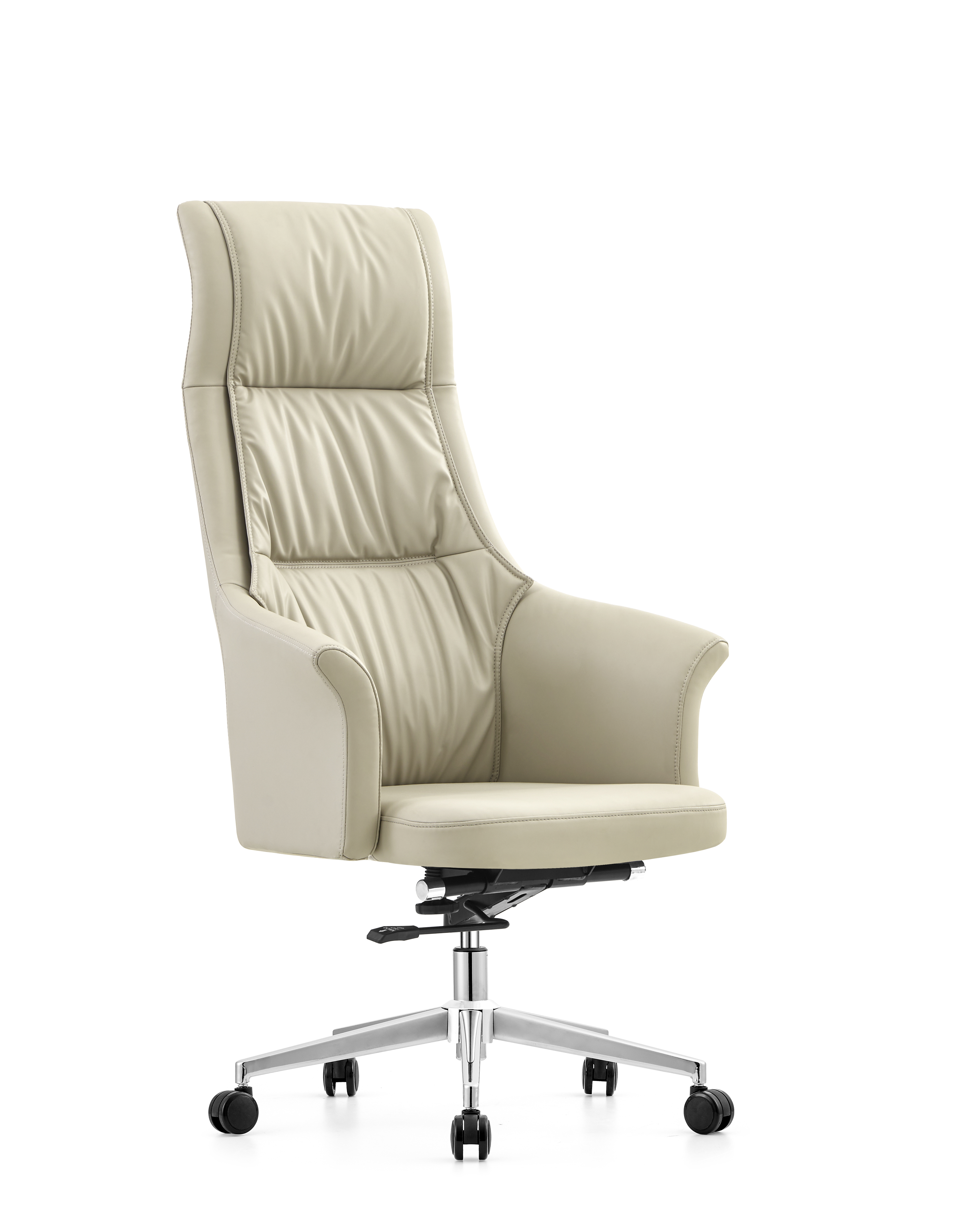
Engineered Weight Capacity: BIFMA Certification and Load-Distribution Design
BIFMA X5.1 & EN 1335 Standards for Heavy-Duty Swivel Office Chairs
ANSI/BIFMA X5.1-2017 and EN 1335 define how heavy-duty swivel office chairs prove their rated capacity under real-world stress—not through static load labels, but via rigorous cyclic fatigue testing. BIFMA X5.1 subjects chairs to over 100,000 cycles simulating sitting, swiveling, reclining, and standing; EN 1335 applies comparable durability benchmarks across European workplaces. These tests evaluate frame deformation, weld integrity, gas lift seal retention, and caster stem endurance. A chair that passes these dynamic load thresholds offers statistically lower risk of sudden failure in daily use.
Load-distribution design is equally critical: wide seat pans, reinforced understructures, and precise central column alignment spread force across the frame rather than concentrating it at vulnerable joints. This certification-based approach helps buyers distinguish verified structural capacity from inflated marketing claims. Independent compliance reports—available from accredited labs like UL or Intertek—document exact test setups and pass/fail limits, reinforcing trust in performance claims.
Class 4 Gas Lifts, Reinforced Frame Joints, and 350+ lb Structural Integrity
True 350+ lb capacity relies on an integrated structural chain—not just a wider seat. Class 4 gas lifts feature thicker cylinder walls and higher-pressure seals engineered specifically for sustained loads, ensuring smooth, controlled height adjustment without drift or collapse. Reinforced frame joints—such as welded steel inserts, corner gussets, and additional fasteners—prevent stress fractures where the seat pan meets the backrest and central column.
In operation, the gas lift absorbs vertical force, the frame resists torsional flex during swiveling, and the base distributes lateral weight evenly across five casters. Testing focuses on off-center seating and cyclic side-load scenarios—not just vertical compression—making these chairs significantly more resilient for users near the upper weight limit. This holistic engineering delivers lower fatigue risk and extended service life in intensive daily use.
Stable Swivel Foundation: Five-Point Aluminum Base Geometry and Material Performance
Base Diameter, Center-of-Gravity Alignment, and Tipping Resistance Metrics
Stability begins with geometry: a five-point aluminum base typically features a contact radius of 13.5–15 inches (34–38 cm) from center to caster. This enlarges the support polygon, helping keep the user’s center of gravity within the base—even when leaning forward, reclining, or reaching sideways. Industry tipping resistance metrics quantify the maximum lateral force or body shift before one caster lifts off the floor, tested across standard seat heights (16–21 inches).
Greater base diameter, combined with a low-mounted, centrally aligned gas lift, improves balance and reduces tipping risk. Reinforced hub connections minimize flex under dynamic loads, preserving caster alignment and responsiveness. A wider footprint also lowers floor pressure and caster drag—key advantages for larger users navigating tight workspaces or mixed flooring.
Aluminum Alloy vs. Nylon: Fatigue Resistance in High-Frequency Swivel Use
Forged 6061-T6 aluminum alloy bases outperform nylon in high-frequency swivel applications. With a tensile strength of ~310 MPa and a dense, uniform grain structure, aluminum resists crack initiation under repeated rotational stress. Nylon, while lighter and shock-absorbing, is prone to creep under sustained weight and heat—gradually losing dimensional stability and caster alignment over time.
For 350+ lb use, aluminum provides a critical fatigue margin: it maintains hub integrity and rotational precision after thousands of swivel cycles. Its superior stiffness also ensures even stress transfer across the hub, reducing long-term loosening and wobble—essential for both safety and longevity.
Precision Swivel Mechanism: Bearing Quality, Sealing, and Frame Integration
Sealed Ball Bearings vs. Open Bushings for Long-Term Swivel Office Chair Reliability
The swivel mechanism defines both daily usability and long-term durability. Sealed ball bearings deliver measurable advantages over open bushings in heavy-duty chairs: low-friction rotation, contamination resistance, and consistent performance across tens of thousands of 360-degree turns. Integrated rubber or metal seals block dust, moisture, and debris from entering the bearing race—preserving smoothness and preventing premature wear.
Open bushings rely on direct surface contact and degrade faster under lateral loading or environmental exposure. Frame integration further amplifies reliability: precision-machined bearing seats and tight tolerances eliminate play and reduce stress concentrations that cause wobble or binding. For sustained 350+ lb use, sealed bearings paired with robust frame alignment yield quieter, more predictable rotation—and fewer maintenance interventions over time.
Integrated Seat System: Dense Foam, Reinforced Pan, and Adjustable Structural Support
High-Density Small-Cell Foam (≥2.8 PCF) and Its Role in Sustained Postural Support
Support doesn’t fade when the seat uses high-density small-cell foam rated at 2.8 PCF or higher. Unlike standard open-cell foam, this denser material compresses less under repeated load—maintaining cushion resilience beneath the sit bones and preventing premature bottoming out. A rigid, reinforced seat pan (often steel-reinforced polypropylene or molded fiberglass) works in tandem with the foam to prevent sagging and preserve structural integrity.
Adjustable structural support—including seat depth and tilt—allows users to fine-tune pelvic alignment and thigh support. That combination sustains neutral spine posture, minimizes pressure buildup, and supports healthy circulation during extended seated tasks. The result is a durable, responsive platform that retains both comfort and biomechanical function over years of daily use.
Heavy-Duty Caster Engineering: Floor Compatibility, Roll Control, and Lateral Load Handling
Floor surface directly affects caster performance: hardwood and laminate offer low rolling resistance, while carpet demands greater wheel contact area and torque to move smoothly. Caster geometry must also manage lateral forces generated during frequent swiveling—without damaging floors or compromising pivot stability.
Dual-Wheel Nylon Casters: Optimizing Stability, Floor Protection, and Swivel Office Chair Mobility
Dual-wheel nylon casters distribute vertical load across two contact points instead of one—reducing point pressure on vinyl, tile, and hardwood. The twin-wheel configuration creates a wider support track during swiveling, enhancing pivot-axis stability and minimizing side drift. Nylon tread resists compression set, maintaining roundness and roll consistency—even after long stationary periods.
On low-pile carpet, the larger effective rolling diameter helps the chair glide over fibers rather than sink into them. The outer wheel pair engages during lateral shifts, improving control and protecting floor finishes. Because the dual-wheel assembly spreads lateral shear forces across the stem and housing—not concentrating them at a single point—it enhances caster longevity and floor compatibility. Nylon wheels also avoid scratching hardwood or ceramic tile under normal use. For carpeted offices, this design reduces start-up force and indentation marks—delivering smoother, quieter, and more predictable mobility across mixed flooring types.
FAQ
What is BIFMA certification?
BIFMA certification is a standard that ensures office furniture, including chairs, meet rigorous safety and performance criteria through cyclic fatigue tests that simulate real-world usage conditions.
Why are Class 4 gas lifts crucial for heavy-duty chairs?
Class 4 gas lifts feature thicker walls and high-pressure seals, making them suitable for sustained loads of 350+ lbs, while ensuring stable height adjustment and reducing the risk of collapse.
What is the advantage of a five-point aluminum base in office chairs?
A five-point aluminum base enhances stability by enlarging the support area, reducing tipping risks, and providing better balance during leaning or reaching movements.
Why is high-density small-cell foam essential for postural support?
High-density small-cell foam resists compression under repeated loads, maintaining cushion resilience and promoting ergonomic posture for long-term seated support.
How do dual-wheel nylon casters improve chair mobility?
Dual-wheel nylon casters distribute weight evenly across two points, enhancing stability, reducing floor damage, and ensuring smooth movement across different surfaces.
Table of Contents
- Engineered Weight Capacity: BIFMA Certification and Load-Distribution Design
- Stable Swivel Foundation: Five-Point Aluminum Base Geometry and Material Performance
- Precision Swivel Mechanism: Bearing Quality, Sealing, and Frame Integration
- Integrated Seat System: Dense Foam, Reinforced Pan, and Adjustable Structural Support
- Heavy-Duty Caster Engineering: Floor Compatibility, Roll Control, and Lateral Load Handling
- FAQ