
 EN
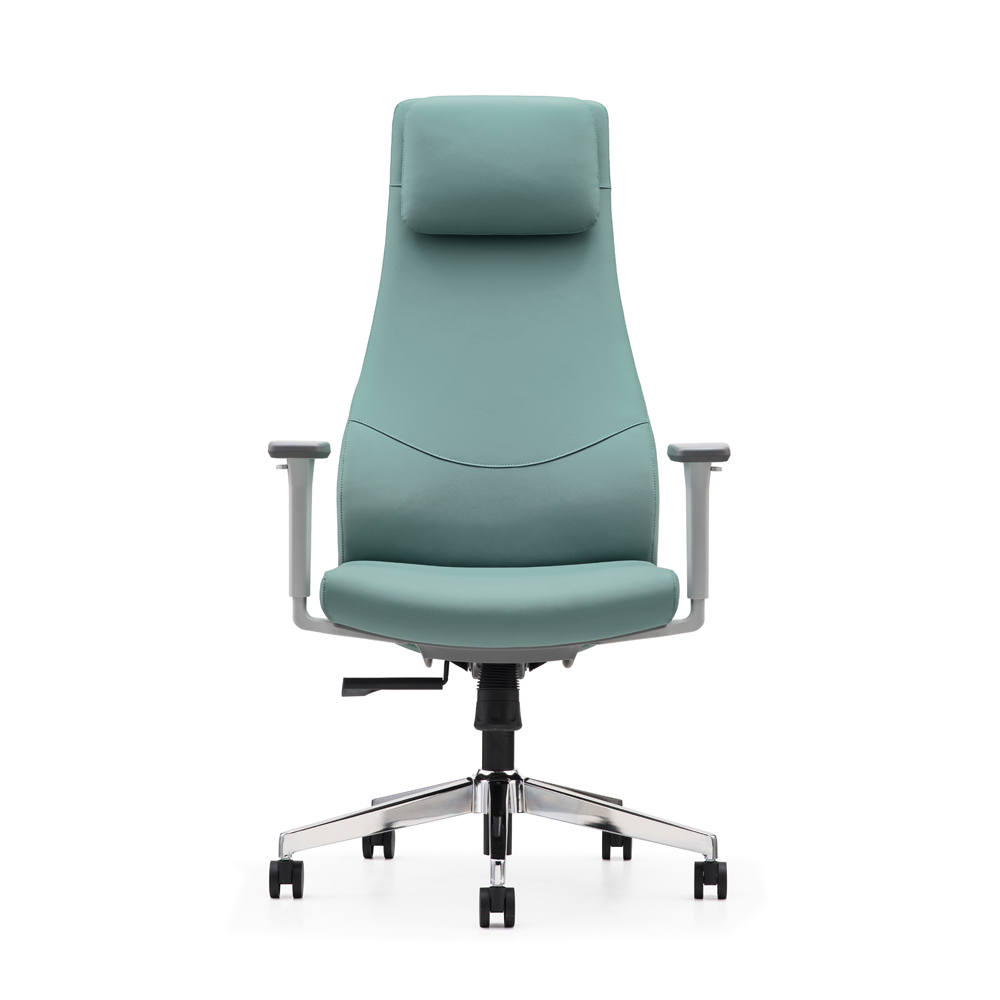
Steel Base Performance: Material Selection, Certification, and Real-World Durability
For procurement teams evaluating a swivel office chair, the steel base is the primary load path for daily use and occasional overloads. Material choice, manufacturing method, and compliance testing directly determine whether a chair remains stable after 400 lb static loading and years of movement.
Cold-Rolled vs. Cast Steel Bases: Load Capacity, ANSI/BIFMA X5.1 Compliance, and 400 lb Static Load Testing
Under ANSI/BIFMA X5.1, office chair bases are evaluated for static load performance—many B2B specifications add a 400 lb static load test as a pass/fail gate to verify no cracks, fractures, or permanent set beyond tight limits. Cold-rolled steel bases, formed from sheet or bar stock with consistent grain structure, typically achieve yield strengths of 350–450 MPa and pass this test with minimal deflection. Cast steel bases, made by pouring molten steel into molds, often display lower yield strength (200–300 MPa) and higher porosity, which can lead to inconsistent load distribution and hidden stress risers.
A 2023 independent laboratory comparison of 120 base samples found that cold-rolled bases recorded an average permanent set of 0.12 mm after 400 lb loading, whereas cast steel bases averaged 0.48 mm—with three samples showing visible micro-cracking.
| Criterion | Cold-Rolled Steel Base | Cast Steel Base |
|---|---|---|
| Typical yield strength | 350–450 MPa | 200–300 MPa |
| 400 lb static load permanent set | ≤0.15 mm | 0.4–0.8 mm |
| Internal porosity risk | Low | Moderate to high |
| ANSI/BIFMA X5.1 pass consistency | High | Variable |
Because users may shift weight abruptly, procurement teams should specify cold-rolled steel bases for 24/7 or multi-shift applications unless cast steel is validated with radiographic inspection.
Beyond Tensile Strength: What 5-Year Accelerated Wear Testing Reveals About Lifecycle Reliability
Tensile strength alone does not predict long-term performance. Five-year accelerated wear tests simulate 40,000 swivel cycles, 100,000 caster rolling cycles, and thermal cycling from 32°F to 104°F. In a 2024 lifecycle benchmark, cold-rolled steel bases showed less than 3% loss in powder-coat adhesion and no measurable fatigue crack initiation after 40,000 cycles. Cast steel bases exhibited localized corrosion at machining marks and a 7% higher rate of caster stem loosening. These results matter because base failure typically occurs not from tensile overload but from fatigue, coating breakdown, or weld degradation. Procurement specifications should therefore require accelerated 5-year wear test reports, salt-spray ratings of at least 500 hours, and evidence of no crack propagation after cyclic loading—ensuring the base remains safe and serviceable beyond the warranty period.
Ergonomic Engineering for the swivel office chair: Adjustability, Anthropometrics, and User-Centric Design
ISO 11226 & ANSI/HFES 100 Alignment: Seat Depth, Lumbar Support Range, and Backrest Contour Precision
ISO 11226 frames ergonomic risk as postural deviation, setting upper limits for trunk flexion, extension, and lateral bending during prolonged computer work. A well-engineered swivel office chair therefore pairs a sliding seat pan with a supporting backrest that preserves lumbar curve without enforcing a fixed spine angle. ANSI/HFES 100-2007 adds workstation-level fit ranges: seat depth must avoid popliteal compression—leaving a two-to-three-finger gap behind the knee; lumbar height must travel vertically between the L1 and L5 vertebrae; and lumbar depth should adjust 10–15 mm to mirror individual lordosis variation.
Procurement teams should reject fixed-geometry units for mixed workforces. Specify seat-depth travel of at least 8–10 cm and lumbar height travel of 10–12 cm. Backrest contour precision matters more than foam thickness—a contoured pad with an apex at the L3 level lowers localized pressure more effectively than a flat padded shell. Validation should include 5th-percentile female and 95th-percentile male fit trials—not just average-height users. A seat-depth range of 38–46 cm covers most adults; confirm that range holds while the backrest reclines.
The 12-Point Adjustability Matrix: Why True Customization Drives Productivity and Reduces Workplace Injury Claims
True customization comes from a 12-point adjustability matrix: seat height, seat depth, seat angle, backrest height, lumbar height, lumbar depth, backrest tilt, tilt tension, armrest height, armrest width, armrest depth, and headrest angle. Procurement teams should verify each control moves independently, locks firmly, and holds position under repeated cycles. When every point is adjustable, the chair adapts to typing, reading, and calls instead of forcing one static posture—reducing sitting-related fatigue and lowering the probability of back, neck, and shoulder strain.
Musculoskeletal disorders account for roughly 30% of lost-time injury cases (U.S. Bureau of Labor Statistics, 2022). A chair that cannot be tuned to the user becomes a direct injury-cost driver. A 12-point unit also shortens onboarding: workers need little external help to fine-tune fit. In multi-shift or hot-desking settings, saved reset time compounds into measurable operational value. Avoid models labeled “ergonomic” with only two or three controls—they cannot span 5th-to-95th percentile users.
B2B Sourcing Decision Framework: Warranty, TCO, and Commercial Lifecycle Value
A procurement decision for a steel swivel office chair should never rest on invoice price alone. Total Cost of Ownership (TCO) captures acquisition, energy, maintenance, downtime, and end-of-life costs over the asset’s service life. Leading B2B teams annualize TCO by dividing total lifecycle cost by expected service years—making it easier to compare chairs with different warranty lengths and repair profiles. For example, a chair with a 10-year warranty and modular cylinder replacement may show a lower annualized TCO than a cheaper chair requiring full-base replacement after five years.
Warranty structure is a commercial lifecycle lever. Buyers should ask whether the warranty covers the steel base, pneumatic lift, casters, and upholstery separately—and whether on-site service or parts-only replacement applies. A strong warranty reduces unplanned downtime and administrative burden. Procurement teams can request extended warranties, bundled preventive service, and uptime clauses to shift repair risk to the supplier. According to a 2023 TCO procurement benchmark, teams that pair lifecycle cost formulas with sensitivity tests on energy and labor rates report double-digit savings over three years.
End-of-life value also matters. A swivel office chair with a recyclable steel base and replaceable components often retains residual value and lowers disposal cost. Scoring quality, reliability, environmental impact, and compliance alongside TCO gives an evidence-based sourcing choice. Use a simple weighted scorecard with three to five criteria—and avoid final decisions based solely on upfront cost.
Sustainability in Steel swivel office chair Manufacturing: Carbon Footprint, Certifications, and Circular Potential
Embodied Carbon (42–68 kg CO₂e/unit) and CarbonNeutral® Pathways for Procurement Teams
Procurement teams evaluating a steel swivel office chair should treat embodied carbon as a hard specification, not a sustainability slogan. Independent lifecycle assessments generally place unit-level emissions between 42 and 68 kg CO₂e, with the steel base, gas lift, and mechanism typically accounting for the largest share. Leading manufacturers have reduced embodied carbon by roughly 35% through recycled polymers, curbside-recycled content, and redesigned component sets—without raising unit cost or sacrificing ANSI/BIFMA performance. Some suppliers now offer CarbonNeutral® product certification, which covers the chair’s entire lifecycle through verified offsets.
For B2B buyers, this shifts the decision from sticker price to carbon-adjusted total cost of ownership. Request third-party verified Environmental Product Declarations (EPDs) and confirm whether the CarbonNeutral® claim applies to the complete chair or only selected subassemblies. In multi-year contracts, a 42–68 kg CO₂e range per unit can translate into hundreds of tonnes of Scope 3 emissions across a large office rollout—making procurement the fastest lever for measurable ESG progress.
FAQ
What is the main difference between cold-rolled and cast steel bases?
Cold-rolled steel bases typically have higher yield strength (350–450 MPa) and lower internal porosity compared to cast steel bases (200–300 MPa), making them more consistent and durable under static load testing.
Why should procurement teams consider accelerated wear testing?
Accelerated wear testing provides insights into long-term reliability, simulating five years of use, such as swivel cycles, caster rolling cycles, and thermal cycling. It ensures the chair remains safe and serviceable beyond its warranty period.
How does adjustability impact workplace ergonomics?
Adjustability reduces fatigue and musculoskeletal injury risks. A chair with a 12-point adjustability matrix adapts to a wide range of users and tasks, promoting comfort and productivity.
What is Total Cost of Ownership (TCO) for swivel office chairs?
TCO captures all lifecycle costs, including acquisition, maintenance, downtime, and end-of-life expenses, enabling procurement teams to make evidence-based decisions.
What is the importance of carbon footprint in B2B chair procurement?
Evaluating carbon footprint helps organizations align sustainability goals with procurement strategies. Chairs with lower embodied carbon and certifications like CarbonNeutral® reduce Scope 3 emissions and contribute to ESG progress.
Table of Contents
- Steel Base Performance: Material Selection, Certification, and Real-World Durability
- Ergonomic Engineering for the swivel office chair: Adjustability, Anthropometrics, and User-Centric Design
- B2B Sourcing Decision Framework: Warranty, TCO, and Commercial Lifecycle Value
- Sustainability in Steel swivel office chair Manufacturing: Carbon Footprint, Certifications, and Circular Potential
-
FAQ
- What is the main difference between cold-rolled and cast steel bases?
- Why should procurement teams consider accelerated wear testing?
- How does adjustability impact workplace ergonomics?
- What is Total Cost of Ownership (TCO) for swivel office chairs?
- What is the importance of carbon footprint in B2B chair procurement?