
 EN
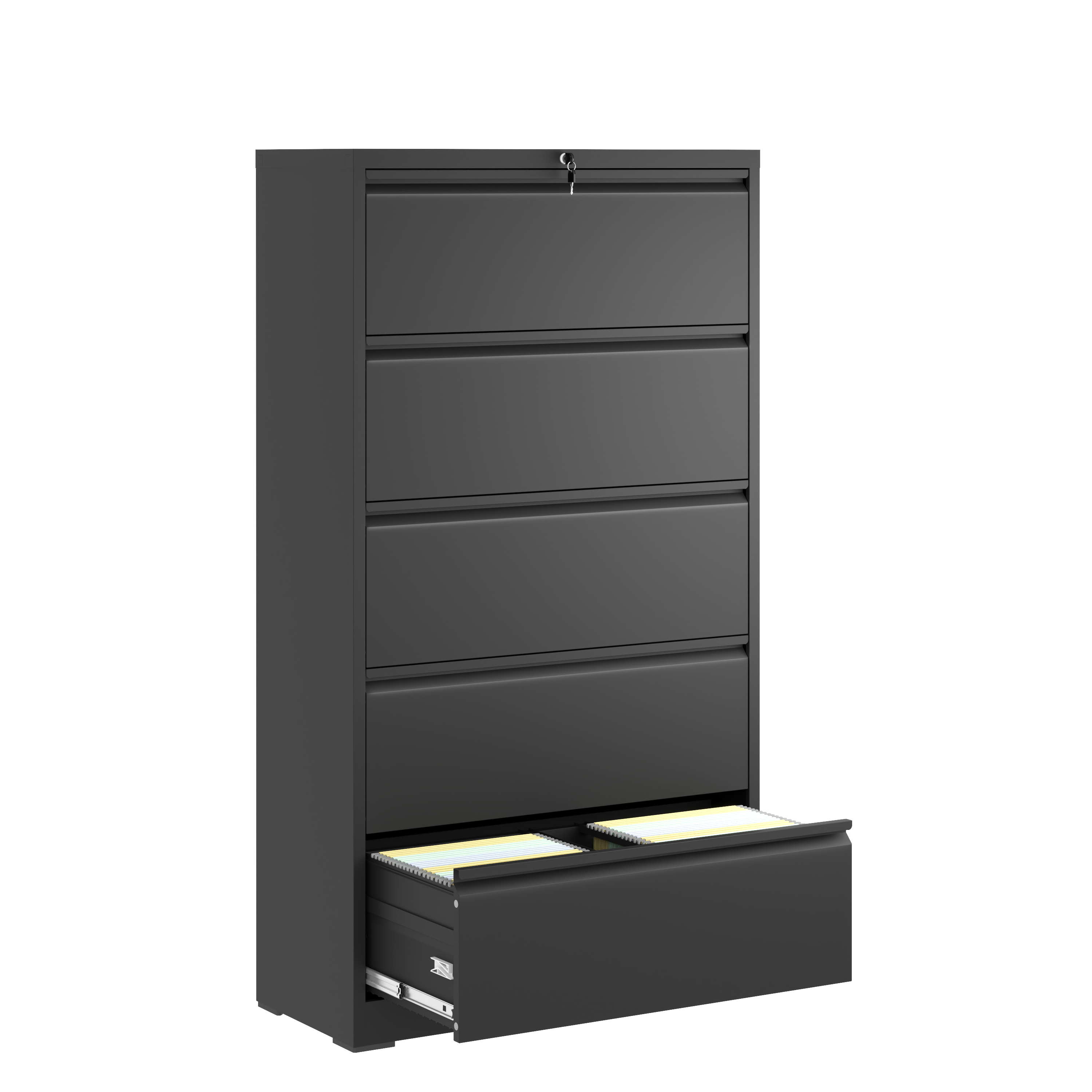
Low Center of Gravity and Anti-Tip Stability for Tall Vertical Cabinets
A heavy-duty tall vertical cabinet gains stability from a low center of gravity—not just base weight. The three design layers below explain how height-to-base ratio, anchoring compatibility, and test validation work together.
Physics of stability: Height-to-base ratio, mass distribution, and resistance to toppling
Stability in tall vertical cabinets hinges on two interrelated factors: height-to-base ratio and vertical mass distribution. A lower center of gravity increases resistance to tipping because the overturning moment must exceed the restoring moment generated by the cabinet’s weight acting through its base footprint. For example, a 78-inch-high unit with a 24-inch base depth has a height-to-base ratio of ~3.25:1—manageable only if the heaviest loads occupy the lower third of the cabinet. Moving a 100-lb load from 60 inches to 12 inches above the floor reduces its overturning moment arm by 80 percent. Mass distribution matters more than total weight: a lightly loaded cabinet with dense objects at the top can tip more easily than a heavily loaded one weighted toward the base. To optimize this, heavy-duty designs place fixed shelves low, incorporate dense steel base plates, and reserve upper zones for lighter items. This layout preserves the effective stability envelope during door opening, drawer extension, and caster movement.
Integrated anti-tip systems and universal wall-anchoring compatibility (studs, concrete, masonry)
Integrated anti-tip systems reduce reliance on operator discipline. Most heavy-duty tall vertical cabinets include a rear anti-tip bracket, steel safety cable, or side-mounted tether—each anchored to the cabinet frame at multiple structural points. Wall anchoring must match substrate type: contractors commonly install into wood studs, poured concrete, or masonry block. Use lag screws for wood studs, wedge anchors for concrete, and sleeve anchors or epoxy-set anchors for hollow masonry. A universal bracket accommodates all three anchor patterns, eliminating field drilling at awkward angles. Anchor points should be within 12 inches of the cabinet top to minimize leverage—and some models add floor anchors for a four-point tie-down. Cabinets with heavy drawers or sliding shelves require anchoring even when stationary, converting the wall into an active part of the overturning resistance system.
| Wall substrate | Recommended anchor | Typical cabinet bracket requirement |
|---|---|---|
| Wood stud | 5/16 in lag screw | Stud finder, pre-drill |
| Poured concrete | 3/8 in wedge anchor | Hammer drill, embed 2.5 in |
| Hollow masonry | Sleeve anchor or epoxy | Reinforcement plate |
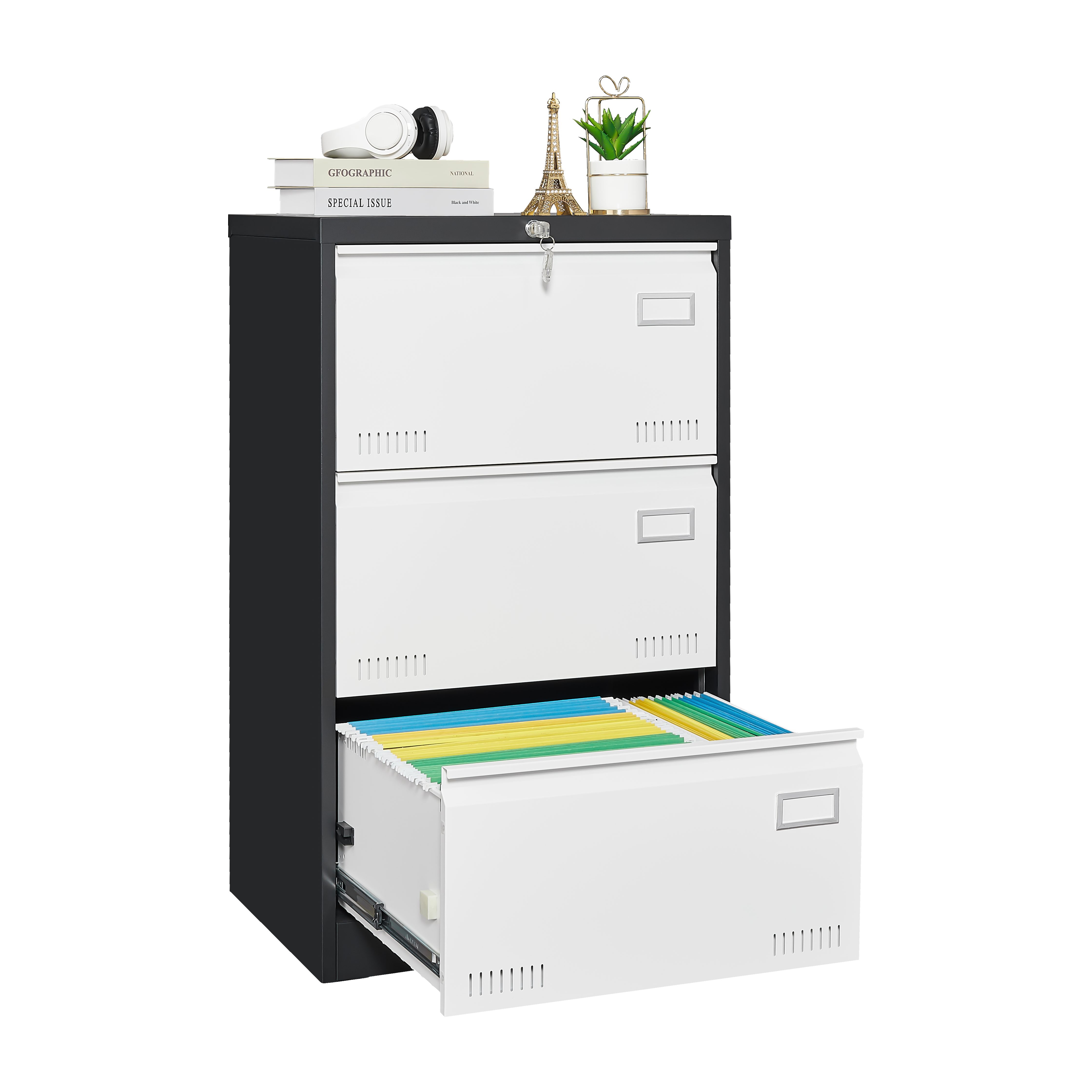
Seismic and racking performance: UL 962 and ANSI/BHMA A156.7 test validation
Racking—lateral deformation that pulls shelves away from corner posts—is mitigated through welded gussets, full-height rear panels, and continuous hinge channels. UL 962 evaluates tip-over resistance under horizontal loading with doors and drawers open; ANSI/BHMA A156.7 validates structural integrity and hardware endurance across repeated side-load cycles. In seismic zones, manufacturers often pursue ICC-ES AC156 certification, which subjects loaded cabinets to tri-axial shaking while monitoring for permanent deformation, latch failure, or loss of upright position. These validations are critical in schools, laboratories, and industrial facilities where cabinets face accidental impacts, moving equipment, or building sway. Specifiers should request test reports for the exact model and load configuration—not generic line art—to ensure real-world performance.
Engineered Load-Bearing Capacity and Shelf Modularity in Tall Vertical Cabinets
A tall vertical cabinet is evaluated not by one load figure but by three distinct ratings: static, dynamic, and rolling. Static capacity reflects stationary shelf weight; dynamic load accounts for forklift bumps and inventory shifting; rolling load measures safe movement on casters. Together, they determine whether a single cabinet meets the demands of both lab precision and warehouse durability.
Static, dynamic, and rolling load ratings — practical implications for labs and warehouses
Static rating is only the baseline. A cabinet rated for 1,200 lb per shelf at rest may safely hold lab instruments—but forklift contact or sudden stops multiply stress. Engineers apply dynamic multipliers: typically 1.25 for rolling carts and 1.5 near forklift traffic. Rolling load ratings are inherently lower than static ones due to lateral racking and caster flex. Labs storing centrifuge rotors or chemical drums routinely derate shelves by 20–25% when cabinets move regularly. Warehouses prioritize welded frames and bolted connections to withstand repeated dynamic loading. Front-edge load concentration remains a common failure point, making reinforced shelf lips and flanged profiles standard in high-use environments. At 500+ lbs per shelf, deflection limits below L/200 are often specified to prevent visible sag and preserve long-term alignment.
Reinforced shelf support systems: Cam-lock vs. bolted brackets at 500+ lbs per shelf
Shelf support type directly affects long-term capacity at 500+ lbs per shelf. Cam-lock hardware enables tool-free height adjustment in 2-inch increments—a benefit for labs requiring frequent reconfiguration. However, cam-lock joints can loosen under repeated dynamic loads. Bolted brackets create a positive mechanical clamp, better suited to fixed warehouse layouts operating near maximum capacity. Flat sheet-metal shelves bend at the front edge; rolled or flanged lips add torsional stiffness and resist local deformation when heavy tools slide across. Crucially, shelf clips must engage the full slot depth—not rest on the lip—as partial engagement is a leading cause of collapse under heavy loads.
| Factor | Cam-lock | Bolted brackets |
|---|---|---|
| Adjustment | Tool-free, 2-inch increments | Tools needed |
| Vibration resistance | Moderate | High |
| 500+ lb shelf retention | Can loosen over time | Positive lock |
| Best use | Labs with frequent reconfiguration | Warehouses with fixed heavy loads |
Industrial-Grade Construction: Steel Gauge, Welded Joints, and Corner Post Design
A heavy-duty tall vertical cabinet begins with frame rigidity—not shelf count. Look for 12-gauge steel (0.1046 in / 2.66 mm) in corner posts, base rails, top caps, and full-height back panels, paired with 14-gauge (0.0747 in / 1.90 mm) side panels and door frames. This combination resists twisting and racking forces experienced during loading, rolling, or seismic movement. Cabinets built from 18- or 20-gauge steel may cost less but often flex visibly under 200-lb shelf loads, accelerating wear on hinges and door latches.
Welded joints define structural integrity. Continuous fillet welds along front and rear corner post seams form a rigid box frame that resists vibration-induced loosening. Bolted or spot-welded alternatives can develop play after repeated movement—eroding anti-tip stability over time. Fabricators adhering to AWS D1.3 (2018) inspect fillet size, undercut, and porosity on structural welds before powder coating—a reliable benchmark when evaluating industrial-grade construction.
| Steel Gauge | Thickness | Typical Use in the Cabinet |
|---|---|---|
| 12 gauge | 0.1046 in (2.66 mm) | Corner posts, base frame, top cap, full-height back panel |
| 14 gauge | 0.0747 in (1.90 mm) | Side panels, adjustable shelf supports, door frames |
| 16 gauge | 0.0598 in (1.52 mm) | Door skins, non-structural covers, internal dividers |
Finally, continuous corner post design controls vertical load path. Full-height formed C-channels or rectangular tubes run unbroken from base plate to top cap, reinforced with welded gussets at floor contact points. This prevents the top shelf from acting as a lever arm during rolling or minor impacts. Quality units also feature textured powder coat over phosphate pretreatment—resisting scratches that could expose steel to corrosion in demanding lab or warehouse environments.
Heavy-Duty Mobility: Casters That Maintain Stability in Tall Vertical Cabinets
Dual-brake 6-inch polyurethane casters: 1,200-lb capacity, precision swivel lock, and floor protection
Each 6-inch polyurethane caster supports up to 1,200 lb, enabling safe movement of fully loaded tall vertical cabinets across smooth floors. The dual-brake mechanism locks both wheel rotation and swivel—preventing drift during loading, maintenance, or tight-space maneuvering. Precision swivel locks maintain cabinet alignment in server rows and narrow aisles, minimizing unintended pivoting. Polyurethane treads are non-marking and resist oil, chemicals, and abrasion—protecting epoxy, tile, and sealed concrete. When stationary, all brakes engage fully to preserve stability and eliminate creep. Four casters provide a combined 4,800-lb capacity—well above typical loaded weights—delivering safety margin, extended component life, and consistent floor protection across frequent repositioning.
Integrated Load Path Engineering for 48+ RU Tall Vertical Cabinets
Vertical load transfer from top shelf to base via continuous corner posts and gusseted chassis
In a 48+ RU tall vertical cabinet, vertical load transfers continuously from the top shelf through uninterrupted corner posts to the base frame. Each post connects to a gusseted chassis, ensuring racking forces from uneven door operation or concentrated equipment weight distribute across the structure—not isolate at a single shelf. This engineered load path limits flex, maintains door alignment, and reduces point stress on casters or leveling feet. For high-density equipment storage, the design routes static weight directly downward—bypassing side panels entirely. Floor reactions spread evenly across the base perimeter, preventing localized tipping moments at the front edge. As a result, the cabinet resists twisting and sustains consistent load capacity across its full height.
FAQ
Why is a low center of gravity important for tall vertical cabinets?
A low center of gravity enhances stability by reducing the overturning moment arm, making the cabinet more resistant to tipping even under uneven weight distribution or load shifting.
What are the best practices for anchoring tall cabinets?
Tall cabinets should be anchored to wall substrates suited for their environment, such as wood studs, concrete, or masonry. Using appropriate anchors like lag screws or wedge anchors ensures stability and safety.
How do seismic tests validate cabinet performance?
Seismic tests such as ICC-ES AC156 ensure cabinets can withstand tri-axial shaking, verifying their ability to resist permanent deformation, latch failure, or tipping during earthquakes.
What materials provide the best structural integrity for heavy-duty cabinets?
Structural integrity is maximized with 12-gauge steel for corner posts, base frames, and back panels, along with welded fillet joints that resist vibration-induced loosening over time.
Why are dual-brake polyurethane casters recommended for mobility?
Dual-brake 6-inch polyurethane casters prevent wheel rotation and swivel drift, while offering high weight capacity and floor-friendly treads to protect surfaces during frequent movement.
Table of Contents
- Low Center of Gravity and Anti-Tip Stability for Tall Vertical Cabinets
- Engineered Load-Bearing Capacity and Shelf Modularity in Tall Vertical Cabinets
- Industrial-Grade Construction: Steel Gauge, Welded Joints, and Corner Post Design
- Heavy-Duty Mobility: Casters That Maintain Stability in Tall Vertical Cabinets
- Integrated Load Path Engineering for 48+ RU Tall Vertical Cabinets
-
FAQ
- Why is a low center of gravity important for tall vertical cabinets?
- What are the best practices for anchoring tall cabinets?
- How do seismic tests validate cabinet performance?
- What materials provide the best structural integrity for heavy-duty cabinets?
- Why are dual-brake polyurethane casters recommended for mobility?