
 EN
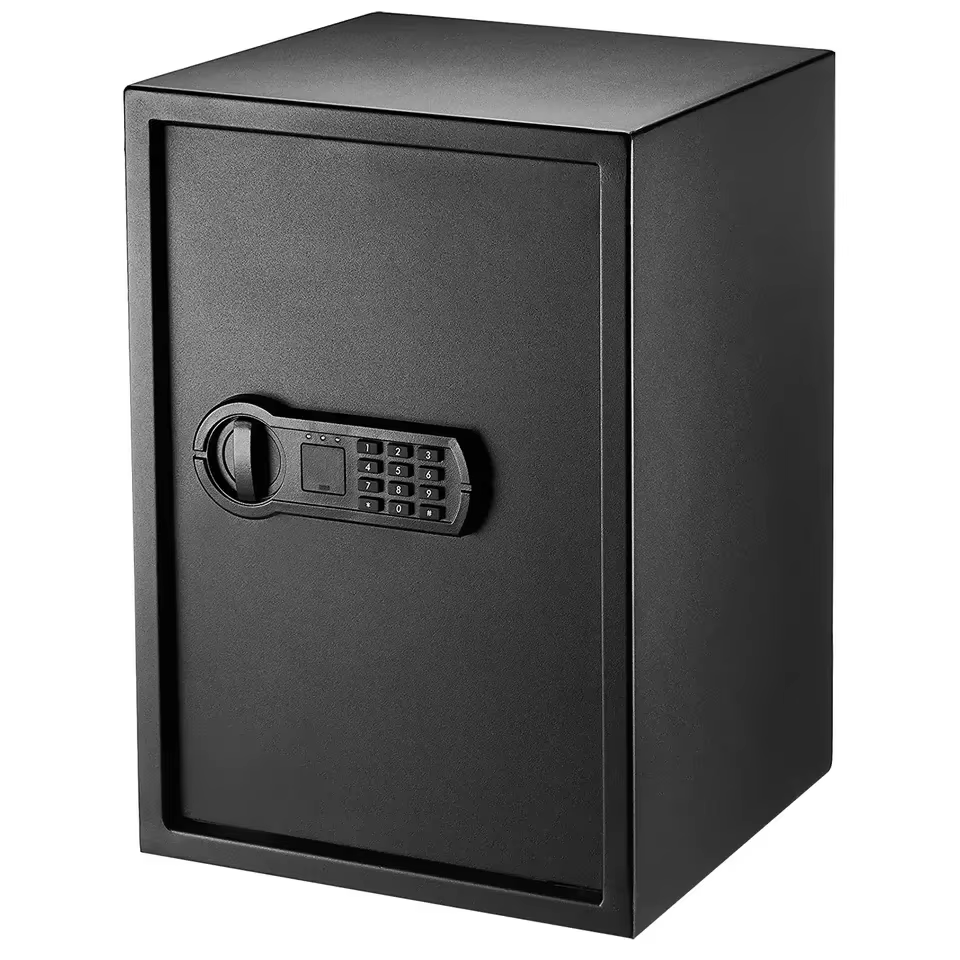
An operations lead at a multi-site service group once asked why a wholesale safe rollout had gone over budget when the unit price had barely moved. The answer was in the invoices nobody had grouped together: replacement keypads, rekeying visits, courier claims for dented doors, and a second shipment of a slightly different grey. None of those lines looked large on its own. A wholesale safe program changes that picture by treating the rollout as one system instead of a series of small purchases, and the savings come from avoiding repeat work rather than from shaving a quote.
Where the money actually leaks
Before counting savings on a wholesale safe program, it helps to name the costs outside the unit price. They are almost all coordination costs, and they multiply with the number of sites.
Why repeat work costs more than a higher specification
On a wholesale safe program, a lock changed mid-program means a site visit, a new key schedule and a fresh set of instructions. A dented door means a return freight leg, a replacement unit and someone to receive it. A finish mismatch means keeping two spare part inventories. Each event is small, but each one needs a purchase order, a technician and a record. Procurement teams often compare quotations line by line and miss these downstream lines entirely, because they land in different cost centres over several months. Writing a single controlled specification at the start is the simplest intervention available, and it costs nothing but the time spent getting the drawing right.
Five mechanisms that lower total spend
The five points below are structural. None of them depends on a discount, and each one can be checked before an order is placed.
Standardising one lock schedule across sites
For a wholesale safe program, choose a single lock model, one key or code hierarchy and one reset procedure for the whole program, then write them into the master specification. A resettable combination lock listed under UL 768 suits sites with high staff turnover because codes can be changed without a rekeying visit; a keyed system needs a documented master key schedule and a rule for spare key custody. Either way, one schedule means one set of instructions, one training session and one spare part bin. Mixed lock bodies across a wholesale safe rollout are the most common source of avoidable service calls, and they are entirely preventable at the ordering stage.
Fewer transit claims through parcel-qualified cartons
Wholesale safe units are heavy, and weight punishes weak packaging. Specify the carton grade, corner and edge protection, how the door is restrained inside the box, and whether the keypad ships separately. Request a transit or parcel sequence test with written acceptance criteria where courier handling is part of the route. Because a wholesale safe program ships to many addresses, it sees far more handling events than a single palletised delivery, so packaging earns its cost back through fewer claims and fewer redeliveries. Photograph the inside of the approved carton and use that image at goods-in.
Why a common finish reduces spare inventory
In a wholesale safe program, a single RAL or Pantone reference across all sites means one touch-up kit, one replacement door part and one visual standard for acceptance. Two greys that look identical on a screen are easy to order and surprisingly hard to live with once units sit side by side in the same corridor. Back the finish with a documented pretreatment and powder coat, plus adhesion and corrosion results naming the method, such as ISO 2409 with ISO 9227 or ASTM B117 exposure. REACH and RoHS declarations cover the coating and any electronic components, and keeping one finish simplifies those documents too.
Spare cylinders on site, not on order
For the wholesale safe batch, order a measured set of lock cylinders, handles, hinge pins, keypads and touch-up material with the main batch rather than after the first failure. The cost is a small addition to one shipment; the alternative is an express freight charge and a cabinet that sits out of service while a part travels. Ask the factory to confirm that every spare matches the drawing revision of the delivered units, and label the spares with that revision. One spare kit per region serves a wholesale safe program with a consistent lock schedule, which is the whole point of standardising in the first place.
When consolidation stops saving money
Filling one container with a wholesale safe order is sensible until it mixes two revisions of the same model in one load. At that point the freight saving is swallowed by sorting, relabelling and site confusion. Set a rule that a single shipment carries one approved drawing revision, or that any split is marked by serial range and accompanied by its own inspection record. Where an order spans production runs, treat them as separate batches with separate documents. Consolidation still works, but only when the version control is as disciplined as the loading plan.
The standards behind those savings
In a wholesale safe program, standardisation is not a preference; it is what lets a buyer prove that a later batch still matches the first one.
Asking for evidence that travels with the batch
ISO 9001 is the backbone here, since controlled drawings, calibrated gauges and retained samples are what keep a wholesale safe program consistent across production runs. ISO 2859-1 gives a defensible sampling plan for incoming checks, and a rating report from an ISO/IEC 17025 accredited laboratory should name the exact model tested. UL 72 covers fire endurance classes, UL 687 and EN 1143-1 address burglary resistance, and UL 768 applies to combination locks. OSHA 29 CFR 1910.176(b) is relevant to storing and handling heavy units before installation, NFPA 1 to placement and exits, and ANSI Z535.4 to the labels users actually read. None of these documents reduce a quote; they reduce the chance of paying twice.
Building the business case internally
For a wholesale safe program, put the unit price and the downstream lines in one sheet: freight, packaging claims, rekeying visits, spare parts, technician time and replacement units. Then show which of those lines the controlled specification removes. Keep the calculation free of invented percentages and use the organisation’s own historical invoices instead, which is both more credible and easier to defend later. Ask the supplier to confirm the master specification, the revision rule and the spare parts list in writing before any deposit. Extending a wholesale safe program built that way to a new site is straightforward: the drawing already exists, the lock schedule already exists, and the inspection checklist already exists. That is where the real saving sits.
Frequently Asked Questions
Do standardised programs really cost less than buying site by site?
In a wholesale safe order, the unit price tells only part of the story. A single controlled specification removes repeated rekeying visits, mixed spare inventories, separate training sessions and redeliveries after transit damage. Put those historical invoice lines beside the quotation when building the case, using the organisation’s own figures rather than a projected saving. The comparison usually becomes clear without any estimate of a discount.
Which lock approach suits sites with frequent staff turnover?
A resettable combination lock is usually easier to administer, and UL 768 is the listing to ask about for combination locks. A keyed system can work just as well, provided the master key hierarchy, spare key custody and rekeying rule are written into the master specification. The important decision is to choose one approach for the whole program, since mixing lock bodies across sites creates the service calls that standardisation is meant to avoid.
How much spare hardware should a rollout include?
Base the quantity on the number of sites, the expected handling intensity and the lead time for a replacement part, then record the reasoning in the order. Cylinders, handles, hinge pins, keypads and touch-up material are the usual items. Ask the factory to label every spare with the drawing revision of the delivered units. One regional kit for a standardised program is normally simpler than a separate stock at each address.
What makes packaging worth specifying on these units?
Weight concentrates damage at carton corners and at the door edge, and a dented door often means a replacement unit and a return freight leg. Specify carton grade, corner protection, door restraint and any separately packed electronics, then request a transit sequence test with written acceptance criteria. Keep a photograph of the approved carton interior and compare the first delivery against it during goods-in, before the pallet is signed for.
Can different drawing revisions share one container?
They can, but only with discipline. Mark each revision by serial range, attach its own inspection record, and tell each receiving site which range to expect. Without that, a freight saving tends to reappear as sorting time and site confusion. Many buyers simply set a rule that one shipment carries one approved revision, and split the order into two documented batches when production runs differ.
Which standards help keep later batches consistent?
ISO 9001 covers the controlled drawings, gauges, retained samples and inspection records that keep production repeatable. ISO 2859-1 supports a defensible incoming sampling plan, while ISO/IEC 17025 is the accreditation to look for on a test laboratory. Ask that every report name the exact model and revision. OSHA 29 CFR 1910.176(b), NFPA 1 and ANSI Z535.4 then cover handling, placement and the labels on the unit.