
 EN
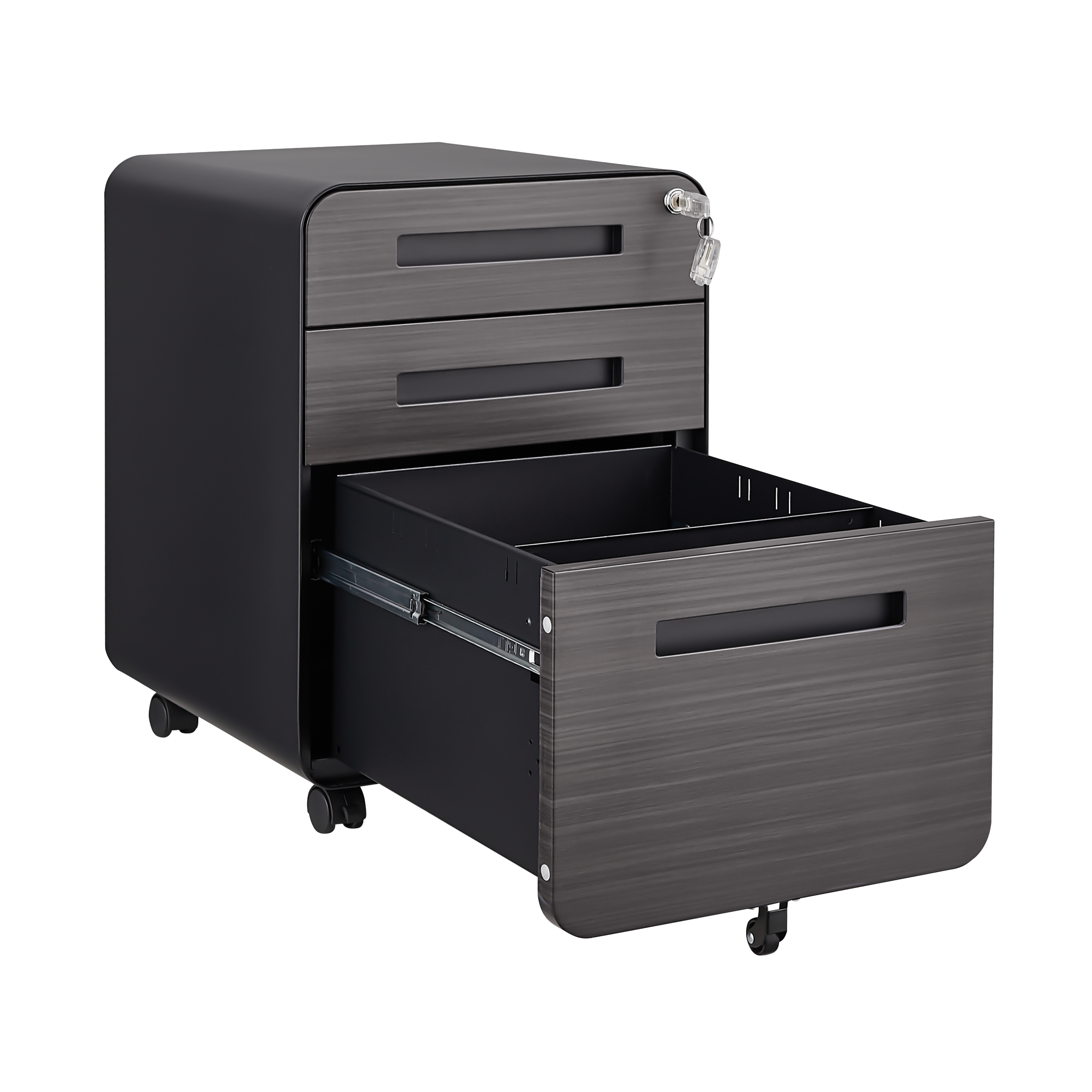
Vertical Cabinet with Drawers: Key Configurations and Space-Smart Design
Drawer Count (2–5 Drawers) and Workflow Alignment for B2B Environments
Matching drawer count to daily workflows measurably reduces retrieval time and workplace clutter. Two-drawer models suit bulky items—reams of paper, binders, or shared equipment—because deeper compartments hold oversized supplies without forcing staff to bend low. Three-drawer cabinets strike a balance of depth and segmentation, ideal for general office files, forms, and light equipment accessed frequently across teams. In legal, medical, or administrative departments—where dozens of small item categories demand fast, reliable separation—four- and five-drawer units enable discrete assignment: one drawer for stationery, another for first-aid supplies, a third for printer consumables, and so on. Pairing full-extension slides with this granular division ensures staff see the entire drawer contents at a glance, eliminating blind spots. This workflow-aligned approach cuts steps wasted on searching and refiling while keeping high-traffic areas orderly. Facility managers can validate fit by mapping current material groups to a drawer plan—a single afternoon exercise that confirms the configuration supports real-world movement patterns.
Standard Dimensions, Clearance Requirements, and Vertical Space Optimization Strategies
B2B buyers must verify dimensions and aisle clearances before procurement to avoid installation bottlenecks. Common footprints and spatial needs follow a predictable range:
| Cabinet Type | Typical Width (in) | Depth (in) | Height (in) | Front Clearance Needed (in) |
|---|---|---|---|---|
| Single‑wide | 30 – 36 | 18 – 24 | 30 – 72 | 24 – 30 |
| Double‑wide | 48 – 60 | 18 – 24 | 30 – 72 | 24 – 30 |
Clearance must accommodate both a fully extended drawer and an operator’s stance—tight corridors can render even high-performing units unusable. To optimize vertical space, select the tallest cabinet the ceiling height allows; upper drawers hold infrequently accessed items and should be clearly labeled for quick identification. In rooms with standard 8-foot ceilings, a 72-inch cabinet doubles storage capacity per square foot versus a 36-inch model. Modular stacking systems—where a two-drawer base supports a separate three-drawer top—add flexibility without expanding floor footprint. When placed in accessible workspaces, always verify that units meet ADA-required knee and reach clearances. These strategies turn every cubic foot into productive storage, essential for dense corporate and institutional environments.
Performance and Durability: What Enterprise Buyers Must Verify in a Vertical Cabinet with Drawers
Steel Gauge, Structural Integrity, and Anti-Tip Safety Compliance for High-Traffic Facilities
The foundation of any durable vertical cabinet with drawers is its steel gauge—an inverse measurement where lower numbers indicate thicker, more robust material. For enterprise environments, specifying a cabinet body made from at least 18-gauge steel is a critical starting point, as it resists denting and torsion more effectively than lighter 20- or 22-gauge alternatives. Structural integrity extends beyond thickness: look for fully welded frames rather than those held together with basic fasteners. Reinforced corner gussets and a double-walled base significantly increase racking resistance—especially valuable when units are regularly relocated or used in active warehouse zones.
Anti-tip safety is a non-negotiable engineering control. The most reliable models incorporate an interlocking drawer system that permits only one drawer to open at a time, preventing top-heaviness and forward tipping. For added security, designs should include pre-drilled holes for permanent floor and wall anchoring. This dual approach aligns with seismic safety best practices and meets the core intent of ASTM F2057, ensuring stability under dynamic workplace conditions.
Full-Extension Drawer Slides, Operational Smoothness, and Industry-Validated Cycle Life (≥50,000 Cycles)
Drawer slide functionality is a primary determinant of long-term user satisfaction and safety. Full-extension slides provide complete access to the drawer’s entire depth, eliminating unsafe blind reaches into rear corners. Procurement teams should specify slide assemblies operating on precision ball bearings—this ensures quiet, wobble-free action and consistent performance under heavy loads, supporting over 100 lbs per drawer without binding. Smooth operation signals component quality and serves as an early indicator of durability.
More critical than initial feel is the slide’s documented, industry-validated cycle life. A cycle is one complete opening and closing sequence. While inferior slides may fail after 10,000–20,000 cycles, durable cabinets require components tested to withstand a minimum of 50,000 cycles—with leading manufacturers validating up to 75,000 cycles or more. This endurance must be confirmed through recognized testing protocols, such as those defined by ANSI/BIFMA, rather than unverified internal claims. Requiring this data upfront transforms subjective “durability” into an objective, fact-based procurement metric that directly predicts service life.
Security, Standards, and Procurement Readiness for Vertical Cabinet with Drawers
Integrated Locking Options: Key, Central, and Height-Adaptive File Security
Selecting the right locking configuration ensures your vertical cabinet with drawers meets both security policies and workflow needs. Keyed-alike individual drawer locks grant selective access per drawer—ideal when multiple departments share one unit. Central locking systems secure all drawers simultaneously with a single key turn, streamlining operations in fast-paced office settings. Height-adaptive locks engage automatically when a drawer isn’t fully closed, preventing accidental openings in high-traffic areas and safeguarding sensitive files. Inspection agencies often require these features for facilities handling confidential records. Crucially, locking mechanisms must be integrated during manufacturing—not added as aftermarket accessories—to preserve structural integrity and long-term reliability.
ANSI/BIFMA Certification, RFQ Documentation, and Submittal Requirements for Institutional Procurement
Institutional buyers must prioritize ANSI/BIFMA certification to guarantee long-term durability, safety, and compliance. The X5.9 standard specifically tests for stability, load capacity, and drawer cycle endurance—benchmarks a compliant cabinet must pass. When preparing an RFQ, include detailed submittal requirements: third-party test reports from certified labs, formal compliance statements, and comprehensive product data sheets. These documents allow procurement teams to compare bids objectively and confirm alignment with facility codes and regulatory expectations. Many government and educational contracts mandate this documentation upfront—having it ready accelerates selection, minimizes compliance risk, and strengthens vendor accountability.
FAQ Section
What is the ideal number of drawers for different workplace needs?
The ideal number of drawers depends on workflow and item types. Two-drawer models suit bulky items, while three-drawer cabinets balance depth and segmentation. Four- and five-drawer units work best for detailed categorization, especially for small items requiring discrete organization.
How can vertical cabinets optimize space in corporate environments?
Choose the tallest cabinets your ceiling height allows to maximize vertical storage. Modular stacking systems add flexibility without consuming additional floor space, and adhering to clearance requirements ensures efficiency and ADA compliance.
Why is steel gauge important in vertical cabinets?
Steel gauge determines material thickness and durability. Cabinets made from thicker gauges, like 18-gauge steel, resist denting and torsion, making them ideal for high-traffic enterprise environments.
What safety features should I look for in a cabinet?
Key safety features include anti-tip mechanisms like interlocking drawers, floor and wall anchoring, and compliance with ASTM F2057 for workplace stability.
Why is ANSI/BIFMA certification necessary?
ANSI/BIFMA certification assures the cabinet meets industry standards for safety, load capacity, stability, and cycle endurance, reducing compliance risks during institutional procurement.