
 EN
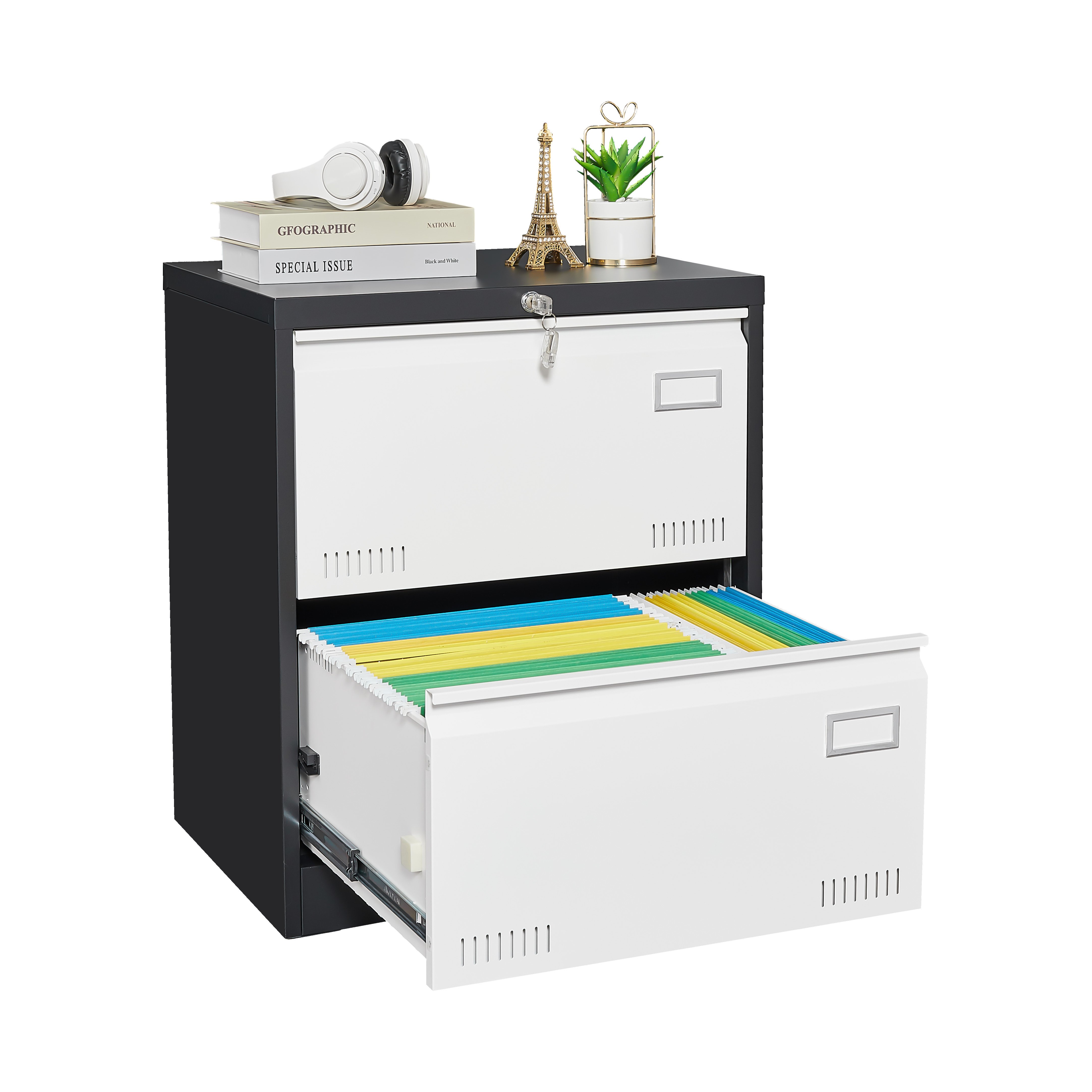
Why a Vertical Cabinet with Drawers Is the Smart Space-Saving Solution for Modern Offices
The Floor-Space Crisis: How Vertical Cabinets Address Urban Office Density
City office rents have climbed relentlessly, pushing per-worker floor allocations to multi-decade lows. In such tight footprints, every square foot must deliver storage without choking circulation. A vertical cabinet with drawers answers this challenge by stacking 2- to 5-drawers upward on a remarkably narrow footprint—typically just 15 inches wide by 25 inches deep, occupying only 2.6 square feet. By contrast, a lateral cabinet offering similar document capacity often demands 3.5 to 4.5 square feet, space that’s especially costly in compressed urban layouts.
Placed against a wall or tucked into an alcove, the upright design leverages otherwise unused vertical height. In a 100-square-foot personal office, two vertical drawer cabinets can coexist with a full-size desk while preserving a clear 36-inch walkway—a spatial efficiency no horizontal alternative matches. For growing teams operating under fixed leases, swapping lateral units for vertical cabinets can recapture 15–20% of the floor plan—enough room for an additional workstation. This density dividend makes vertical storage a first-line tactic in urban office space planning.
Ergonomic Science: Why Vertical Orientation Aligns with Natural Reach Zones
Workplace injury data consistently identifies lower-back strain as a leading cause of lost productivity—much of it triggered by repeated bending and awkward reaches. A vertical drawer cabinet aligns naturally with the body’s most efficient movement envelope: the zone between knee and shoulder height. Because files sit front-to-back inside deep drawers that pull out fully, employees retrieve folders with a straight spine and relaxed arm position at elbow height—eliminating the stooping and torso rotation common with low, wide lateral drawers.
Ergonomic guidelines recommend storing frequently accessed materials between 14 and 48 inches off the floor—a range that maps precisely to the bottom-to-top span of a standard vertical unit. Further, the upright configuration supports intuitive load distribution: lighter, high-frequency items go in upper drawers; heavier archival files stay near the base—reducing shoulder stress and promoting safer lifting habits. When paired with full-extension slides that bring every inch of the drawer into view, the vertical orientation transforms document access into a posture-friendly motion, cutting retrieval time and fatigue during long workdays.
Vertical Cabinet with Drawers vs. Horizontal Alternatives: Key Functional Trade-Offs
When selecting office storage, understanding the functional differences between a vertical cabinet with drawers and horizontal (lateral) options is crucial. These choices directly impact daily efficiency—particularly in retrieval speed and long-term ergonomics.
Accessibility Comparison: Retrieval Speed, Visibility, and Posture Impact
Daily document access highlights clear contrasts between vertical and horizontal designs. The table below captures the most significant ergonomic and speed-related differences reported by workplace efficiency studies.
| Aspect | Vertical Cabinet with Drawers | Horizontal (Lateral) Cabinet |
|---|---|---|
| Retrieval Speed | Slower for deep-reach tasks; files stored front-to-back require bending to access rear portions | Faster; wide drawers display all files at a glance |
| Visibility | Limited; deep drawers hide rear documents, hindering quick scanning | Excellent; open-front design shows labels across entire width |
| Posture Impact | Lower strain when used as intended: top-to-bottom zoning and full-extension slides support neutral spine alignment | Higher risk of forward lean or twisting when accessing low or deep compartments |
These trade-offs show that for high-frequency access—such as shared team filing—lateral configurations reduce time and physical effort. But vertical cabinets excel where retrieval is less frequent, and space constraints or workflow zoning take priority.
Workflow Fit: When Vertical Cabinets Outperform Horizontal Units in Hybrid & High-Traffic Settings
Despite the accessibility advantages of horizontal cabinets, a vertical cabinet with drawers remains the smarter choice in many dynamic workspaces:
- Hybrid & hot-desking floors: Minimal floor width allows each desk zone to include personal locked storage without blocking circulation.
- Narrow corridors and high-traffic aisles: Their upright form fits into tight corners where wide lateral cabinets would create bottlenecks.
- Archival or reference roles: When drawers hold infrequently accessed records—such as annual tax files or completed project folders—deep front-to-back storage maximizes capacity with negligible ergonomic cost.
- Multi-drawer zoning: Two or three vertically stacked drawers can be dedicated to “active” files in the top drawer and “archived” files below, preserving easy reach for daily tasks while keeping older records out of the way.
These scenarios demonstrate that a vertical cabinet with drawers can align with modern hybrid workflows—proving that space savings and specialized organization often outweigh the retrieval speed advantage of horizontal alternatives.
Design Features That Make a Vertical Cabinet with Drawers Truly Usable Every Day
Full-Extension Slides and Weight-Balanced Compartments for Effortless Access
A vertical cabinet with drawers becomes genuinely user-friendly when each drawer glides all the way out. Full-extension slides—often built on ball-bearing carriages—let you reach files at the very back without stretching or shuffling, eliminating the blind spots that plague half-open drawers. Smooth, consistent action matters just as much: drawers that stick or jerk under load waste time and increase strain.
Equally critical is weight-balanced construction. An unbalanced cabinet—say, with heavy items in a top drawer and light ones below—can tilt forward, creating a safety hazard. Reputable manufacturers address this through distributed drawer-mount points and interlock systems that allow only one drawer to open at a time. Even under full loads, quality cabinets remain stable and grounded. Together, full-extension access and deliberate weight balancing turn daily document retrieval into a one-handed, glance-and-go task—keeping workflows fluid and stress levels low.
Smart Drawer Configuration: Label-Friendly Fronts and Zoned Storage for Document Types
Well-chosen drawer layouts transform a storage unit into a retrieval engine. Label-friendly fronts—whether angled pull handles with insert slots or flat-face panels designed for clear adhesive tags—let teams identify contents at a glance, eliminating trial-and-error opening.
Beyond labeling, internal zoning multiplies usefulness. Simple dividers split a long drawer into sections for active, pending, and archived files, while modular trays keep small supplies like sticky notes or binder clips from sliding into disarray. For document-specific sorting, dedicate drawers by record type: one for invoices, one for contracts, another for HR correspondence. This granularity mirrors real-world office workflows—so a new hire doesn’t waste five minutes hunting for a purchase order.
When every drawer has a clear identity and internal zones reflect that logic, the cabinet becomes a self-documenting system: daily work speeds up, misfiles shrink, and the whole office maintains a cleaner, more professional look.
FAQ
What is the main benefit of using a vertical cabinet with drawers in an office?
The primary benefit is space efficiency. A vertical cabinet uses a small floor footprint while maximizing storage by utilizing vertical space, making it ideal for compact office layouts.
Are vertical cabinets more ergonomic than lateral cabinets?
Yes, vertical cabinets are designed to align with the body’s natural reach zones. They allow for accessing files between knee and shoulder height, reducing bending and awkward movements.
Do vertical cabinets support workflow organization?
Yes, vertical cabinets can be divided into zones for active and archival files. Label-friendly fronts and internal dividers enhance organization and improve efficiency in document retrieval.
What design features make vertical cabinets user-friendly?
Full-extension slides for easy access, weight-balanced compartments for safety, and modular zoning options make vertical cabinets easy to use and ergonomic for everyday tasks.
When should I choose a vertical cabinet over a lateral cabinet?
Vertical cabinets are best for spaces that prioritize storage density, narrow layouts, or lower-frequency document access, as well as hybrid or hot-desking environments.