
 EN
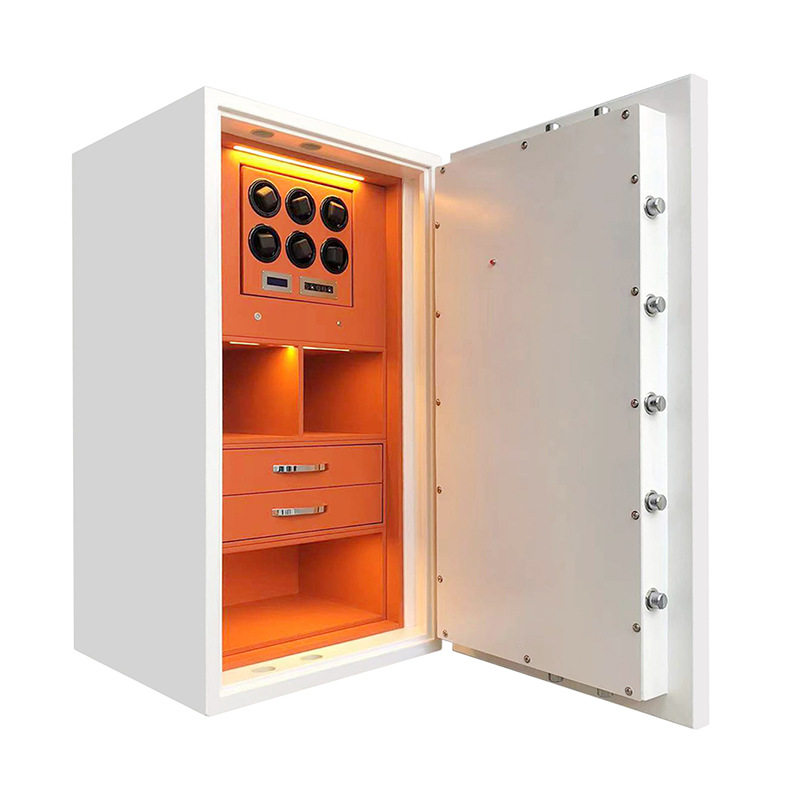
An office manager inherited a combination safe whose code had not changed in three years. Four former colleagues still knew it, the reset instruction had been thrown away with the packaging, and nobody could find the change key. The lock worked exactly as designed. A combination safe shifts the weak point from a physical key to a managed number, so sourcing one is as much about writing a code policy as it is about comparing steel. The useful questions are who sets the code, who may change it and what happens when a person leaves.
Where code-based orders lose control
A combination safe rarely fails mechanically. They fail when the administrative side is left to each site to improvise.
A code policy nobody wrote down
For a combination safe, ask who holds the master or supervisor code, how a change is authorised, where the record is kept and how a leaver’s code is retired. State the reset procedure in the order and request the instruction sheet before the units ship, not afterwards. Where several departments share one door, a single shared code gives no useful record of who opened it; consider separate compartments or a second lock. Get the spare parts list in the same document: a change key, a dial or keypad assembly, and any override tool. A combination safe with a lost reset procedure is a service call waiting to happen.
Mechanical and electronic listed as one option
Some combination safe quotations use one model code for both a mechanical dial and an electronic keypad. They are not interchangeable. A mechanical wheel pack has no battery but needs a change key and a careful dialling routine; a keypad resets quickly but depends on a cell and a low-battery warning. Ask which one is being quoted, request the lock’s own documentation, and confirm that the drawing revision names it. Check the number of users, the opening frequency and whether an audit trail is required before choosing. A combination safe selected on price alone often arrives with the wrong lock for the site’s staffing pattern.
Inside the dial and the keypad
Understanding the combination safe mechanism makes the specification shorter, because a buyer learns which few parts decide daily behaviour.
Wheel packs, fences and what a change key does
In a combination safe, a mechanical dial turns a drive cam that sets a stack of wheels; each wheel has a gate, and the fence drops into the aligned gates before the lever can release the boltwork. Tolerance in that stack is why a dial that is off by a fraction feels wrong. A change key engages the wheels so the code can be reset, which is why custody of that tool matters as much as custody of the code itself. Ask whether the lock sits behind a hardplate, whether a relocker blocks the bolts independently if the dial is punched, and how the spindle is protected. UL 768 is the listing to ask about for combination locks.
Solenoids, cells and the emergency route in
On a combination safe, an electronic keypad drives a solenoid or a small motor that retracts the bolt, with the code held in non-volatile memory. Ask how many cycles the unit is tested for, what the low-battery indication looks like, where the cell sits and whether it can be changed without opening the door. Request the emergency opening procedure and decide who holds the override key, then seal it in a documented location. NFPA 70 is relevant where a powered keypad is wired in, and REACH and RoHS declarations cover the board and cell. A combination safe with a flat cell and no override plan will eventually need a locksmith rather than a battery.
Standards that separate the lock from the box
For a combination safe, a cabinet rating and a lock listing answer different questions, and a single certificate usually leaves one of them open.
Reading UL 768 alongside UL 687 and UL 72
UL 768 applies to the combination lock as a device. The box is a separate question, handled by UL 687 or EN 1143-1 for attack resistance, EN 14450 for lighter units, and UL 72 where fire exposure threatens paper records. Ask which of these the quotation actually claims, then request that single report with its laboratory accreditation under ISO/IEC 17025, the model code and the tested configuration. Where the destinations differ, check which standard the local insurer or facilities policy recognises. A lock listing does not rate the frame, and a cabinet rating does not describe the reset procedure.
Where ISO 9001, NFPA 70 and ANSI Z535.4 fit
ISO 9001 governs whether the lock model, the change key and the instruction sheet repeat across a second run; ask for a controlled drawing with a revision number and an inspection record from a real batch. ISO 2859-1 helps set a goods-in sampling plan. NFPA 70 covers powered keypad wiring, NFPA 1 and NFPA 101 placement and escape routes, and OSHA 29 CFR 1910.176(b) handling of heavy units before installation. ANSI Z535.4 applies to the user label, which should explain the reset and override rules in plain wording. Coating evidence normally pairs an adhesion method such as ISO 2409 with a salt spray method, and a scratched door edge is still where corrosion starts.
A handover sheet for every site
Put one combination safe page in the file: the lock type and model, the drawing revision, the master or supervisor code custody rule, the reset procedure, the change key location, the override key location, the battery type and replacement owner where applicable, and the service contact. Require written approval before any lock substitution and keep one sealed sample with its instruction sheet. At goods-in, check the lock model against the order, set a fresh code, open and close three times, then reset it again and record the result by serial number. Log every change with its timestamp and the operator responsible. A combination safe rollout built that way stays auditable long after the original buyer has moved on.
Frequently Asked Questions
What belongs in a code policy for these units?
For a combination safe, name the holder of the master or supervisor code, the authorisation rule for a change, where the record is kept and how a leaver’s code is retired. Add the reset procedure, the change key and override key locations, and the service contact. Where several teams share a door, consider separate compartments or a second lock, since one shared code gives no useful record of who opened it.
How do a mechanical dial and an electronic keypad differ in practice?
A mechanical wheel pack needs no battery but relies on a change key and an accurate dialling routine. A keypad resets quickly but depends on a cell, a low-battery warning and an override plan. Ask which one the quotation names, request the lock’s own documentation and check the drawing revision. Decide from the number of users, the opening frequency and whether an audit trail is needed.
Is UL 768 a rating for the whole cabinet?
No. UL 768 applies to the combination lock as a device. UL 687 and EN 1143-1 address attack resistance of the enclosure, EN 14450 covers lighter secure storage in S1 and S2 classes, and UL 72 addresses fire endurance classes for records. Request each report with the exact model code and tested configuration, and check which standard the destination’s insurer recognises.
What should be asked about emergency opening?
Request the documented procedure, decide who holds the override key and seal it in a recorded location. For an electronic lock, ask where the cell sits, how low-battery is indicated and whether it can be changed without opening the door. NFPA 70 applies to powered keypad wiring, and REACH and RoHS declarations cover the board and cell. An unplanned flat cell should not require a locksmith.
Which documents should travel with the order?
A controlled drawing with a revision number naming the lock model, the instruction sheet, a bill of materials, an inspection record from a real batch and any rating or lock report with its exact model code. Add a spare parts list covering the change key, dial or keypad assembly and any override tool. Keep one sealed sample with its paperwork for later comparison.
What should goods-in verify?
Check the lock model against the order and the drawing revision, then set a fresh code, open and close the unit three times, reset the code again and record the result by serial number. Use a sampling plan such as ISO 2859-1 rather than a single unit. Log every subsequent change with a date and a name so the handover sheet stays current.