
 EN
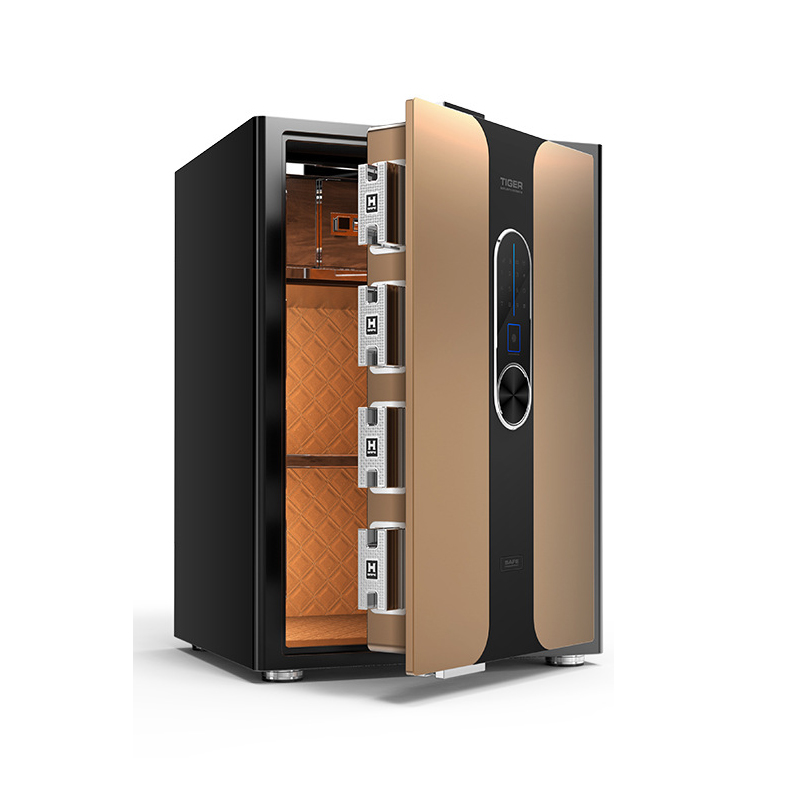
Why Steel File Safe Units Are Essential for B2B Document Security
Physical document loss remains a critical threat in B2B operations. According to the Ponemon Institute, more than 60% of data breaches involve lost or stolen paper documents. Law firms, healthcare providers, and financial institutions routinely handle irreplaceable contracts, patient records, and audit files—many containing personally identifiable information (PII) and proprietary business data. These materials attract both internal and external threats, making secure physical storage non-negotiable.
Steel file safe units provide a locked, fire-resistant barrier that deters unauthorized access, reduces theft risk, and safeguards against environmental damage. Regulatory frameworks—including HIPAA, GDPR, and SOX—mandate secure handling of specific document types. Steel file safes support compliance through advanced locking options (keyed, electronic keypad, central locking) and fire-rated construction, which enhances business continuity and insurance alignment. A single compromised file can trigger regulatory penalties, litigation, and reputational harm—turning storage decisions into strategic risk management actions.
For procurement teams, these units are not office furniture but foundational physical security controls. They lower breach-related costs, streamline audit readiness, and strengthen organizational resilience over time.
Key Specifications That Define a Reliable File Safe
B2B sourcing should treat dimensions, weight, and scalability as an integrated specification block—not isolated afterthoughts. A steel file safe may meet security ratings yet fail operationally if it cannot be installed, accessed, or scaled within its intended environment.
Dimensions, weight, and modular scalability for office and industrial environments
External dimensions do not reflect usable interior capacity. Fire-resistant walls, insulation layers, and locking bolt channels reduce interior height and depth—so buyers must measure the largest record type (e.g., hanging folders, legal files, archival boxes) before shortlisting. Weight directly impacts installation logistics: office-grade units require floor load verification and elevator/door clearance checks, while industrial models often demand reinforced slabs, lift access, and expanded door swing allowances.
Modular scalability ensures long-term adaptability without compromising protection. Look for adjustable shelves, drawer trays, and compatible add-on pedestals that integrate seamlessly with the same safe body—preserving fire-resistance integrity while reducing replacement cost and downtime.
| Environment | Key dimension check | Weight and access consideration | Scalability requirement |
|---|---|---|---|
| Office | Interior width/depth for A4, legal, hanging files | Confirm floor load, elevator, door clearance | Drawer dividers, trays, casters |
| Industrial | Clear interior for binders, media, archival boxes | Reinforced slab, pallet jack or lift access | Bolt-on expansion, crane access, rack alignment |
Standard vs. custom footprints: optimizing space, logistics, and future expansion
Standard footprints offer faster delivery, lower unit cost, and simplified replacement—ideal when space constraints allow. Custom footprints become necessary only when architectural or workflow limitations (e.g., narrow doorways, low ceilings, fixed workstation lines) demand exact fit. Buyers should evaluate total operating clearance, not just cabinet footprint: account for door swing radius, full drawer extension, and service access zones.
Custom builds extend lead times and may require structural review—especially where high floor loads are involved. For future growth, select a unified product series with consistent heights and shared locking components. This enables adjacent placement across departments or sites without re-engineering room layouts—and simplifies maintenance and spare-part logistics. Site surveys must document truck access, stair width, and final room clearance before committing to either option.
Certifications and Security Features That Validate True File Safe Performance
UL 72 and EN 1143-1 ratings — what fire-resistance and burglary-class levels actually mean for procurement
A UL 72 Class 350-1 hour rating certifies that internal temperatures remain below 350°F and relative humidity under 85% for one hour—sufficient for most paper records. Digital media require stricter Class 125 protection, as data corruption begins at lower temperatures. UL 72 also defines Class 350-2 hour and Class 350-3 hour ratings for extended fire exposure. EN 1143-1 establishes burglary resistance grades from Grade 0 to Grade XIII, based on tool types and attack duration. Procurement teams should align ratings with asset value, insurance requirements, and NFPA 232 guidance—which recommends fire-resistant storage for vital records.
For paper-based legal or financial records, a Class 350-2 hour fire rating is often appropriate; for high-value or mission-critical documents, EN 1143-1 Grade III or higher adds essential burglary defense. Always verify testing was conducted by an accredited third-party laboratory—not self-certified—to avoid false assurance and procurement misalignment.
Beyond labeling: audit trails, relock mechanisms, and tamper-evident design in enterprise-grade file safe units
Enterprise-grade units increasingly incorporate electronic locks with time-stamped, user-coded audit trails—supporting ISO 15489 compliance and enabling chain-of-custody verification. These logs help auditors confirm segregation of duties and detect anomalies in access patterns.
Relock mechanisms activate automatically during lock tampering, deploying secondary barriers to delay forced entry. Tamper-evident features—such as breakaway seals or visible deformation indicators—provide immediate visual confirmation of unauthorized attempts. In multi-user facilities, scheduled access reports and real-time failed-entry alerts further enhance oversight.
Procurement should request third-party test evidence for relock activation timing and audit log retention duration. These features transform the file safe from passive infrastructure into an active, managed security asset—reducing undetected intrusion risk and strengthening forensic response and regulatory audit outcomes.
Procurement Best Practices for Steel File Safe Units
A reliable purchase starts with rigorous vendor evaluation and a holistic view of total cost of ownership—not just sticker price.
Vendor due diligence: certifications, service history, and post-installation support
Confirm current UL 72 and EN 1143-1 certifications before shortlisting suppliers. Request at least three verifiable service records from similar B2B deployments—ideally including installations in comparable sectors (e.g., healthcare, finance). Ask specifically about post-installation support: lock servicing frequency, rekeying turnaround, emergency access protocols, and documented local service partner coverage. Suppliers with published maintenance response SLAs and long-term part availability significantly reduce operational risk. Avoid vendors lacking a clear escalation path post-delivery.
Total cost of ownership analysis — from delivery and installation to compliance maintenance and lifecycle upgrades
Look beyond the unit price. Include freight, rigging, floor load assessment, and internal placement labor. Annual compliance checks—fire-resistance validation, burglary-class verification, lock calibration, and audit trail updates—add recurring operational costs. Modular designs lower long-term relocation expense, while lifecycle upgrades—like electronic lock retrofits or API integration—impact scalability and interoperability.
Building a ten-year TCO model helps justify higher initial investment in a file safe that avoids premature obsolescence, non-compliance penalties, or unplanned replacement—delivering measurable ROI through sustained security, audit readiness, and reduced administrative overhead.
FAQ Section
Why are steel file safe units essential for B2B operations?
Steel file safes protect physical documents from unauthorized access, theft, regulatory penalties, and environmental damages such as fire, ensuring compliance and reducing breach-related costs.
What certifications should I look for in steel file safes?
UL 72 (fire resistance) and EN 1143-1 (burglary resistance) certifications are key. Ensure testing is conducted by accredited third-party labs rather than self-certified claims.
How do dimensions and weight impact safe selection?
Dimensions matter for accommodating specific document types. Weight influences floor load compatibility and installation logistics, especially in industrial or multi-story environments.
What security features enhance enterprise-grade safes?
Look for electronic locks with audit trails, automatic relock mechanisms, and tamper-evident designs to strengthen oversight and reduce undetected intrusion risks.
How can procurement teams ensure long-term value?
Conduct vendor due diligence, analyze total cost of ownership (TCO), and prioritize modular, scalable designs to avoid premature obsolescence and streamline future upgrades.