
 EN
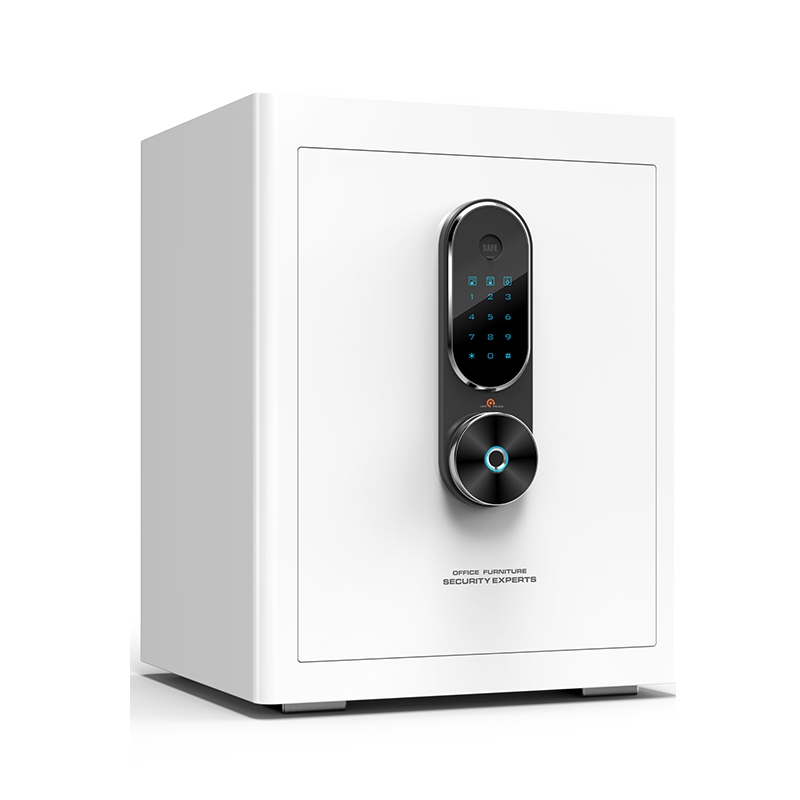
Fireproof Safe Certification Standards: UL, ETL, and Global Equivalents
For B2B buyers, a fireproof safe rating is only meaningful when it references a test standard, a time duration, and an internal temperature class. UL (Underwriters Laboratories) 72, ETL/Intertek verification, and global equivalents each measure fire endurance differently—so procurement teams must compare the test conditions behind the label, not just the certification mark.
UL 72 Fire Resistance Classes Explained: 125°F, 150°F, and 350°F Internal Temperature Limits
UL 72 defines fire resistance classes by the maximum internal temperature allowed during furnace testing. A Class 350 rating means the safe’s interior stays at or below 350°F (177°C) for the stated period—even when external temperatures reach 1,700°F (927°C). That threshold protects paper, which begins charring well below 450°F. Class 150 lowers the limit to 150°F (66°C) for magnetic tape and film. Class 125 is the strictest, holding interiors to 125°F (52°C) for hard drives, SSDs, USB media, and flexible disks. Crucially, duration is inseparable from class: a Class 350 1-hour unit is not equivalent to a Class 350 2-hour unit.
| UL 72 Class | Maximum Interior Temperature | Typical Protected Media | Common Durations |
|---|---|---|---|
| Class 350 | 350°F (177°C) | Paper, cash, binders | 30 min, 1 hr, 2 hr |
| Class 150 | 150°F (66°C) | Magnetic tape, film | 1 hr, 2 hr |
| Class 125 | 125°F (52°C) | Hard drives, SSDs, USB media | 1 hr, 2 hr |
Why Third-Party Certification (UL/ETL) Is Non-Negotiable for B2B Fireproof Safe Procurement
Third-party certification from UL or ETL/Intertek removes guesswork from fire claims. Both labs test sample units under controlled furnace conditions per UL 72, verifying that interiors remain within the stated temperature class for the full rated duration. This independent validation matters because B2B buyers bear legal and financial liability for lost records, data, or regulated files—such as patient health information—if a unit fails. A certification mark without a traceable, model-specific test report holds no enforceable value. Procurement teams should require documentation that includes the model number, test standard (e.g., UL 72), temperature class, duration, and issuing laboratory. Note: Some ETL marks are issued against UL 72 criteria—but equivalency applies only when class and duration match exactly. For multi-location rollouts, explicitly require third-party test evidence in RFPs to avoid remedial cost and reputational risk.
Cross-Referencing Global Standards: How JIS, GOST, and EN 15659 Map to UL 72 Fire Endurance Benchmarks
Global certifications are not automatic substitutes for UL 72. Japan’s JIS S 6026, Russia’s GOST-based safe testing, and Europe’s EN 15659 follow similar furnace time–temperature curves but apply different pass/fail thresholds, humidity criteria, and classification logic. A UL 72 Class 350 1-hour unit and an EN 15659-rated cabinet may both protect paper, but differences persist in internal temperature spike tolerance, insulation performance reporting, impact resistance, and post-fire water exposure requirements. JIS S 6026 typically emphasizes maximum internal temperature at a defined fire duration, while EN 15659 classifies units separately by integrity (structural stability) and insulation (temperature control) performance. For global procurement, avoid one-to-one label mapping. Instead, request the underlying test report and compare heat curve fidelity, internal temperature limit, rated duration, and post-fire functional verification—including drop, water ingress, and seal integrity tests—before accepting equivalency.
How Fireproof Safe Performance Is Validated: Beyond Fire—Water, Impact, and Environmental Testing
A certified fireproof safe is a system—not just a steel box. In B2B procurement, performance validation must include fire endurance, water resistance, impact survivability, and environmental exposure—not a single furnace label.
Fire Endurance Testing: Duration, Heat Curves, and Real-World Fire Scenario Alignment
Fire endurance testing places the safe in a furnace following a standardized time–temperature curve. Under UL 72, a 1-hour test raises furnace temperatures to approximately 1,700°F (927°C), while interior thermocouples verify contents stay within the rated temperature limit. For paper documents, Class 350’s 350°F ceiling aligns closely with cellulose charring onset. For digital backups, Class 125 (125°F) and Class 150 (150°F) enforce tighter thermal control. Rated durations—30 minutes, 1 hour, or 2 hours—are calibrated to real-world response timelines: evacuation windows, first-responder arrival, and delayed suppression scenarios. Flashover events, where room temperatures surge rapidly, underscore why B2B buyers should demand full test reports showing both furnace curve fidelity and measured interior temperatures—not just a pass/fail certificate.
| UL 72 Class | Max Interior Temperature | Typical Protected Contents |
|---|---|---|
| Class 125 | 125°F (52°C) | Hard drives, SSDs, USB media |
| Class 150 | 150°F (66°C) | Magnetic tape, photographic film, optical discs |
| Class 350 | 350°F (177°C) | Paper records, cash, physical contracts |
Multi-Condition Validation: Why Drop, Explosion, and Humidity Resistance Reduce Operational Risk
A fireproof safe must survive the full emergency sequence—not just fire. After furnace exposure, many third-party tests require a drop test from height onto rubble or concrete, simulating structural collapse and verifying door integrity, lock function, and body cohesion. Explosion and rapid-cooling tests assess resilience to thermal shock—such as when superheated surfaces contact firefighting water or debris. Humidity resistance ensures internal seals prevent condensation buildup over days of post-fire storage, protecting paper, electronics, and currency from moisture damage. For B2B buyers, these combined validations reduce operational risk: a safe that maintains functionality after fire, impact, and moisture exposure is far more likely to preserve mission-critical assets during real emergencies. Always request supplier documentation for water ingress, seal integrity, and mechanical operation after impact and fire exposure—not just pre-test specs.
B2B Supplier Vetting for Fireproof Safe Units: Transparency, Documentation, and Due Diligence
Verifying Authentic Certifications, Test Report Traceability, and Manufacturer Chain-of-Custody Records
For B2B buyers, a fireproof safe is only as credible as its documentation. Require suppliers to provide unique certification IDs verifiable in the issuing body’s official database (e.g., UL Product iQ or ETL Verified Directory), along with test reports dated within the last three years. Confirm the certificate holder name matches the manufacturer’s business license, and that the listed model corresponds precisely to the unit being ordered. Request batch-specific fire endurance and impact test results—not generic datasheets. A complete chain-of-custody record should link each safe to its steel lot, insulation batch, and final assembly run. Suppliers that display certification logos without traceable reports—or rely on unaccredited labs—fail basic B2B due diligence.
Matching Fireproof Safe Ratings to Business-Critical Compliance Requirements
HIPAA, IRS, ISO 27001, and Local Fire Codes: Translating Regulatory Mandates into Fire Rating Specifications
HIPAA and IRS recordkeeping rules treat fire as a foreseeable threat, so paper document storage commonly requires a UL 72 Class 350 1-hour rating. Magnetic or digital backup media—subject to stricter thermal sensitivity—often demand Class 125 or Class 150 protection. ISO/IEC 27001 Annex A controls (e.g., A.8.2.3 and A.8.3.2) require fire-resistant storage for backup media and critical information assets, mandating documented validation—not marketing claims. Local fire codes may impose two-hour ratings in high-risk zones such as server rooms or archival vaults. To close compliance gaps, translate each regulatory requirement into specific, test-verified parameters: internal temperature limit, minimum duration, and third-party validation scope—not generalized “fireproof” language.
FAQs
What is UL 72 certification?
UL 72 certification is a standardized test for fireproof safes that assesses their ability to maintain internal temperature limits under high heat conditions. It defines specific classes (125°F, 150°F, and 350°F) and durations (e.g., 1 hour, 2 hours).
Why is third-party certification important?
Third-party certifications like UL and ETL ensure that fireproof safes meet rigorous testing standards under controlled conditions. This guarantees reliable protection for critical records and data during emergencies.
Can global standards replace UL 72?
Global standards like JIS S 6026 and EN 15659 may overlap with UL 72 but differ in criteria such as temperature tolerance, humidity, and post-fire tests. Buyers should compare detailed test reports to assess equivalency.
What additional tests should a fireproof safe pass?
Fireproof safes should also pass drop tests, explosion resistance, humidity resistance, and water ingress tests to ensure comprehensive protection across emergency scenarios.
How do I verify a fireproof safe’s certification is authentic?
Check certification IDs in official databases like UL Product iQ or the ETL Verified Directory. Require documentation linking the certification to the specific model and recent test reports.
Table of Contents
- Fireproof Safe Certification Standards: UL, ETL, and Global Equivalents
- How Fireproof Safe Performance Is Validated: Beyond Fire—Water, Impact, and Environmental Testing
- B2B Supplier Vetting for Fireproof Safe Units: Transparency, Documentation, and Due Diligence
- Matching Fireproof Safe Ratings to Business-Critical Compliance Requirements
- FAQs