
 EN
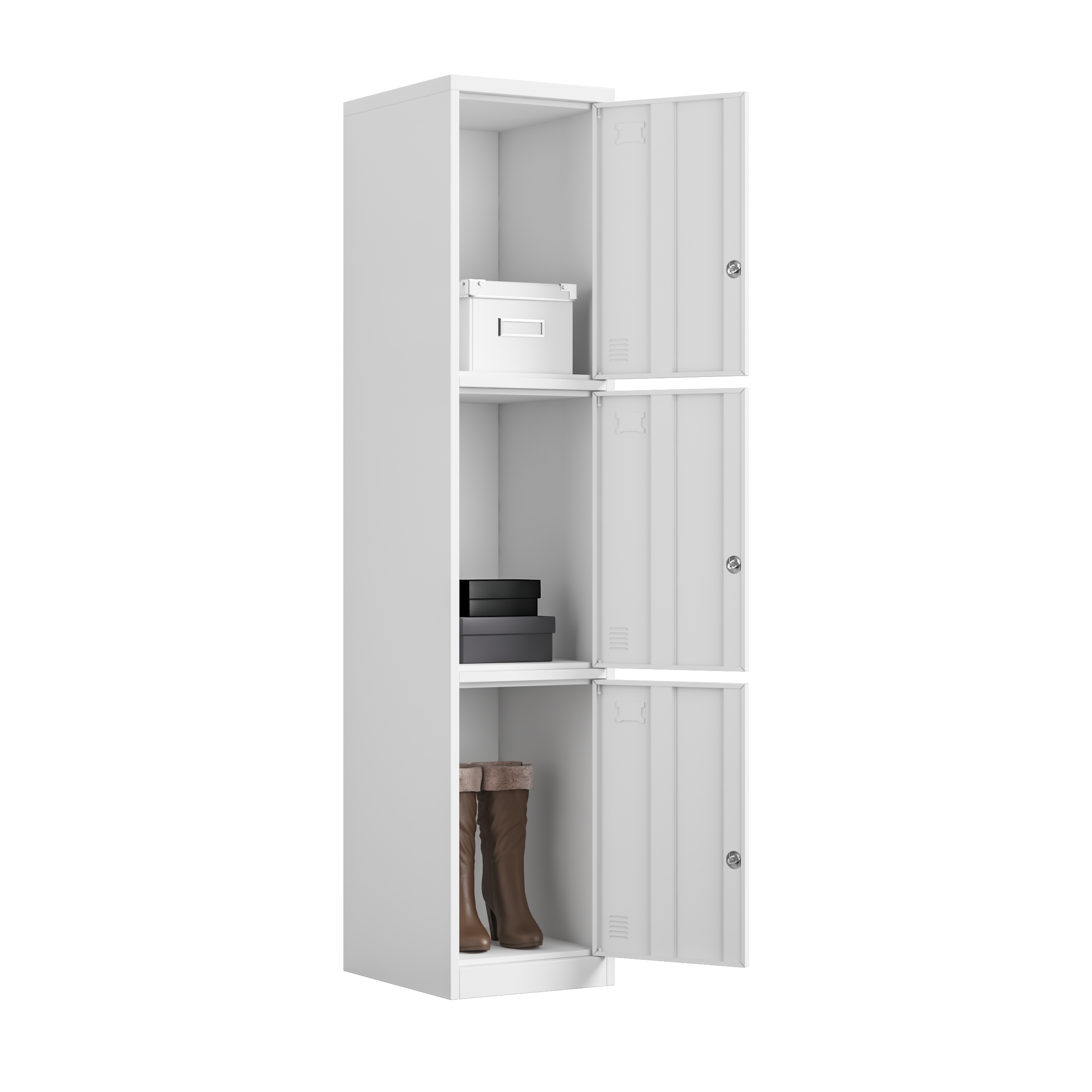
Heavy-Duty Construction: Steel Gauge, Welding, and Finish for B2B Longevity
For B2B buyers, a tall single locker must withstand years of daily use in demanding environments. Heavy-duty construction starts with steel gauge, welding, and finish—and directly affects replacement cycles, security, and total cost of ownership.
Why 14–16-Gauge Steel Frames Deliver Structural Integrity in High-Use Facilities
In a tall single locker, the steel frame is the primary load-bearing component. Steel thickness is measured in gauge—lower numbers indicate greater thickness. A 14-gauge frame is approximately 0.075 inches thick; 16-gauge is about 0.060 inches. This 14–16 gauge range delivers the rigidity needed to support 72-inch-high door openings and full-depth compartments without adding unnecessary weight. In high-use facilities such as warehouses, manufacturing plants, and corporate fitness centers, frame panels face constant impacts from carts, tools, racks, and employee traffic. Thicker steel resists denting and side-wall deflection, preserving door alignment and latch engagement over time. Welded frame corners further distribute stress, reducing the risk of seam separation or racking. While many heavy-duty models use 14-gauge bodies with 16-gauge doors, the highest-traffic corridors may specify 14-gauge throughout. For B2B buyers, this gauge specification translates to fewer bent panels, reduced repair frequency, and extended service life—critical where operational downtime carries steep costs.
Reinforced Doors, Commercial-Grade Hinges, and Tamper-Resistant Latching Systems
A robust frame alone isn’t enough. Full-height doors are prone to flexing unless reinforced with internal stiffeners or structural edges—such as full-length vertical channels or hat sections—that maintain a straight closing plane and prevent bowing. Commercial-grade hinges—typically continuous piano hinges or multi-knuckle designs with welded pins—distribute door weight evenly and resist sagging after thousands of annual cycles. In shared or high-turnover spaces, latching systems must deter forced entry. Tamper-resistant options include recessed padlock hasps, three-point latching rods, and integrated lock bodies that minimize exposed hardware vulnerable to prying. Anti-pry flanges along the jamb further block screwdriver access. These features collectively reduce unauthorized access, improve user confidence, and lower long-term maintenance in locker rooms, warehouse staging areas, and high-traffic corridors.
Powder-Coated Corrosion Resistance for Warehouses, Manufacturing, and Wet Environments
Even the thickest steel degrades without proper surface protection. Powder coating applies electrostatically charged dry resin particles, then cures them under heat to form a non-porous, highly durable barrier. Compared to conventional wet paint, it offers superior resistance to scratches, chips, and corrosion—especially critical in warehouses, food processing facilities, marine-adjacent sites, and manufacturing floors exposed to humidity, mild acids, cleaning agents, and occasional high-pressure washdowns. Crucially, powder coating adheres uniformly to edges and welded joints—the most rust-prone areas. To maximize performance, B2B buyers should specify a multi-stage pretreatment (e.g., phosphate or zirconium) before coating to ensure strong adhesion and long-term rust prevention. In wet or chemically aggressive settings, this finish significantly extends service life beyond standard painted alternatives.
Tall Single Locker Design: Vertical Efficiency, Ergonomics, and Facility Integration
72-Inch Height and Full-Height Interior for PPE, Uniforms, Tools, and Oversized Gear
A 72-inch-tall single locker with a full-height door creates one uninterrupted storage zone—ideal for hanging coveralls, uniforms, coats, helmets, face shields, work boots, bags, and knee pads without folding or stacking. Eliminating folds reduces fabric wear and keeps items visible during shift inspections or safety audits. Because only one user controls the compartment, managers can trace missing items more reliably and conduct sanitation checks faster. Strategic interior organization—placing heavy tool belts and boots on lower hooks or shelves, and lighter accessories overhead—reduces awkward bending and reaching. This supports safer, more efficient daily use in high-turnover environments. Select models with adjustable interior components to accommodate evolving gear requirements over time.
Standardized Tall Single Locker Dimensions (e.g., 72" H × 12"–24" W × 24" D) for Modular Layouts
Standardized dimensions enable predictable, scalable facility planning. A common footprint is 72 inches high, 12 to 24 inches wide, and 24 inches deep. Narrower 12-inch-wide units support high-density layouts along tight walls; 18- and 24-inch widths provide added interior volume for bulky gear and bags. The consistent 24-inch depth ensures uniform door swing, hinge placement, and locking hardware across runs. Because each unit repeats the same footprint, installers can accurately calculate row length, aisle clearance, and swing zones before purchase. When designing layouts, multiply locker width by quantity and add required aisle space to avoid pinch points during shift changes. Modular sizing also allows seamless reconfiguration as staffing levels fluctuate—enabling additions or replacements without custom fabrication or unsightly wall gaps. This predictability reduces lead times and strengthens long-term space planning.
B2B Procurement Essentials: Scalability, Support, and Total Cost of Ownership
Bulk Ordering, Specifier Resources, and Headcount-Based Sizing Tools for Facility Managers
Facility managers should evaluate total cost of ownership (TCO), not just unit price, when sourcing tall single lockers. Bulk ordering across multiple locations lowers per-unit freight and handling costs while ensuring consistency in dimensions, finishes, and hardware. Specifier resources—including CAD drawings, finish samples, and verified load-capacity data—help procurement teams confirm compliance with PPE, uniform, and tool storage requirements. Headcount-based sizing tools translate workforce numbers into recommended locker counts by department, shift overlap, and gender ratio—minimizing overbuying and shortages. A scalable procurement process also supports phased facility rollouts and future reorders without redesigning locker specifications. Aligning order volume with validated headcount data improves budget accuracy and strengthens long-term asset planning.
25-Year Frame Warranty, Assembled/Unassembled Options, and Nationwide Installation & Anchor Kits
A 25-year frame warranty reflects proven structural durability and significantly reduces lifecycle replacement risk in high-use facilities. Buyers can choose pre-assembled units for rapid deployment—or flat-pack unassembled options to cut freight and on-site storage costs. Nationwide installation services and seismic-rated anchor kits ensure stable, code-compliant installations in warehouses, industrial plants, schools, and other regulated environments. Writing warranty coverage, installation support, and reorder availability into procurement contracts enhances TCO predictability and operational continuity.
FAQ
What steel gauge is recommended for high-use B2B lockers?
For high-use B2B lockers, a 14–16 gauge steel range is recommended. A 14-gauge frame provides superior rigidity and durability, especially in demanding environments where impacts and heavy loads are common.
What features make the locking mechanism tamper-resistant?
Tamper-resistant features include recessed padlock hasps, three-point latching rods, and integrated lock bodies. These features minimize exposed hardware and block unauthorized access attempts.
Why is powder coating better than wet paint for lockers?
Powder coating offers superior resistance to scratches, chips, and corrosion. It adheres uniformly to the locker’s edges and welded joints, which are most prone to rust, making it ideal for humid or chemically aggressive environments.
What are the standard dimensions of a tall single locker?
Standard dimensions for tall single lockers are approximately 72 inches high, 12–24 inches wide, and 24 inches deep. These standardized measurements facilitate modular facility planning and reconfiguration.
What is included in the 25-year frame warranty for lockers?
The 25-year frame warranty covers structural durability and reduces lifecycle replacement risk. It ensures long-term reliability in high-use environments such as warehouses and industrial facilities.