
 EN
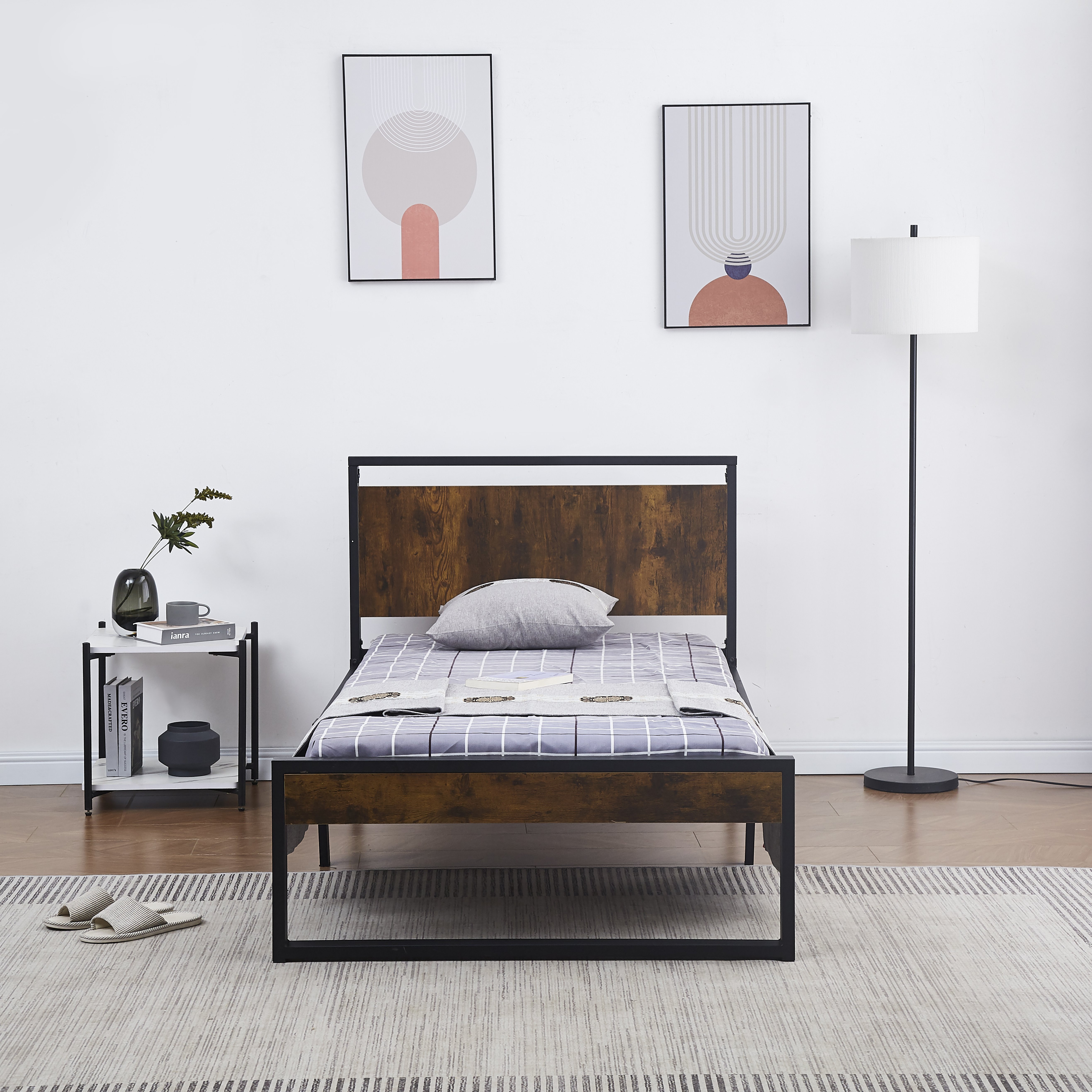
Selecting the Right Steel for Metal Bed Frame Units
Cold-Rolled vs Hot-Rolled Steel: Strength, Surface Quality, and Assembly Readiness
Cold-rolled steel is processed below its recrystallization temperature, delivering tighter thickness tolerances and a smoother surface than hot-rolled steel. For metal bed frames—where rails, brackets, and other visible components must meet high aesthetic and functional standards—cold-rolled substrate is preferred. Its uniform surface accepts electroplating and powder coating with fewer defects, reducing rework and rejection during finishing. Hot-rolled steel remains a cost-effective option for internal, non-visible supports, but its mill scale and wider dimensional variance typically require additional surface preparation like blasting or pickling before coating. In automated assembly, cold-rolled blanks maintain consistent hole placement and bend angles, improving weld accuracy and lowering scrap rates. A 2023 benchmark across multiple coating lines found that cold-rolled components reduced surface-prep rejection by 12–18% under identical pretreatment conditions. B2B buyers should therefore specify cold-rolled steel for exterior frame parts and reserve hot-rolled steel only where appearance and tight tolerances are secondary.
Material Standards Matter: Why ASTM A1008 and EN 10131 Ensure Consistency in High-Volume Metal Bed Frame Production
Material standards provide objective, enforceable benchmarks—not marketing claims. ASTM A1008 governs cold-rolled carbon steel sheet, specifying chemical composition, temper, surface finish, and dimensional tolerances. EN 10131 covers cold-rolled low-carbon flat products intended for cold forming, with comparable controls on thickness consistency and surface integrity. These standards enable procurement and quality teams to verify that incoming coils meet the mechanical properties required for precise punching, bending, and welding. Without them, coil-to-coil variation in hardness or gauge can cause warping, cracked bends, inconsistent weld penetration, and premature fatigue. In high-volume production, standardizing on ASTM A1008 or EN 10131 allows auditable supplier certification, timely lot rejection, and stable cycle times. It also mitigates hidden downgauging—where thinner or softer steel enters production undetected—preserving structural performance across thousands of units.
Ensuring Structural Integrity and Compliance for Commercial Metal Bed Frames
Load-Bearing Performance: Meeting EN 1725 & ASTM F2057 with 300kg Static Load Testing
For commercial applications, material thickness alone is an unreliable proxy for safety. EN 1725 defines minimum strength, stability, and durability requirements for beds used in residential and institutional settings, while ASTM F2057 addresses stability and tip-over risk—critical in contract furniture procurement. Leading B2B buyers combine both standards with a 300 kg static load test applied across the sleeping surface, side rails, and center beam. A compliant frame shows no weld cracking, fastener loosening, or permanent deformation exceeding 2 mm after load removal. Because failure most often originates at center legs and hook brackets, request ISO/IEC 17025-accredited test reports—including dated, annotated photos—that validate performance after full powder coating and curing. Testing raw steel alone risks missing coating-induced stress concentrations or adhesion failures masked during finishing.
Fatigue Resistance in Real-World Use: Preventing Failure in Hotels, Dormitories, and Healthcare Facilities
Static load testing reveals strength—but not endurance. In high-turnover environments like hotels, dormitories, and healthcare facilities, metal bed frames endure repeated loading from occupant movement, bed adjustments, and room-to-room transport. A frame passing a one-time 300 kg test may still develop micro-cracks at weld junctions after just months of cyclic use. Request independent cyclic fatigue testing of at least 20,000 cycles under a 150–200 kg vertical load, with post-test inspection focused on side rail hooks, center leg welds, and headboard bracket interfaces. Design features such as reinforced gussets, continuous weld beads, and anti-loosening fasteners significantly improve field reliability. For multi-site B2B programs, weighting fatigue performance equally with static load data helps reduce warranty claims, avoid costly replacement freight, and prevent safety incidents tied to structural degradation.
Optimizing Total Cost of Ownership for Metal Bed Frame Procurement
Beyond Unit Price: Logistics Damage, Coating Yield, and Warranty Costs in B2B Fulfillment
The lowest unit price rarely delivers the lowest total cost of ownership (TCO) for metal bed frames in B2B fulfillment. Logistics damage—often caused by insufficient corner reinforcement or inadequate palletization—can inflate landed costs by 3–8%. Coating yield directly impacts margin: a 5% rework rate adds labor, energy, and time to every batch. And warranty costs shift liability back to buyers when premature failures occur within the first year. Industry analyses show TCO over a fifteen-year lifecycle can exceed initial purchase price by more than 200%, driven by repackaging, returns, replacement labor, and freight. Procurement teams should therefore evaluate suppliers using standardized metrics: landed cost per unit, first-pass coating yield, freight claim frequency, and warranty claims per 1,000 units shipped. This approach surfaces hidden costs and aligns sourcing decisions with long-term performance—especially critical in high-volume contracts for hotels and student housing. Negotiate rebates tied to verified coating yield and damage-free delivery rates to convert TCO discipline into competitive advantage.
Strategic B2B Sourcing Models for Reliable Metal Bed Frame Supply
Balancing MOQ, Lead Time, and Quality Control: Dual-Base (China + Mexico) Sourcing Trends
A dual-base sourcing strategy—leveraging manufacturing capacity in both China and Mexico—is increasingly adopted by B2B buyers to balance cost, speed, and supply resilience. Ocean transit from China to North America typically takes 30–45 days, while cross-border trucking from Mexico delivers in 7–15 days. China offers economies of scale, mature stamping and powder-coating infrastructure, and deep experience in high-volume metal furniture production—though subject to tariff volatility and longer lead time uncertainty. Mexico provides responsiveness and lower logistics risk, with growing capabilities in precision welding and assembly, though specialized tooling capacity remains more limited. To ensure consistency, procurement teams must harmonize supplier audit protocols, raw material certifications (e.g., ASTM A1008), packaging standards, and quality checkpoints across both regions. One base can support forecast-driven, high-volume replenishment; the other handles urgent orders, regional compliance needs (e.g., Prop 65 labeling), or surge demand. Joint quality reviews—focused on weld strength, coating thickness, and assembly fit—maintain performance parity and protect brand reputation across geographies.
FAQ
What is the difference between cold-rolled and hot-rolled steel?
Cold-rolled steel is processed below its recrystallization temperature, providing tighter thickness tolerances and a smooth surface suitable for aesthetic and functional components like bed frames. Hot-rolled steel, on the other hand, is processed at high temperatures, making it cost-effective but less precise and requiring additional surface preparation for visibility in applications.
Why are standards like ASTM A1008 or EN 10131 important?
These standards ensure consistency in material thickness, surface quality, and mechanical properties, enabling reliable and precise manufacturing for high-volume production. They also help procurement teams verify supplier quality and detect material irregularities.
What is a 300 kg static load test, and why is it important?
This test measures a metal bed frame's ability to withstand weight applied across critical areas such as side rails and center beams. Compliance with standards like EN 1725 and ASTM F2057 ensures durability and safety in commercial settings.
What is cyclic fatigue testing?
Cyclic fatigue testing involves applying repeated loads over thousands of cycles to evaluate the durability of metal bed frames under real-world usage. It helps identify potential weak points, such as welds and fasteners, that could fail over time.
What is a dual-base sourcing strategy?
It involves sourcing from two regions, typically China and Mexico, to balance cost, lead time, and supply chain resilience. China provides economies of scale, while Mexico offers quicker delivery and lower logistics risk, mitigating vulnerabilities in high-volume production.