
 EN
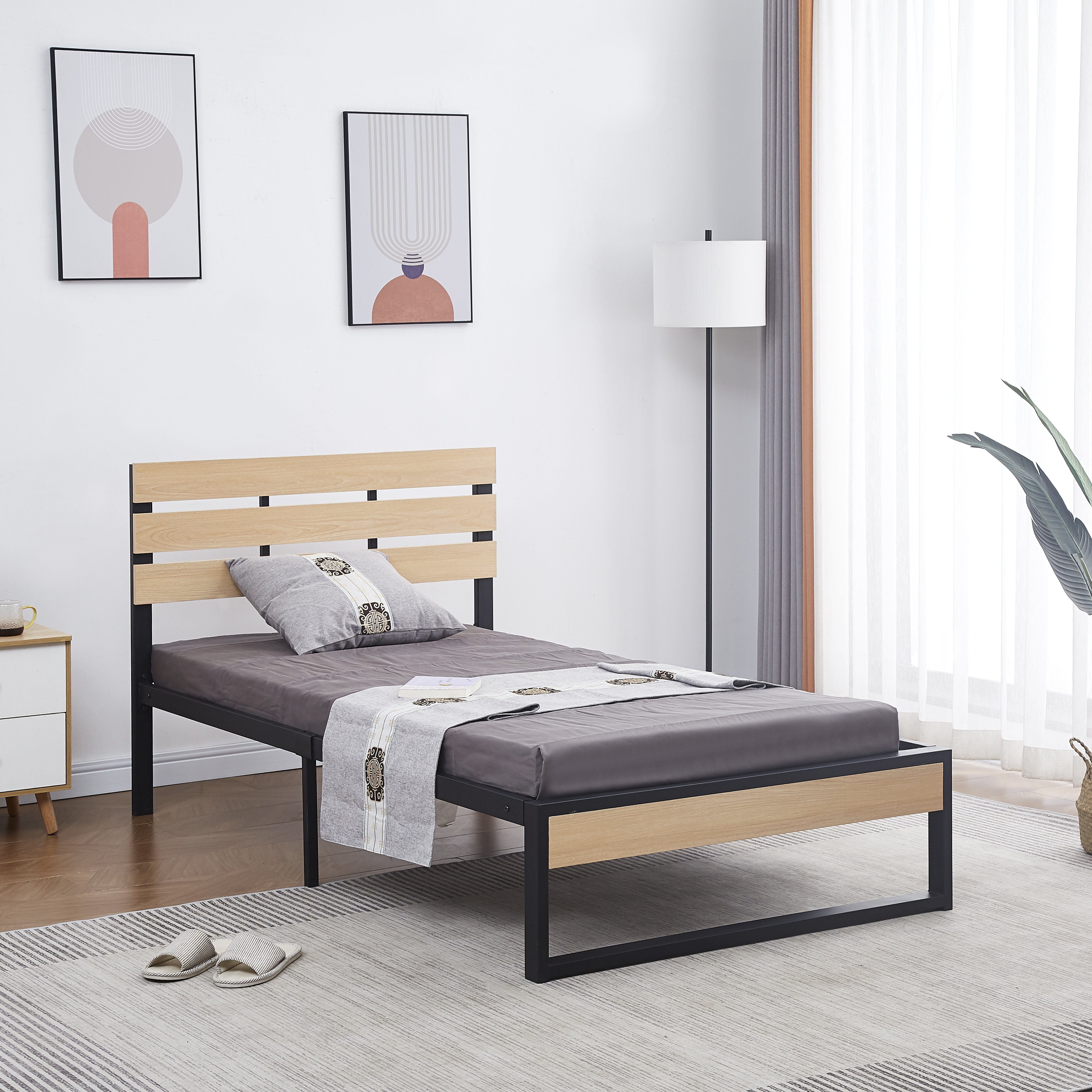
Unmatched Durability and Lifecycle Value for Commercial Environments
High-Yield Steel Construction and Corrosion-Resistant Finishes
Foldable metal beds for commercial use are built from high-yield steel tubing—typically ASTM A500 Grade B—with a minimum yield strength of 46,000 psi. This delivers exceptional resistance to bending and weld fatigue across thousands of deployment cycles. Unlike wood or plastic frames, steel maintains dimensional stability through humidity shifts, temperature extremes, and high-turnover environments like student housing and emergency shelters. Fully welded joints—not bolted connections—eliminate loosening over time, while powder-coated or zinc-primed finishes form a durable barrier against sanitizing chemicals, salt air, and daily abrasion from linens and carts. Independent lab testing per ASTM B117 (2023) confirms powder-coated components withstand 1,000 hours of salt spray without red rust. Field audits across multiple facilities show less than 2% structural degradation after seven years of continuous use—translating to fewer repairs, no touch-up painting, and minimal frame replacement. For procurement teams managing hundreds of units, this consistency reduces service interruptions and long-term capital risk.
Total Cost of Ownership: Foldable Metal Bed vs. Traditional Alternatives
Initial price alone misrepresents value in commercial bedding. While foldable metal beds carry a 10–15% premium over solid wood or particleboard frames, their 10-year total cost of ownership (TCO) is typically 30–40% lower (2023 facility procurement study). Steel avoids common failure modes: no split rails, stripped hardware, or moisture-induced swelling. Maintenance is limited to routine wipe-downs—no sanding, sealing, or insect treatment required. The foldable design also improves logistics efficiency: 40 units palletize into the same freight cube as just 24 rigid frames, lowering inbound shipping and warehouse handling costs.
| Cost Driver | Foldable Metal Bed | Wood / Upholstered Frame |
|---|---|---|
| Typical service life | 10–12 years | 4–6 years |
| Annual maintenance | Low: wipe-down only | Moderate: repairs, refinishing |
| Replacement frequency | 1 per decade | 2–3 per decade |
| End-of-life value | Recyclable steel scrap | Landfill or repurposing |
Across a 500-bed facility, these advantages yield $180,000–$240,000 in TCO savings over 10 years—making the foldable metal bed a financially defensible, operationally resilient choice.
Safety, Compliance, and Structural Reliability Across Facilities
Safety is non-negotiable for heavy-duty foldable metal beds deployed in shelters, dormitories, behavioral health units, and other multi-user settings. Visual compliance isn’t enough—a frame must perform reliably under real-world lateral loads and repeated use. Two critical differentiators separate field-proven units from unverified imports.
ANSI/BIFMA X5.5 Certification and Real-World Stability Testing
ANSI/BIFMA X5.5 sets the benchmark for institutional furniture, covering static load capacity, side racking, and fatigue performance under repeated deployment. Third-party labs test welded joints, hinge assemblies, and cross-braces under a 250 lb lateral force and 500 lb vertical load at both head and foot sections—and cycle the unit open and closed up to 5,000 times. Facilities using X5.5-certified frames report an average of 0.4 stability incidents per 1,000 bed-days, compared with 1.2 for uncertified models (2023). Crucially, certification requires accredited lab testing—not self-declaration. Buyers should request both the certificate of compliance and the raw test report to support safety audits and mitigate batch-replacement risk.
Fail-Safe Locking Mechanisms and Low-Center-of-Gravity Engineering
A foldable bed must remain stable during sudden weight shifts or rapid movement by staff. Fail-safe locking systems—spring-loaded pins or gravity latches—engage fully before the frame bears any load and are validated for 5,000 open-close cycles at rated capacity. Low-center-of-gravity engineering places heaviest steel members near the floor, not the upper frame, while wide stances and angled legs reduce tip risk by 40% versus narrow vertical-leg designs in lateral push testing (2023). Hinges are engineered to prevent partial engagement: the bed moves only when the lock is fully disengaged. These features ensure predictable performance in high-turnover spaces where users may sit on edges, lean against sides, or assemble beds quickly—without compromising safety.
Heavy-Duty Performance: Validated Load Capacity and Bariatric Readiness
1,200+ lb Static Load Rating with Third-Party Verification
In institutional and commercial settings, reliability under extreme load is essential. Leading heavy-duty foldable metal beds are third-party tested to a verified 1,200 lb (544 kg) static load rating—with no visible deformation after 72-hour sustained loading (2024). This supports bariatric users and accommodates frequent multi-occupant shifts without affecting frame alignment or hinge tolerance. Force is applied to the deck, side rails, and hinge points, confirming structural integrity across welded high-yield steel crossmembers and reinforced center legs. Independent lab reports confirm permanent set remains below 0.2% after 10,000 load repetitions—well beyond typical stacking, transport, and turnover demands. For B2B buyers, this means fewer warranty claims, safer handling in healthcare and shelter environments, and consistent performance across diverse facility types. Always verify that the reported rating reflects static (not peak or dynamic) load—and includes validation in both deployed and folded transport positions.
Operational Efficiency: How Foldability Optimizes Space, Logistics, and Scalability
Rapid Deployment, Compact Storage, and Multi-Setting Adaptability
A heavy-duty foldable metal bed transitions from storage to sleep-ready in under 60 seconds—no tools required—enabling flexible room reconfiguration. When folded, it occupies just 20–25% of its deployed volume, reducing empty storage footprint by up to 80% (2023 logistics efficiency review). That compact profile enables higher-density staging in warehouses and more efficient truck loading: folded units stack cleanly on standard pallets, cutting return-logistics trips and freight cost per bed cycle. In multi-setting operations—corporate housing, emergency response centers, training academies—the same unit moves seamlessly between dormitory rooms, storage closets, and transport trailers without disassembly. This adaptability supports scalable surge capacity and eliminates rigid, fixed-bed layouts. Because folded units occupy less aisle space, facilities can store 3–4× more beds in the same square footage—while keeping corridors clear for staff movement and equipment access.
FAQ
What are the advantages of foldable metal beds over wood or plastic frames?
Foldable metal beds offer unmatched durability, resistance to environmental factors, and lower total cost of ownership. They maintain structural integrity even in high-turnover environments and require minimal maintenance compared to wood or plastic frames.
How long do these metal beds generally last?
Heavy-duty foldable metal beds have a typical service life of 10–12 years, compared to 4–6 years for wood or upholstered frames. They also have lower replacement frequency.
How do foldable metal beds optimize logistics and storage?
These beds fold compactly into 20–25% of their deployed volume, enabling efficient storage and transportation. Facilities can store significantly more beds in the same space, reducing logistics costs.
Are foldable metal beds suitable for bariatric users?
Yes, these beds are tested to support up to 1,200 lb of static load, making them ideal for bariatric and multi-occupant uses.
What certifications should buyers look for?
Buyers should ensure the beds comply with ANSI/BIFMA X5.5 standards. Request both the certificate of compliance and the raw test report for safety and reliability assurances.