
 EN
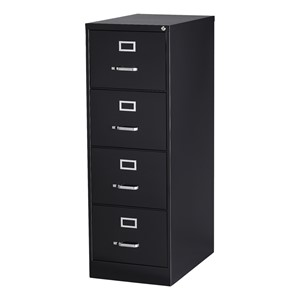
Two quotations sit on a procurement desk for a workshop stores area, both describing a tall two-door steel cabinet. One lists a painted finish and a lock; the other lists a per-shelf load, a rib pattern, and a hinge count. The shorter sheet says little about spare bearings and fasteners stacked to the back of a middle shelf. On the existing units, that shelf has bowed and the doors no longer meet at the center. A vent slot near the base is blocked by a pallet. Shelf load and door geometry decide the order, not the color card, for a metal storage cabinet bought in volume.
Where a Workshop Order Was Won on Shelf Load
The Stores Area: A Shelf That Bowed Under Spare Parts
The stores area in question keeps spare parts for a maintenance crew, and the middle shelf of each metal storage cabinet holds the densest boxes. Over a season, that shelf developed a visible dip at the center while the end supports stayed put. The doors began to meet unevenly at the latch, and a strip of daylight appeared along one edge. Nothing had been dropped and no panel was dented. The pattern pointed to repeated loading near the middle of the span rather than a single accident.
Why Two Similar Bids Diverged on Paper
On paper the two bids looked close: same external size, same finish, same lock type. The difference sat in lines that are easy to skip. One quote named a per-shelf load rating and described a folded reinforcement rib under each shelf; the other gave only a sheet gauge. When a metal storage cabinet is bought on a finish description alone, the shelf becomes an assumption. That assumption is what shows up later as a bowed panel and a latch that no longer lines up with its strike.
What Door Swing and Vent Slots Change in Service
How a Door Gap Turns Into a Rework Cost
Door geometry is the first thing to change once a shelf sags, because the carcass racks with the load. A hinge set that was aligned at installation now carries a twisting moment, the leaf drops, and the cam lock or padlock hasp needs a shove to engage. Vent slots add a second constraint: they must stay clear of stacked goods and of the wall behind the unit, or the airflow path is lost. A metal storage cabinet placed tight against a partition with vents on the back panel is a cabinet with vents that do nothing.
The Spec Sheet Listed Finish but Omitted Load
The specification sheet listed color, handle style, and a carton count, but it omitted load. It also omitted how the doors are hung and where the unit is expected to be anchored. Those omissions matter more than the finish when the cabinet will hold tooling, solvents, or boxed fasteners in a working area. A drawing that shows hinge quantity, hinge position, and a fixing point at the base gives an installer something to verify. Sourcing a metal storage cabinet is largely the work of closing these gaps before the order is signed, not after delivery.
How Reinforcement Ribs and Hinges Share the Load
Placing Reinforcement Ribs Under the Shelf Span
In a metal storage cabinet, cold-rolled sheet gains stiffness from its shape, so a flat shelf of generous gauge can still deflect more than a lighter shelf with a folded return. A reinforcement rib formed along the front and rear edges, or a hat section pressed into the underside, raises the section modulus without adding much material. CNC bending holds that rib position repeatable across a batch. Spot welds then tie the rib to the shelf panel at a consistent pitch; wide gaps let the sheet drum between fixings. A Luoyang factory founded in 1992, with 30,000 square meters and a monthly output of 10,000 pcs, holds that position with fixed tooling.
At the Hinge: Vent Slots, Swing, and Anchoring
At the hinge of a metal storage cabinet, door geometry decides whether a loaded unit stays square. Three hinges on a tall door share the swinging mass better than two, and a continuous piano hinge spreads it further, but either choice needs a flat, ribbed door leaf to work. Vent slots are punched before forming, so their position is fixed by the hydraulic punching or laser cutting program; a slot too close to the edge weakens the very fold that stiffens the door. Anchoring closes the loop. A tall unit fixed through a base bracket resists the forward pull of an open loaded door and keeps the carcass plumb.
Standards That Tie Anchoring to Egress and Storage
ANSI/BIFMA X5.9, ISO 9001, OSHA 1910.176, NFPA 1
A metal storage cabinet is covered by ANSI/BIFMA X5.9, which sets strength and durability expectations through cycle and load testing rather than a visual grade. ISO 9001 speaks to the control of cutting, bending, welding, and coating, so a stated shelf load is repeatable across a production run instead of true for one sample. OSHA 29 CFR 1910.176 addresses material storage and the prevention of tipping, which is why anchoring points belong on the drawing. NFPA 1, the Fire Code, brings in clear aisles and the separation of stored goods from ignition sources and equipment. None of these documents replaces an inspection; together they define which claims a buyer is entitled to check.
Buying a metal storage cabinet: Ask for the per-shelf load, rib detail, hinge count, vent slot positions, and anchoring provision on the drawing, then compare those lines across bids.
Inspecting a metal storage cabinet on arrival: Stand a sample on a flat floor, load a middle shelf to its rating, check the center dip and door gap, and locate the fixing points.
Using a metal storage cabinet: Keep heavy items on lower shelves near the back supports, spread point loads across the span, and leave vent slots clear so airflow stays open.
Maintaining a metal storage cabinet: Recheck door alignment and hinge fixings at each inspection round, clear dust from vent slots, and watch for a growing center dip on any shelf.
Frequently Asked Questions
Q: What is the first number to request on a storage cabinet quote?
A: Ask for the per-shelf load rating and the basis behind it. A shelf can look rigid empty and still dip once dense stock sits at mid-span. The rating should be tied to a defined support condition and a repeatable test, not to a sheet gauge alone. Without that figure, two quotes with the same external size cannot be compared, and the decision falls back on finish and carton count.
Q: Why do doors drift out of alignment on a loaded unit?
A: A sagging middle shelf racks the carcass, and the hinge set then carries a twisting load it was not aligned for. The door leaf drops at the free corner, so the cam lock or padlock hasp misses its strike. Vent slots blocked by stacked goods add moisture and heat but do not cause the drift. Checking the door gap with the cabinet loaded, rather than empty, catches the movement early.
Q: How should a metal storage cabinet be anchored in a workshop?
A: Use the base or wall fixing points shown on the drawing and fasten into a substrate that can take the pull, then recheck after the first loading cycle. Anchoring resists the forward moment of an open loaded door and the risk addressed by OSHA 1910.176. A freestanding tall unit may look stable empty and still tip once a heavy shelf is extended or a door is swung wide.
Q: Do vent slots weaken the door or the panel?
A: A slot punched too close to a folded edge removes material from the very feature that stiffens the panel, so placement matters more than the count. Slots set inside the flat field, clear of the return folds and the hinge line, keep airflow without cutting into the load path. Confirm their position on the forming drawing and keep them unobstructed after installation, since a covered slot provides no ventilation at all.
Q: Which standards help when reviewing a supplier for this purchase?
A: ANSI/BIFMA X5.9 covers strength and durability testing for storage units, and ISO 9001 indicates whether cutting, bending, welding, and coating are controlled across a batch. OSHA 29 CFR 1910.176 concerns stored material and tipping, while NFPA 1 addresses aisle clearance and separation from ignition sources. Together they turn a finish description into a set of verifiable checks rather than a matter of impression.
Q: What does an acceptance check look like on delivery day?
A: Set a sample metal storage cabinet on a flat floor, load a middle shelf to the stated rating, and measure the center dip and the door gap. Cycle each door, confirm the vents are clear, and locate the fixing points before filling the unit. Repeat on several cartons from the pallet, because consistent results across a batch say more than one carefully prepared sample. Log the readings for later comparison.