
 EN
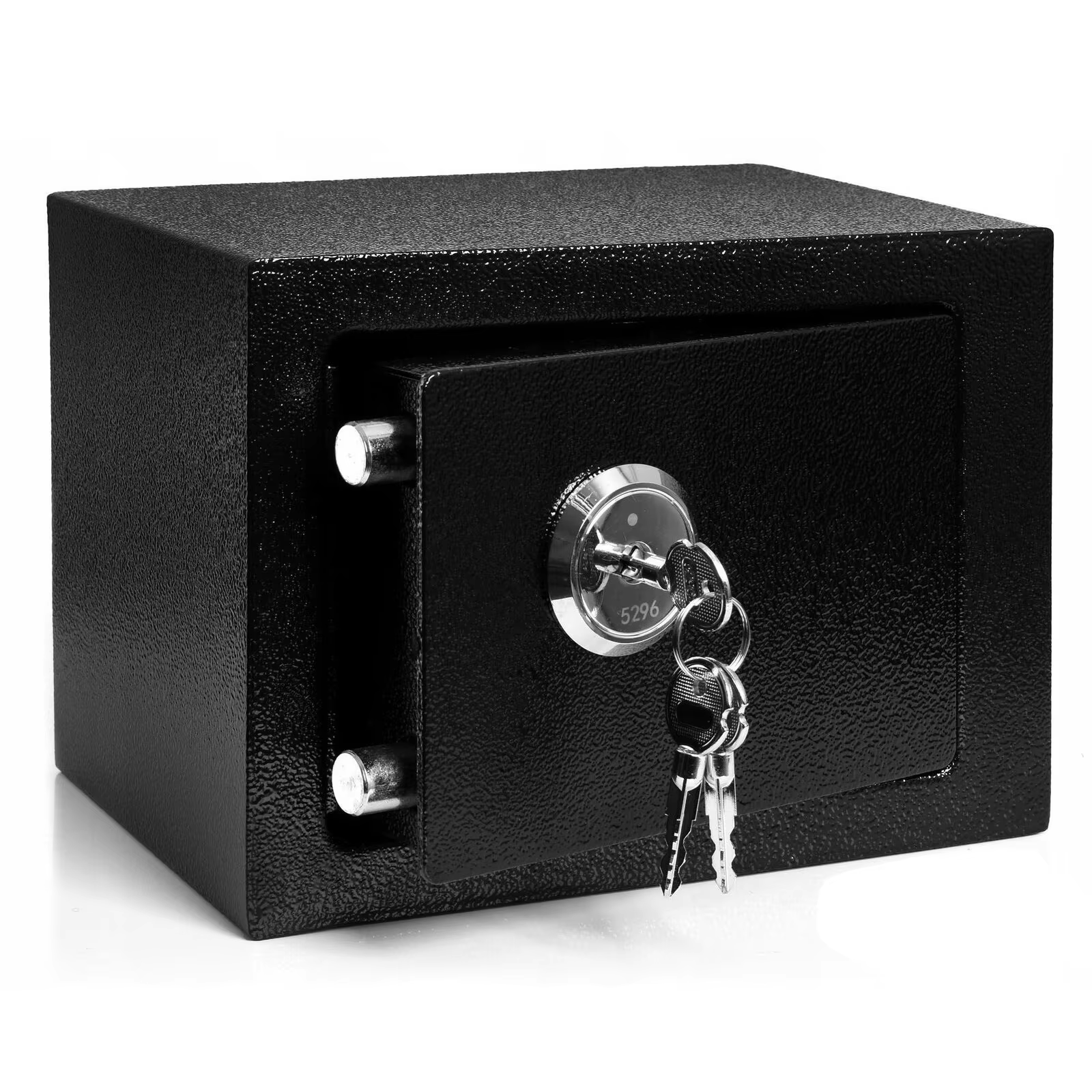
Commercial facility managers often discover the hidden weaknesses of light-gauge security boxes only after a pry-bar incident or an accidental forklift bump in a back-office cash room. Across retail chains, logistics hubs, and corporate treasury departments, swapping thin sheet-metal lockboxes for an engineered heavy duty steel safe eliminates recurring hardware failure and unauthorized access.
Why Thin-Gauge Security Boxes Fail in Commercial Operations
Budget storage boxes marketed to general consumers frequently rely on thin spot-welded wrappers and die-cast zinc cam latches. Under daily commercial shift rotations, door hinges sag, keypad solenoids bind against misaligned strike plates, and pry tools easily deform unreinforced door edges.
Pry-Bar Leverage and Door Frame Deflection Risks
When a gap wider than two millimeters exists between a safe door and its surrounding jamb, flat pry bars gain immediate mechanical leverage. Without a stepped or folded box-frame return flange, outward prying force concentrates directly on a tiny locking tongue, popping the door open within seconds without ever touching the combination dial.
Transit Drop Damage Before Installation Begins
Heavy safes shipped via parcel networks or LTL freight experience severe corner impacts and vibration. Factories without engineered drop-resistant packaging ship units that arrive with racked frames and jammed boltwork. Founded in 1992, Luoyang Huawei Office Furniture Co., Ltd. pioneered mail-order packing and passed the first third-party factory inspection in the Luoyang office furniture industry, applying multi-layer honeycomb cushioning and corner armor to keep heavy steel enclosures square during long-haul transit.
Five Core Engineering Strengths Inside a Heavy Duty Steel Safe
Specifying a commercial-grade steel safe requires looking past exterior paint gloss to examine metallurgy, weld continuity, and locking mechanics.
|
Structural Feature |
Commercial Engineering Design |
Operational Benefit |
|
Cold-Rolled Steel Plate |
High-density SPCC or hot-rolled structural plate per ASTM A1008 |
Resists drilling, sledge impacts, and frame twisting |
|
Continuous Seam Welds |
Full-penetration MIG welds along internal body seams |
Prevents panel separation under hydraulic wedging |
|
Multi-Directional Live Bolts |
Solid chromoly or carbon-steel cylindrical bolts on three sides |
Distributes prying stress evenly across the jamb |
|
Anti-Drill Hardplate |
Carburized or manganese steel baffle plate behind the lock body |
Deflects carbide drill bits away from relocker pins |
|
Anchor Gusset Base |
Pre-drilled bottom mounting plate with reinforced washer ribs |
Secures unit directly into concrete slabs |
Continuous Seam Welding Versus Spot-Tacked Shells
Light storage cabinets depend on intermittent resistance spot welds spaced several inches apart. A true heavy duty steel safe utilizes continuous gas metal arc welding along internal body junctions, turning six separate steel plates into a monolithic rigid cube that resists torsional racking.
Multi-Way Boltwork and Passive Relocking Mechanisms
Commercial boltwork links solid cylindrical steel bolts to an internal cam drive supported by Nylon or brass wear bushings. High-grade designs incorporate a spring-loaded glass or thermal mechanical relocker that permanently pins the bolt carriage in place if someone attempts to punch or torch the primary spindle.
Recessed Door Geometry and Concealed Hinge Architecture
Internal heavy-duty pivot hinges keep hinge barrels completely shielded behind the door slab. Even if an attacker grinds at the exterior seam, fixed deadbolts on the hinge side interlock with the frame channel so the door slab cannot lift out of the opening.
Compliance Benchmarks and Workplace Safety Standards
Commercial procurement teams align physical security equipment with established facility standards. Quality management under ISO 9001 ensures consistent steel plate gauge tolerances and weld penetration checks across batch production. Surface coatings tested under ISO 9227 neutral salt spray and ASTM D3359 cross-hatch adhesion protocols protect steel safes placed in humid ground-floor vaults or coastal retail backrooms.
From a facility safety standpoint, OSHA 1910.22 requires walking-working surfaces and storage equipment to remain structurally stable and free of tipping hazards, making concrete floor anchoring mandatory for top-heavy vertical safes. Additionally, NFPA 101 Life Safety Code guidelines remind facility planners to position heavy safes inside designated alcoves rather than obstructing required egress corridor widths.
Practical B2B Selection, Inspection, and Maintenance Protocols
Purchasing managers sourcing container loads or regional rollouts benefit from standardized incoming quality checks and routine mechanical care.
Pre-Shipment and Receiving Inspection Steps
During factory audits or warehouse receiving, inspectors verify door-to-jamb gap uniformity using feeler gauges, cycle the locking bolts twenty consecutive times to confirm smooth cam travel, and test electrostatic powder coating thickness with a magnetic dry-film gauge. Custom OEM configurations—such as depository drop chutes or internal locker compartments built from buyer CAD drawings—require dimensional verification before mass assembly.
Preventive Care for High-Frequency Commercial Use
Keep bolt channels clean of paper dust and coin debris using dry compressed air every six months. Apply a light dry PTFE lubricant to internal linkage pivot points annually while avoiding heavy grease near electronic solenoid plungers. Always replace alkaline keypad batteries on a fixed annual schedule before low-voltage warnings trigger lockouts.
Frequently Asked Questions
What steel thickness separates a heavy duty steel safe from a standard steel cabinet?
Standard office storage cabinets typically use 0.6 mm to 0.8 mm cold-rolled steel sheets designed for document organization. A heavy duty steel safe utilizes substantially thicker structural steel plates—often ranging from 2 mm to 6 mm on the body and even thicker slabs on the door—providing real resistance against mechanical prying and impact tools.
Why is floor anchoring essential for commercial steel safes?
Unanchored safes under a few hundred kilograms can be tipped onto their backs, giving intruders full body-weight leverage with long pry bars, or simply wheeled out on a warehouse hand truck. Bolting the reinforced base gusset directly into a cured concrete floor slab using expansion wedge anchors eliminates both tipping hazards and removal risks.
How does electrostatic powder coating outperform liquid paint on steel safes?
Electrostatic epoxy-polyester powder coating cures thermally around 180°C to 200°C after chemical degreasing and phosphating. Unlike solvent liquid paint that chips easily when cash trays or metal boxes scrape the doorway, cured powder coating forms a dense, cross-linked polymer barrier that resists abrasion, chemical cleaners, and ambient moisture corrosion.
Can B2B buyers customize internal shelving and deposit slots on steel safes?
Experienced steel furniture factories with in-house CAD engineering teams support full OEM customization. Buyers routinely specify rotary hopper drop chutes for night-shift retail cash drops, separate lockable inner coffer boxes for branch managers, adjustable slotted shelf pilasters, and custom exterior RAL colors matched to corporate facility branding.
How does mail-order packaging protect heavy steel safes during parcel transit?
Mail-order drop packaging combines high-burst double-wall corrugated cartons, high-density EPS or honeycomb paperboard shock absorbers, molded corner protectors, and internal door-foam blocks that prevent boltwork vibration. Testing package designs against ISTA 3A parcel simulation criteria ensures safes arrive square and operational even after multi-stop courier handling.
What should facility teams check if a safe door begins binding when closing?
First inspect the lower door threshold for trapped debris such as staples, receipts, or grit. Next check floor levelness with a spirit level, as uneven subfloors or loose concrete anchor bolts can slightly twist a tall safe body. Finally verify that internal shelf clips are not protruding into the rear path of the door slab.