
 EN
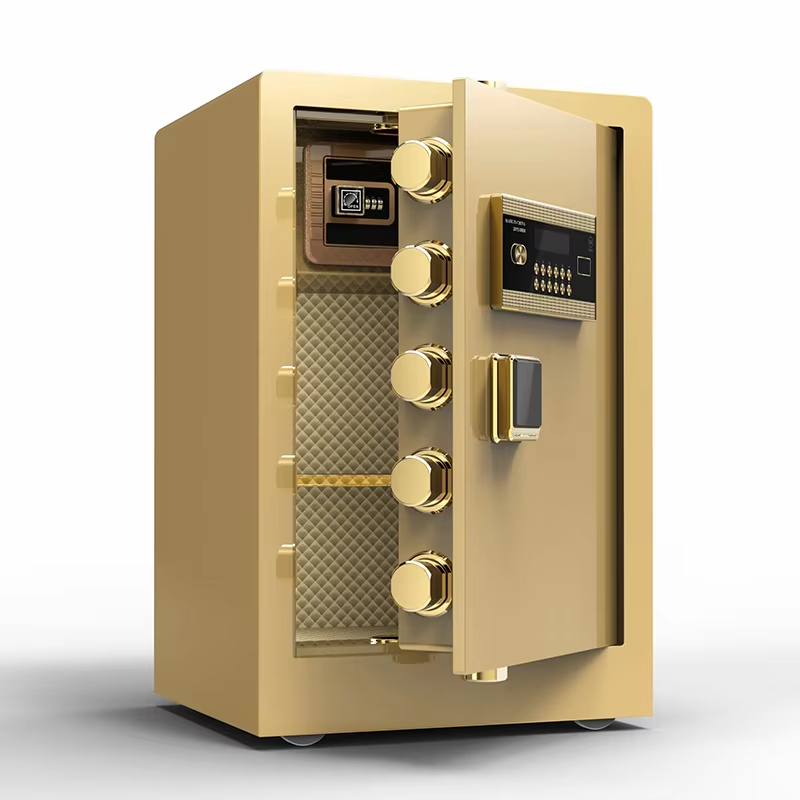
A sales operations team issued portable safe units to field staff for samples, contracts and occasional cash. Within a quarter, three had come back with a cracked handle bracket and one had no cable anchor at all, though the photograph on the purchase order showed one. Nobody had asked how heavy a loaded unit would be, or what happened when it was carried up a flight of stairs every day. A portable safe is specified by its travelling conditions more than by its dimensions. Getting the order right means writing down the load, the carry point and the issuing routine before comparing quotations.
Where field-use orders go wrong
A unit that never leaves a room and a portable safe that rides in a car boot every week do not fail in the same places.
Weight limits nobody checked
For a portable safe, ask for the empty weight and the maximum recommended loaded weight, then add the weight of what the team actually carries. Check any courier, airline or internal travel limit in writing rather than assuming it, and state the number of units one person is expected to move at a time. A heavy box that is awkward to lift gets dragged, dropped or left behind, which defeats the point of taking it. Where a portable safe will be used at a desk in a hotel or a client site, ask whether a cable anchor is supplied and what it is meant to fix to. Weight and anchoring are the two figures that decide whether a field policy can be followed.
A handle that was never load-tested
On a portable safe, a handle is a load path, not a styling detail. Ask how it is joined to the shell: welded, bolted through a reinforcing plate, or riveted into a single sheet. Request the test method and the acceptance criterion for a loaded lift or a repeated carry cycle, and check whether the grip is comfortable with one hand. Look at what happens if the handle is dropped while the door is open. A portable safe with a bracket that tears out of a thin panel is worse than no box at all, because somebody will be carrying it when it fails.
What a travelling box has to tolerate
Transit adds shocks, abrasion and repeated handling to a portable safe that a fixed cabinet never sees, so the structure has to be read with that in mind.
Handle, shell and the joint between them
A portable safe folded body with clean corner joints spreads a lifting load far better than a flat panel with a handle screwed through it. Ask for a section drawing of the handle mount and the reinforcing plate behind it, plus the weld pattern at the base corners. Cold-rolled sheet is formed, welded and then coated; the coating needs adhesion and corrosion results with the method named, such as ISO 2409 with ISO 9227 exposure, because a chipped handle edge is where rust starts after a few weeks in a damp car boot. Check that the door stays latched when the unit is set down on its side. A portable safe should still close square after being carried by one corner.
Cable anchors, liners and lock durability
A cable anchor gives a portable safe user something to fix the box to, but only if the anchor is part of the load-bearing shell rather than a clip on a liner. Ask where it sits, what it is rated to resist and what the cable is expected to loop around. Inside, a fitted liner keeps samples and media from banging against the steel; check that it can be lifted out for cleaning and that it does not block the boltwork. A resettable combination lock to UL 768 suits a unit shared by a rotating team, while a keyed system needs a documented spare key rule. Repeated handling also means more lock cycles, so ask for a documented cycle test.
Standards that belong in the order
For a portable safe, standards separate travel durability from security, which a single product claim tends to blur.
Reading UL 768, ANSI Z535.4 and ISTA 3A together
UL 768 applies to combination locks, and UL 687 or EN 14450 address resistance to attack on the enclosure where a rating is claimed. Neither covers a handle bracket or a carton. Ask for the transit test method and acceptance criteria, with ISTA 3A sequences relevant where units travel as parcels, and put the handle load test in the same document. ANSI Z535.4 covers the user label, which should state the loaded weight limit and how to use the cable anchor in plain wording. REACH and RoHS declarations cover the coating, liner and any electronic lock. OSHA 29 CFR 1910.176(b) is relevant to manual handling and storage of heavy units at the dispatch point.
Where ISO 9001 and REACH fit the paperwork
ISO 9001 is what keeps the handle mount, liner and cable anchor identical across a second production run; ask for a controlled drawing with a revision number and an inspection record from a real batch. ISO/IEC 17025 is the accreditation to look for on any external test report, and ISO 2859-1 helps set a sampling plan at goods-in. NFPA 1 is relevant where several units are stored together at a depot, and NFPA 101 to keeping exit routes clear. Huawei Furniture, a Luoyang steel furniture maker founded in 1992, introduced mail-order packing to its local industry early on, which is the kind of experience that shows up in how a portable safe carton is drawn. Ask for the carton drawing, not a photograph of a packed box.
A field-issue routine
Write one portable safe sheet covering the empty and maximum loaded weight, the cable anchor use, the code or key custody rule, the damage reporting step and the inspection interval. Give each unit an asset number in a register and on the label, and reference the same drawing revision on both. Require written approval before any change to the handle, liner or lock model. At goods-in, open cartons from several pallet positions, lift each sampled unit by the handle with a test load, set it down on its side and check the door still latches square. On return from a trip, log scuffs at the handle and bottom corners, clear grit from the boltwork and wipe the liner. A portable safe program built that way produces fewer replacements and a much clearer record of what actually failed in the field.
Frequently Asked Questions
Which figures should be fixed before comparing quotations?
For a portable safe, empty weight, maximum recommended loaded weight, the weight of what the team actually carries, and any courier, airline or internal travel limit in writing. Add how many units one person is expected to move at once and whether a cable anchor is supplied. Those numbers decide whether a field policy is realistic long before the lock or finish is chosen.
How should a handle be specified?
Ask for a section drawing of the mount, the reinforcing plate behind it and the weld pattern at the base corners. Request the test method and acceptance criterion for a loaded lift or repeated carry cycle, and check the grip works with one hand. A bracket riveted into a single sheet is a common failure point. ISO 2409 and ISO 9227 results describe the coating that protects a chipped handle edge.
Does a security rating cover travel durability?
No. UL 687 and EN 14450 address resistance to attack, UL 768 covers combination locks, and UL 72 addresses fire endurance classes. A handle bracket, liner, carton and repeated drop or vibration need their own test method and acceptance criteria, with ISTA 3A sequences relevant for parcel travel. Request the cabinet report and the transit documentation as separate items.
What should a cable anchor be checked against?
Look at where it sits, whether it is part of the load-bearing shell rather than a clip on the liner, and what the cable is expected to loop around. Ask the factory what the anchor is designed to resist and put the use instruction on the user label. A cable that only attaches to a thin trim gives a field user very little benefit.
What belongs in a field-issue sheet?
Empty and maximum loaded weight, cable anchor use, code or key custody, damage reporting and the inspection interval. Give each unit an asset number in a register and on the label, with the same drawing revision on both. Require written approval before any change to the handle, liner or lock model, and log returns with photographs of scuffs at the handle and bottom corners.
How should goods-in test these units?
Use a sampling plan such as ISO 2859-1 and pull cartons from several pallet positions. Lift each sampled unit by the handle with a test load, set it down on its side and confirm the door still latches square. Check the liner, cable anchor, label and carton interior against the sealed sample. Record findings by asset number rather than as a general pass.