
 EN
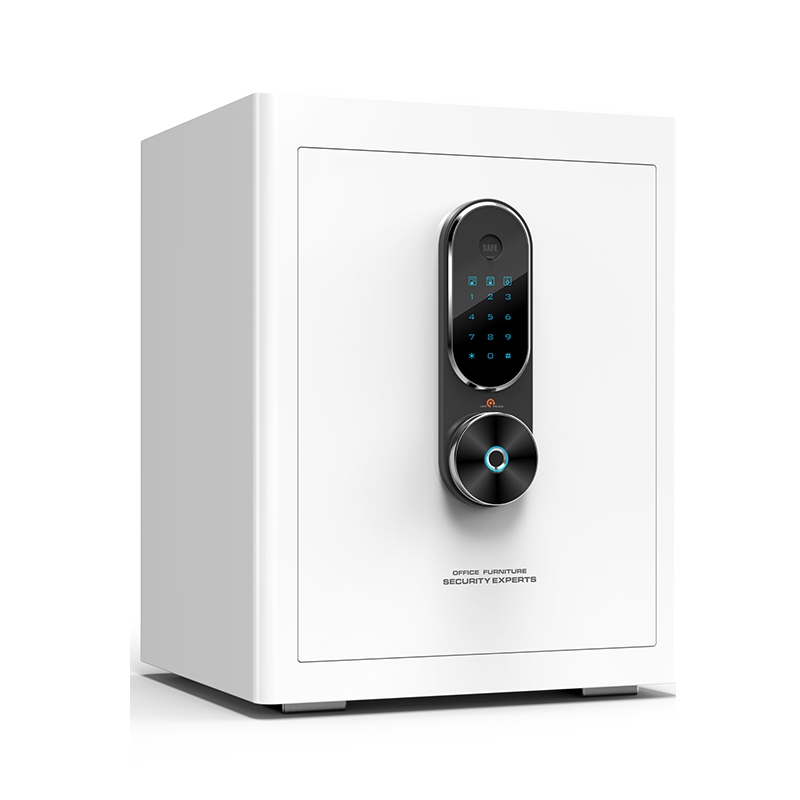
A security lead at a distribution group approved a batch of safe with alarm units after a demo in a quiet meeting room. On the warehouse floor, the loading bay door slamming three metres away set two of them off every morning. The units were not faulty; nobody had written down what should trigger them, or where they would stand. A safe with alarm adds an electrical layer to a mechanical product, and that layer is where most sourcing gaps appear. The enclosure can be excellent while the specification for the sensor, the battery and the output signal is still a single line on a quotation.
Where alarm-equipped orders go off track
A safe with alarm fails in ways a plain steel cabinet never does, because part of the product is a decision about when to make noise.
What the quotation forgot to define
For a safe with alarm, ask for a written definition of the trigger conditions: door opening, tilt, vibration, repeated wrong codes, or a combination of them. State the sensitivity setting, the delay before the sounder starts, how long it runs and how it is silenced. Get the sound level and the test distance in the same document, since a buzzer that is clear in a showroom can disappear inside a steel shell on a busy floor. Name the battery type, the expected replacement interval under a stated test pattern and the low-battery indication. If the unit sends a signal to a building system, specify the output type and the connector. A safe with alarm quotation that lists only a model code leaves every one of those choices to the factory.
False alarms that nobody tested for
Around a safe with alarm, vibration from a trolley, a slammed door, a pallet truck passing over a floor joint and a cleaner’s vacuum can all look like an attack to a sensitive sensor. Ask how the controller filters a short shock from sustained movement, and whether the tilt threshold can be set for a unit fixed to a wall rather than a floor. Request an acceptance test that repeats ordinary site events, not just a tap on the door. Log which events caused a call-out and feed that back into the sensitivity setting before the rest of the order ships. False alarms are expensive because staff stop responding to them, which quietly removes the whole point of the alarm.
Inside the alarm chain
Understanding the signal path of a safe with alarm makes the specification shorter, because a buyer learns which few parts decide how the unit behaves.
Sensors, thresholds and the controller
On a safe with alarm, door contact switches are simple and reliable; a magnetic reed or a mechanical plunger reports whether the door is seated. Tilt and vibration sensing usually comes from a small accelerometer or a piezo element feeding a controller that compares the event against a threshold and a time window. That comparison is the useful part: a single sharp knock should not be treated the same way as sustained movement. Ask where the sensor board sits, how it is fixed, and whether it can be reached without opening the lock. A safe with alarm built for a busy site needs the electronics protected behind the door frame, with a cable route that cannot be pinched when the door closes.
Power, low-battery behaviour and cabled output
Most compact safe with alarm units run from a replaceable battery, which means the alarm has to keep working when building power is off and has to warn somebody before the cell dies. Ask for the low-battery signal, whether it is audible or visual, and who is expected to act on it. Where a hardwired or dry-contact output feeds a building panel, the cable entry, strain relief and the wiring diagram belong in the specification. NFPA 70 covers the electrical installation side, and NFPA 72 is relevant where an alarm signal is brought into a building’s fire alarm and signaling system; those requirements sit with the site’s installer, not the cabinet factory, so name the boundary in the order. A safe with alarm that loses its battery on a Friday afternoon is just a heavy box by Monday.
Standards that belong on the order
For a safe with alarm, standards separate the cabinet from the electronics, which is exactly the distinction a quotation tends to blur.
Reading UL 687, UL 768 and NFPA 70 together
A cabinet’s resistance to attack is its own question, addressed by UL 687 or EN 1143-1 grades, with EN 14450 covering lighter secure storage in S1 and S2 classes. UL 768 applies to combination locks. UL 72 addresses fire endurance classes where records are the risk. None of these documents rate the alarm module, so ask for the module’s own declaration and test method, plus REACH and RoHS declarations for the board, cell and any wiring. ANSI Z535.4 covers the user label, which should explain silencing and battery replacement in plain wording. NFPA 70 and NFPA 72 belong in the installation scope, and OSHA 29 CFR 1910.176(b) covers secure storage and handling of heavy units before they are fixed.
Where ISO 9001 and ISO 2859-1 keep batches consistent
ISO 9001 is what keeps the sensor board, the sensitivity setting and the battery type identical across a second production run; ask for a controlled drawing with a revision number and an inspection record from a real batch. ISO/IEC 17025 is the accreditation to look for on any external test report. ISO 2859-1 gives a defensible sampling plan for goods-in, which matters because an alarm fault is functional rather than visual and a quick look at one unit proves nothing. Add a written packaging specification with a transit test, since a shock in transit can dislodge a connector. ISO 9227 and ISO 2409 results describe the coating, and a scratched door edge is still the place corrosion starts.
An acceptance routine before the rollout
Approve one golden sample of the safe with alarm and keep it sealed, with photographs of the sensor position, the battery bay, the cable entry and the inside of the carton. Put the trigger conditions, sensitivity setting, sound level, battery type, output type and drawing revision into one sheet, and require written approval before any substitution. At goods-in, open cartons from the top, middle and bottom of a pallet, power each sampled unit, trigger it once, silence it, and repeat one ordinary site event such as a nearby door closing or a trolley passing. Record the result by serial number. On site, agree who replaces cells and when, and log every nuisance activation with the cause. That log is what turns a first batch of safe with alarm units into a specification the next site can actually reuse.
Frequently Asked Questions
What should a written specification cover beyond the cabinet?
For a safe with alarm order, name the trigger conditions, sensitivity setting, start delay, sounder duration and silencing method, plus the sound level and the distance it is measured at. Add the battery type, low-battery indication, replacement interval under a stated test pattern, and the output type and connector if a building panel is involved. Attach the sensor position, cable route and drawing revision. A model code alone leaves all of these choices open.
How can false alarms be caught before a full rollout?
Write an acceptance test that reproduces ordinary site events rather than only a direct tap on the door: a nearby door closing, a trolley passing over a floor joint, cleaning equipment running beside the unit. Log every activation and its cause, then adjust the sensitivity setting before the remaining units ship. Ask the factory how the controller filters a short shock from sustained movement, since that filtering decides most nuisance call-outs.
Does a cabinet rating cover the alarm module?
No. UL 687 or EN 1143-1 address resistance to attack on the enclosure, UL 768 covers a combination lock, and UL 72 addresses fire endurance classes. The alarm board, cell, sounder and any output need their own documentation, including the test method and declarations such as REACH and RoHS. Request the cabinet report and the module documentation as separate items with the same model code.
Who is responsible for the alarm wiring?
The factory supplies the unit, its connector and the wiring diagram; the site’s installer handles the building side. NFPA 70 covers the electrical installation, and NFPA 72 is relevant where a signal enters a fire alarm and signaling system. Name that boundary in the order so a cable entry, strain relief or relay interface cannot fall between two parties. Confirm the output type before the panel is specified.
What should goods-in check on these units?
Use a sampling plan such as ISO 2859-1 and pull cartons from several positions on the pallet. Power each sampled unit, trigger it once, silence it, then repeat one ordinary site event to see whether it fires again. Check that the battery bay is closed, the label matches the drawing revision and no connector has worked loose in transit. Record results by serial number rather than as a general pass.
What maintenance does the alarm layer need?
Name an owner for battery replacement and put a date in the site log. Check the low-battery indication, test the sounder at a fixed interval, keep the sensor area and any vent clear of dust, and wipe the door seal with a mild neutral cleaner. Record every nuisance activation with its cause so the sensitivity setting can be reviewed. A dated log makes the next order easier to specify.