
 EN
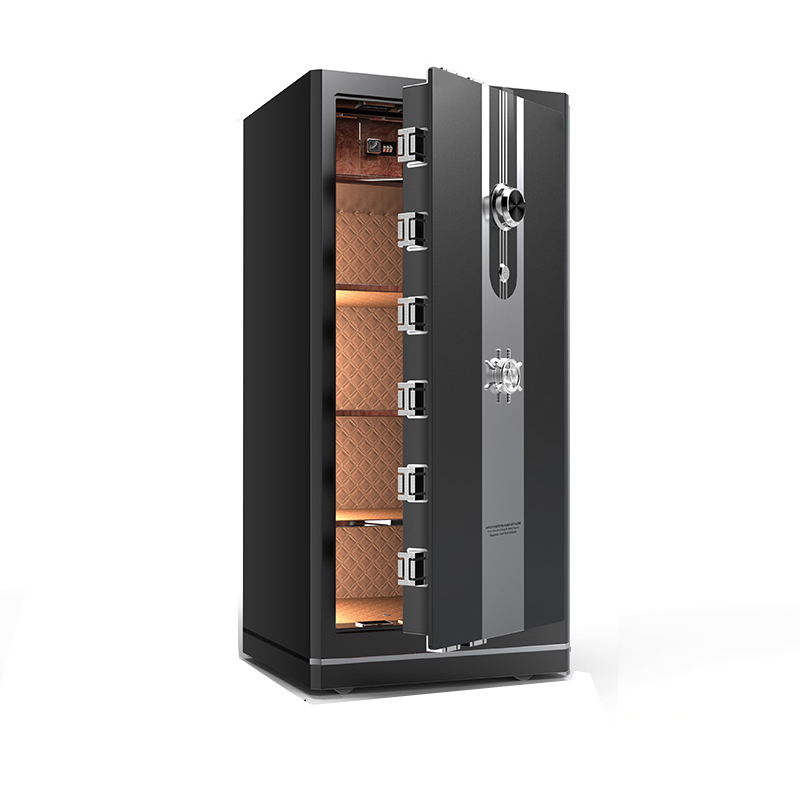
Key Security Ratings and Compliance Standards for B2B Storage Safe Procurement
Decoding UL TL-15, TL-30, and TL-30x6 Burglary Ratings for Commercial Storage Safe Units
Underwriters Laboratories (UL) assigns burglary ratings based on controlled attack testing—not material thickness alone. A TL-15 safe must resist expert attacks for 15 minutes using common hand tools, carbide drills, and picking devices. TL-30 extends that resistance to 30 minutes. TL-30x6 is the most stringent: it requires the same 30-minute resistance on all six faces, including top, bottom, and side walls. This distinction is critical for B2B buyers—safes rated only TL-30 on the door may still be compromised through thinner side panels. Insurers often tie coverage limits directly to these ratings, with TL-30x6 units supporting higher cash or inventory valuations. Per UL 687 test protocols, attack time excludes setup and tool changes—so the rating reflects a minimum benchmark, not real-world delay. The table below summarizes key differences.
| Rating | Test Duration | Attack Tools | Typical Commercial Application |
|---|---|---|---|
| TL-15 | 15 minutes | Hand tools, drills, picks | Small cash, documents |
| TL-30 | 30 minutes | Hand tools, high-speed steel bits | Pharmacy cash, moderate valuables |
| TL-30x6 | 30 minutes, all six sides | Hand tools, drills, grinding points | Dispensary stock, high-value parts, financial |
Industry-Specific Mandates: DEA, UL, and EN Certifications for Pharmacy, Dispensary, and Financial Storage Safe Deployment
Pharmacy and dispensary operations face layered regulatory expectations. In the U.S., the Drug Enforcement Administration (DEA) mandates under 21 CFR § 1301.72 (2023) that controlled substances be stored in a “securely locked, substantially constructed” safe or cabinet. While this sets a baseline, many insurers and state pharmacy boards require third-party certification—most commonly UL burglary ratings—to satisfy audit requirements. In the European Union, EN 1143-1 (2018) governs secure storage, with grades 0–XIII indicating escalating resistance levels. Financial institutions typically specify UL TL-30 or TL-30x6 because internal audit frameworks and cash-on-hand policies reference those exact standards. For example, a dispensary handling Schedule II drugs may need a safe that meets both DEA’s “substantial construction” requirement and a state-mandated fire or burglary rating. Procurement teams should always request verifiable UL listing documentation or EN certification before purchase—without third-party validation, even a heavy steel enclosure risks noncompliance during inspection. For multi-jurisdiction deployments, specifying both UL and EN certification in the RFQ streamlines vendor evaluation and avoids re-inspection delays.
Steel Construction Quality and Structural Integrity of Storage Safe Units
A dependable storage safe begins with engineering-grade steel and anti-intrusion design. Procurement teams should prioritize body thickness, alloy composition, and reinforcement over bolt count or electronic features.
Gauge Thickness, Hardened Steel Liners, and Alloy Specifications That Define True Heavy-Duty Storage Safe Performance
Steel gauge is inverse to thickness: lower numbers mean thicker, stronger steel. Entry-level commercial safes may use 12-gauge bodies (0.1046 in / 2.66 mm), but true heavy-duty units rely on 10-gauge (0.1345 in / 3.42 mm) or 7-gauge (0.1793 in / 4.55 mm) plate. Hardened steel liners—often exceeding 60 HRC—resist carbide-tipped drills and slow mechanical breaching. High-strength low-alloy (HSLA) steel with chromium, manganese, and nickel improves tensile strength and weld integrity. ASTM A36 structural plate—minimum yield strength of 36,000 psi—is widely used as a baseline; premium models add cement-based composite fill between steel layers to disrupt thermal cutting tools. The table below compares common gauges.
| Gauge | Thickness | Typical Commercial Safe Application | |
|---|---|---|---|
| 12 | 0.1046 in | Entry-level storage safe side panels | |
| 10 | 0.1345 in | Standard commercial storage safe body | |
| 7 | 0.1793 in | Heavy-duty storage safe door or body |
Door Jamb Reinforcement, Boltwork Geometry, and Hinge Systems: Engineering Anti-Theft Resilience into Every Storage Safe Unit
Reinforced door jambs are essential to prevent pry-bar entry. Heavy-duty units use recessed jambs with welded steel channels or continuous inner frames—not just bolted-on plates. Boltwork geometry matters more than quantity: active locking bolts must extend into the jamb on both hinge and non-hinge sides, with at least 1-inch diameter for commercial applications. Fixed bolts on the hinge side prevent door removal if hinges are cut. External hinges allow full 180-degree opening but require interlocking lugs or dead bars to block manipulation; internal hinges reduce exposed attack surfaces but limit access. ANSI/UL tests evaluate door and frame as a single assembly—not separate components—so procurement teams should specify units where bolts engage all four sides of the jamb for maximum prying resistance.
Installation Best Practices and Environmental Integration for Optimal Storage Safe Security
Anchoring Methods, Load-Bearing Requirements, and ANSI/UL Compliance for Floor- and Wall-Mounted Storage Safe Units
Proper anchoring transforms a heavy storage safe from a movable object into a fixed security asset. Floor-mounted units require high-tensile wedge anchors or epoxy-set bolts embedded at least 3 inches into cured concrete with a compressive strength of 3,000 psi or greater. Wall-mounted installations demand backing into structural studs—or reinforced concrete/masonry substrates—because drywall alone cannot withstand dynamic pry loads. Always follow the manufacturer’s load-bearing calculations and verify pull-out resistance at each anchor point. Confirm that anchoring hardware complies with ANSI/UL standards through certified installation documentation; UL-listed anti-theft mounting systems provide a recognized benchmark for tamper resistance. In humid or corrosive environments, specify stainless-steel or zinc-coated hardware to preserve long-term integrity.
Streamlining B2B Procurement of Storage Safe Units: Volume, Support, and Lifecycle Value
For B2B buyers, the purchase price represents only part of total cost. Procurement teams must weigh volume-tier pricing, warranty depth, service response times, and long-term maintenance support before selecting a supplier. A rigorous sourcing process uses RFP criteria covering structural warranty length, spare parts availability, rekeying support, and delivery lead times. Consolidating orders across multiple facilities unlocks volume discounts while simplifying vendor management and compliance documentation.
| Evaluation Area | RFP Requirements | Impact on Lifecycle Value |
|---|---|---|
| Volume pricing | Tiered discounts at 10, 25, 50+ units | Lowers upfront cost per unit |
| Support terms | 24–48 hour on-site service, locked spare parts SLA | Reduces downtime in secured environments |
| Warranty | 5–10 year structural and locking system warranty | Covers latent defects in steel and boltwork |
| Lifecycle services | Rekeying, lock upgrades, scheduled maintenance | Extends service life and preserves compliance |
After deployment, reliable support and proactive maintenance determine whether a storage safe remains compliant and attack-resistant over its 10–20 year lifespan. Buyers should request documentation on replacement lock availability, upgrade paths for electronic or biometric systems, and regional service coverage. Suppliers offering formal lifecycle management—including firmware updates, compatibility roadmaps, and obsolescence planning—reduce total cost of ownership and prevent security gaps caused by delayed repairs or discontinued components.
Frequently Asked Questions
What is the difference between UL TL-15, TL-30, and TL-30x6 burglary ratings?
These ratings indicate the level of resistance to physical attacks during testing. TL-15 provides 15 minutes of resistance, TL-30 extends this to 30 minutes, and TL-30x6 applies the same 30-minute resistance to all six sides of the safe.
Why is the TL-30x6 rating significant for B2B buyers?
TL-30x6-rated safes provide enhanced security since they offer protection on all six sides, including top, bottom, and sides. Insurers often offer higher coverage limits for safes with this rating.
What steel gauge is best for commercial storage safes?
True heavy-duty commercial safes typically use 10-gauge (0.1345 in) or 7-gauge (0.1793 in) steel for optimal resistance to intrusion and durability.
How should storage safes be anchored?
Floor-mounted safes should use high-tensile wedge anchors or epoxy-set bolts embedded into cured concrete. Wall-mounted safes need backing into structural studs or reinforced concrete for proper support.
What certifications should I look for when purchasing a safe for pharmacy or dispensary use?
In the U.S., ensure compliance with DEA regulations and UL burglary ratings. For EU deployments, look for EN 1143-1 certification, which governs secure storage standards.
Table of Contents
- Key Security Ratings and Compliance Standards for B2B Storage Safe Procurement
- Steel Construction Quality and Structural Integrity of Storage Safe Units
- Installation Best Practices and Environmental Integration for Optimal Storage Safe Security
- Streamlining B2B Procurement of Storage Safe Units: Volume, Support, and Lifecycle Value
-
Frequently Asked Questions
- What is the difference between UL TL-15, TL-30, and TL-30x6 burglary ratings?
- Why is the TL-30x6 rating significant for B2B buyers?
- What steel gauge is best for commercial storage safes?
- How should storage safes be anchored?
- What certifications should I look for when purchasing a safe for pharmacy or dispensary use?