
 EN
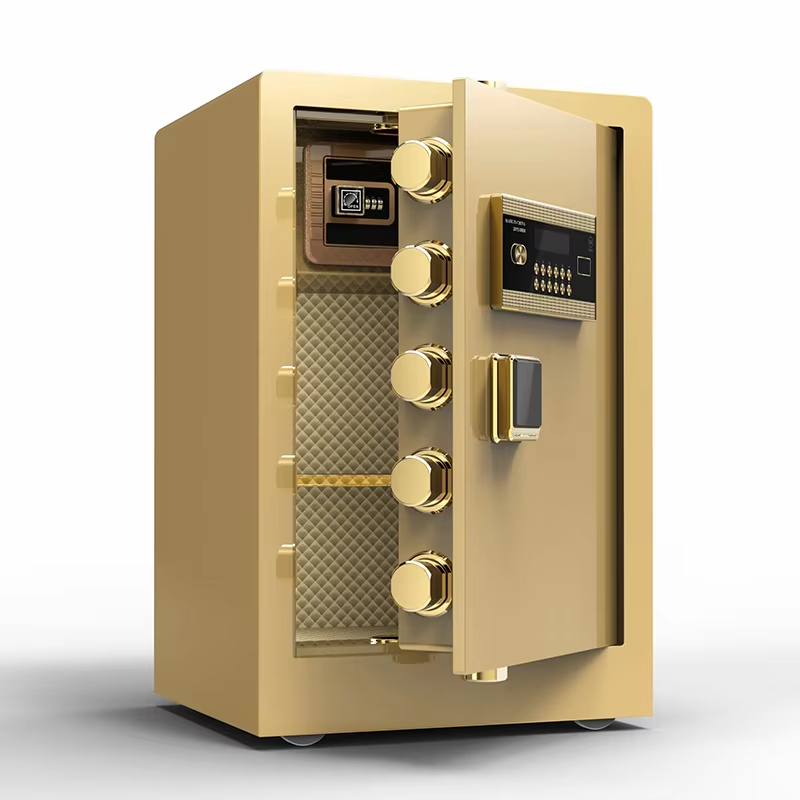
A records team moved archive boxes into a waterproof safe in a basement. A month later the paper was damp and the hinges showed rust blooms. There had been no flood; condensation inside a sealed box and a door gasket that never fully compressed did the damage. The word on the quotation covered neither of those conditions, because nobody had asked what it meant. A waterproof safe is bought against a test condition, not an adjective. Sourcing one well means getting that condition, the seal design and the maintenance plan onto paper before the order is placed.
Where water-resistance claims go vague
Most waterproof safe disputes start with a word covering several very different exposures and no stated method behind it.
One word covering four different exposures
Splash from cleaning, a sprinkler discharge, temporary standing water and sustained immersion are not the same event. For a waterproof safe, ask which one the product is intended for, which test method was used, how long the exposure ran and what the acceptance criterion was inside the box. IEC 60529 gives a common language for ingress protection, but a rating only means something when the test condition and the exact model are named; do not accept a bare claim copied from a brochure. Request the report from an ISO/IEC 17025 accredited laboratory and check the date and drawing revision. A waterproof safe specified without a test condition cannot be compared between two suppliers.
A seal that was never going to be replaced
A waterproof safe door gasket is a wear part. Ask what it is made from, how it is retained, whether a replacement is available as a spare part under the same drawing revision and how an installer can tell it has lost compression. Look at the sealing face too: a folded return that is not flat will leave a gap no gasket can bridge. Check the corners, the hinge side and any cable or lock passage, since those are where water finds a route. NFPA 1 is relevant to sprinkler and fire loading considerations at the placement stage. A waterproof safe with a glued-in seal and no spare part has a service life set by that strip of rubber.
What a sealed door actually involves
Sealing a waterproof safe changes the door, the interior and daily use.
Gasket compression and a flat sealing face
On a waterproof safe, a continuous gasket needs even compression along the whole opening, which means a stiff door, a flat sealing face and a latch or bolt system that pulls the door in evenly rather than at one point. Ask for a section drawing showing the gasket profile, its retention method and the compression stop, since an over-compressed seal will take a permanent set. Where a keypad or cable passes through the door, request a sealed gland rather than an open hole. Coating around any cut edge should be documented with adhesion and corrosion results naming the method, such as ISO 2409 adhesion and ISO 9227 salt spray. A waterproof safe that closes easily but leaves a shiny uneven mark on the gasket is not sealing.
Fire barriers, drainage and condensation
In a waterproof safe carrying a fire class, an insulated barrier sits beside an intumescent seal that expands under heat; a water seal uses a compressible gasket that has to stay flexible at room temperature. Ask how both are arranged around the same door opening and whether one interferes with the other. UL 72 addresses fire endurance classes for records, while IEC 60529 covers ingress protection; neither substitutes for the other. A tightly sealed box also holds moisture from the air and from damp contents, so ask about a desiccant position and put periodic airing in the user instructions. Where standing water is plausible, ask whether the design relies on a drain or on keeping water out entirely, and get that in writing.
Standards that make the claim checkable
For a waterproof safe, the paperwork only works when it separates ingress, fire, attack and site duties.
Reading IEC 60529 alongside UL 72 and UL 687
IEC 60529 provides the ingress protection vocabulary; request the test condition and the classification actually achieved for the quoted model. Fire performance (UL 72), forced entry (UL 687, EN 1143-1, EN 14450) and the lock (UL 768) are separate questions with separate reports; ask only for the ones the quotation claims, each with an ISO/IEC 17025 accredited laboratory and the model code. Sprinkler exposure, egress and wiring sit with NFPA 1, NFPA 101 and NFPA 70, while OSHA 29 CFR 1910.176(b) covers handling. ANSI Z535.4 governs the seal-care label; REACH and RoHS cover the gasket.
Where ISO 9001, NFPA 1 and ANSI Z535.4 fit
Consistency of the gasket profile, sealing face and compression stop is an ISO 9001 matter; ask for a controlled drawing with a revision number and an inspection record from a real batch. ISO 2859-1 helps set a goods-in sampling plan, and ISO 9227 describes corrosion behaviour of the coating and plated hardware. Huawei Furniture, a Luoyang steel office furniture maker founded in 1992, builds to customer plans and samples with an in-house design team, which is how a buyer gets the gasket section and the test condition into one controlled drawing. Put the written test condition, the acceptance criterion and the seal part number into the order rather than into an email thread.
A written test condition before the order
For a waterproof safe, ask the supplier to state the exposure type, the test method, the duration, the acceptance criterion inside the box and the exact model and revision tested. Attach the gasket section drawing, the spare part number, the desiccant position and the seal inspection interval to the same sheet. Require written approval before any change to the gasket, door or lock passage. At goods-in, close a strip of paper across the gasket line on sampled units and check for an even mark, then compare the seal profile with the sealed sample. Record findings by serial number. A waterproof safe program built on that sheet gives a later auditor something verifiable instead of an adjective.
Frequently Asked Questions
What should a written water-resistance condition state?
For a waterproof safe, the exposure type, the test method, the duration, the acceptance criterion inside the box and the exact model and drawing revision tested. Splash, sprinkler discharge, standing water and immersion are different events, and a bare claim cannot be compared between suppliers. Request the report from an ISO/IEC 17025 accredited laboratory and check its date matches the current revision.
How is IEC 60529 relevant here?
It gives a common vocabulary for ingress protection, but a classification only means something when the test condition is stated and the report names the exact model. Do not accept a rating copied from a brochure. Ask which exposure was tested, how long it ran and what was found inside the box, then put that condition into the purchase order.
What should be checked about the door gasket?
A continuous profile, even compression along the whole opening, a flat sealing face and a compression stop. Ask for the material, the retention method, the spare part number and how a loss of compression can be recognised. Look at corners, the hinge side and any keypad or cable passage. ISO 2409 and ISO 9227 results describe the coating around cut edges.
Can fire protection and water protection be specified together?
Often, but the two seals do different jobs. An intumescent seal expands under heat, while a water gasket has to stay flexible at room temperature. Ask for a section drawing showing how both sit around the door opening and whether one interferes with the other. UL 72 addresses fire endurance classes and IEC 60529 ingress protection; request a separate report for each.
How should condensation inside a sealed box be handled?
Ask about a desiccant position and put periodic airing in the user instructions, since a tightly sealed enclosure holds moisture from the air and from damp contents. Where standing water is plausible, get the design’s approach written down: keeping water out entirely, or a drain that must stay clear. A sealed box with no drying routine can damage paper without any flood.
What belongs in the goods-in check?
Compare the gasket profile with the sealed sample, close a strip of paper across the seal line on sampled units and check for an even mark, then confirm the spare seal part number and the test condition in the documents. Use a sampling plan such as ISO 2859-1. Record findings by serial number and keep one sealed sample with its instruction sheet for later batches.