
 EN
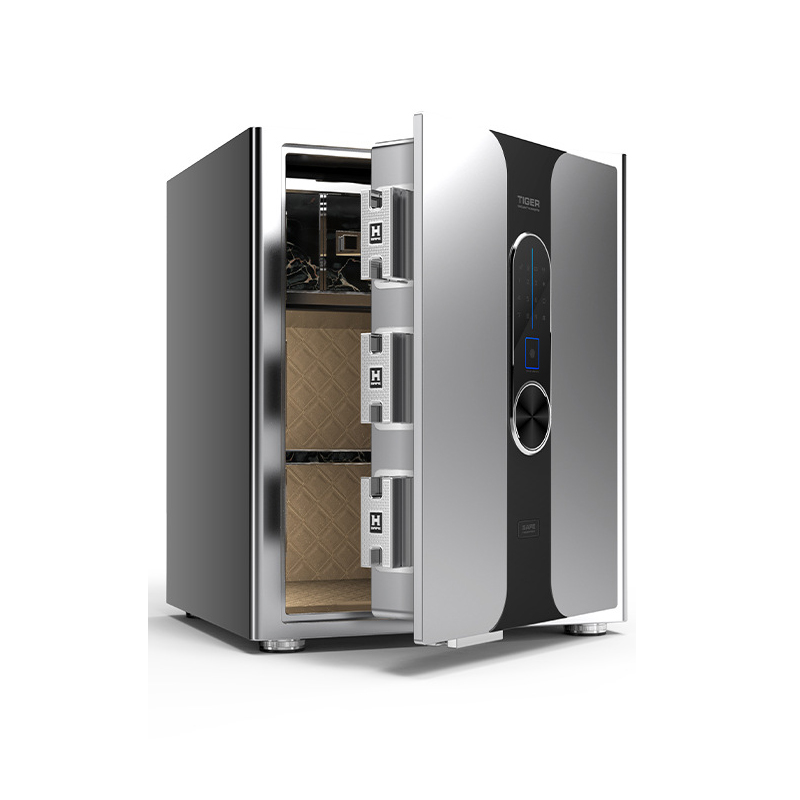
A site supervisor prised the trim off a lockable safe and pulled a cheap cylinder out with a pair of pliers. The door stayed shut, because fixed bolts on the hinge side still held it, but the lock had to be replaced and the key schedule rebuilt for the whole floor. The enclosure was sound; the parts around the cylinder were not. A lockable safe is judged by what sits behind the keyway as much as by the door itself. Five structural details decide whether a lost key is an inconvenience or a security incident.
The zone behind the keyway
In a lockable safe, a cylinder is a small component in a large steel door, and it takes a surprising amount of force.
When a trim carries the load
On a lockable safe, a cylinder held by a decorative bezel and a thin clip will eventually be pulled, especially in a shared area where doors get leaned on. For a lockable safe, ask for a section drawing showing the cylinder, its retaining nut, the plate behind it and the route from the cam to the boltwork. Check that the keyway cut-out avoids a folded return or a load-bearing weld. A heavy duty lockable safe keeps that zone inside the defended envelope, with the opening planned at the forming stage rather than enlarged on the assembly bench.
Five build details worth checking
Each lockable safe detail is visible on a sample or a section drawing, and each changes how the unit behaves after a year of daily use.
A reinforced seat behind every cylinder
On a lockable safe, look for a continuous plate fixed to the door assembly, with the cylinder retained by a nut rather than a spring clip. The cam should drive a defined lever or rod, not push directly against a thin panel. Ask how the plate is fixed and whether it can be serviced without disturbing the bolt cover. UL 437 applies to key locks and UL 768 to combination locks as component documents; neither rates this seat. A lockable safe with a strong cylinder on a weak plate has simply moved the weak point one step backwards.
Swapping a core without taking off the door
On a lockable safe, staff leave, keys go missing and a master schedule gets extended. A cylinder that can be exchanged from the front, using a documented procedure and a spare core under the same drawing revision, turns that into a ten-minute job. Ask whether the core is standard across the range, whether the retaining hardware is captive, and whether a change affects the master key hierarchy. Check that the replacement operation does not expose the boltwork to somebody standing at the door. A lockable safe that needs the door unhinged for a rekey will simply not be rekeyed.
Why three bolts beat one cam
A single cam on a lockable safe holds the middle of the door, so the free corner can be pulled clear. Three-point boltwork engages the frame at the top, bottom and opening side, spreads the load and keeps the gap even. Look for guided rods, defined strike pockets and a plate behind the cylinder, and ask for a documented cycle test on the assembled door. Check that the key withdraws only when the bolts are fully seated. A lockable safe that needs a lift and a turn to close is already out of alignment, and no amount of keying will fix that.
Where the fixed lip protects the hinge side
On a lockable safe, hinge-side bolts or a retaining lip stop the door being lifted off if the pins are attacked. With concealed hinges, ask for the backing plate behind them and the maximum opening angle in the intended position, since a unit in a narrow corridor may have little swing room. Look at the rebated frame too: a flat overlap leaves a straight prying gap, while a rebate turns that gap and lets the bolts engage behind a thicker section of steel. ISO 2409 with ISO 9227 describes the coating around these cut edges.
Shielded keyways, exposed ones are an invitation
A lockable safe keyway set behind a hardplate or a shielded recess resists drilling, while one surrounded by a thin trim invites tampering. Ask how the keyway is protected, whether the bezel is captive, and what happens if the cylinder is punched through. A relocker behind the lock blocks the boltwork independently if that occurs, so request a description of it in the drawing. NFPA 70 is relevant to checking for services before a unit is fixed near wired accessories, and ANSI Z535.4 covers the label explaining spare key custody. An unprotected keyway makes the rest of the structure irrelevant.
Documents that back up the structure
Standards separate the lock, the enclosure and the site, so the file needs more than one sheet.
Asking for reports that name this door assembly
A cylinder tested to UL 437 or a dial to UL 768 is only one component. The assembly’s behaviour under attack belongs to UL 687, EN 1143-1 and EN 14450; fire exposure to records belongs to UL 72. Ask for the report that names this exact door revision, issued by a laboratory holding ISO/IEC 17025 accreditation, and add a cycle test on the complete door. Repeatability of the cylinder model and lock seat is an ISO 9001 matter, and ISO 2859-1 sets the goods-in sample size. Handling, placement and egress fall under OSHA 29 CFR 1910.176(b), NFPA 1 and NFPA 101, with REACH and RoHS covering plated hardware.
Inspecting the same points in service
With the lockable safe door open, look at the lock seat from inside: a continuous plate, a captive retaining nut, guided rods and no loose clip. Turn the key through three full cycles and check that it withdraws only when the bolts are seated. Press gently on the free corner and look along the frame for an uneven gap. Clear grit from the keyway and strike pockets, clean the seal with a mild detergent, repair finish damage at folded returns and enter each key issue or core change in the register. A heavy duty lockable safe built on these five details keeps its key schedule manageable across many sites.
Frequently Asked Questions
Why does the plate behind the cylinder matter?
A cylinder held by a decorative bezel and a thin clip can be pulled out of the door, even when the lock itself is sound. Look for a continuous plate fixed to the door assembly, a retaining nut rather than a spring clip, and a defined lever or rod between the cam and the boltwork. UL 437 and UL 768 rate the lock as a component, not this seat.
What makes a core swap straightforward?
A cylinder exchangeable from the front, using a documented procedure and a spare core under the same drawing revision. Ask whether the core is standard across the range, whether the retaining hardware is captive and whether a change affects the master key hierarchy. Check that the operation does not expose the boltwork. A rekey that needs the door unhinged will simply not happen.
How should boltwork be judged on a sample?
Look for three-point engagement with guided rods, defined strike pockets and a plate behind the cylinder. Ask for a cycle test on the assembled door and check the key withdraws only when the bolts are fully seated. Bolts or a retaining lip on the hinge side stop the door being lifted off if the pins are attacked. A door needing a lift and a turn to close is out of alignment.
What protects the hinge side?
Hinge-side bolts or a fixed retaining lip, plus a backing plate behind concealed hinges. A rebated frame turns the straight prying gap a flat overlap leaves and lets the bolts engage behind thicker steel. Ask for the maximum opening angle in the intended position, since a narrow corridor may limit swing. ISO 2409 and ISO 9227 results describe the coating around these cut edges.
Why is the keyway surround important?
A keyway behind a hardplate or shielded recess resists drilling, while one surrounded by thin trim invites tampering. Ask whether the bezel is captive and whether a relocker blocks the boltwork independently if the cylinder is punched through. ANSI Z535.4 covers the label on spare key custody. An unprotected keyway makes the rest of the structure irrelevant.
What should a service inspection record?
Three full key cycles, confirmation that the key withdraws only when the bolts are seated, and a check of the lock seat from inside. Clear grit from the keyway and strike pockets, wipe the seal with a pH-neutral cloth and seal coating chips at folded edges. Log every key issue and core change with a date and a name so the handover sheet stays current.