
 EN
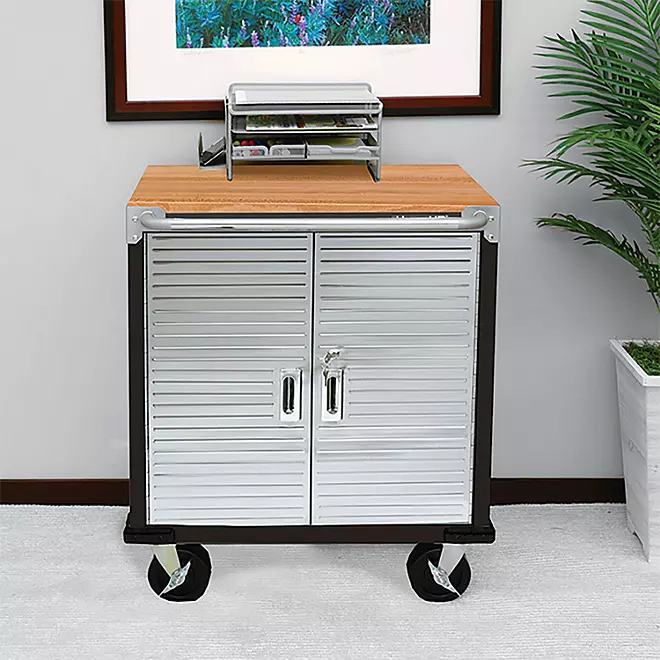
Clutter Reduction and Time Savings from a Metal Cabinet with Lock
How Secure Storage Eliminates Visual and Physical Clutter in High-Traffic Workspaces
In high-traffic work areas, loose tools, personal items, and spare parts rapidly create visual and physical clutter—crowding surfaces, narrowing walkways, and forcing workers to waste time searching through disorganized piles. A metal cabinet with lock resolves this by consolidating scattered items behind a single, secured door. When every tool or component has a designated, enclosed location, aisles stay clear, workstations remain clean, and visual distractions vanish. Employees no longer scan cluttered desks or shared carts; instead, they retrieve what they need directly from labeled shelves or organized drawers. The lockable design ensures only authorized staff access contents, making the workspace predictable and stable. For example, a maintenance team storing diagnostic equipment in a reinforced metal cabinet can cut retrieval time by keeping full instrument sets together—reducing task preparation, minimizing interruptions, and eliminating repeated trips to the supply room. Less clutter means fewer misplaced items, less rework, and more time spent on value-adding work.
Cognitive Load Theory: Why Organized, Locked Storage Accelerates Decision-Making and Task Initiation
Cognitive load theory holds that working memory has limited capacity—and cluttered environments overload it with irrelevant visual stimuli. A lockable metal cabinet reduces extraneous cognitive load by concealing non-essential items behind closed doors. Workers no longer expend mental energy filtering out messy piles or guessing where a tool was left. With each object assigned to a consistent, secure location, the number of micro-decisions before task initiation drops significantly. Reliable access control also removes the mental step of verifying tool safety or ownership. Technicians who know the cabinet layout and lock code can begin repairs immediately—no scanning, no hesitation. This is especially impactful in high-pressure settings where delays compound. Lower cognitive load correlates with fewer errors, faster task starts, and more consistent output. In practice, the organized, locked cabinet functions as a cognitive shortcut: less noise, fewer choices, and quicker action.
Security as an Efficiency Driver: How the Lock Mechanism Prevents Workflow Disruption
Reducing Rework and Downtime Caused by Unauthorized Access or Misplaced Tools
Unauthorized access frequently leads to misplaced, lost, or misused tools—triggering production pauses, repeated setups, and costly rework. A metal cabinet with lock mitigates this risk by restricting access to trained, authorized personnel only. Fixed, secured locations mean workers spend less time searching and more time executing tasks. This directly cuts downtime from missing equipment and prevents quality compromises caused by unapproved substitutes. In shared workshops, a reinforced locking system establishes clear boundaries: only those with verified access can open high-value storage. That accountability discourages ad hoc borrowing and careless handling—two leading causes of specialized tool loss. Supervisors gain traceability: if an issue arises, access logs or key assignments simplify root-cause analysis. Over time, fewer disruptions and less rework translate into measurable efficiency gains—particularly critical in production or maintenance environments where seconds count and delays cascade.
Trust Architecture in Practice: Streamlining Procedures When Access Control Is Reliable
Reliable access control builds a “trust architecture” that removes procedural friction. When a lock mechanism functions consistently, teams skip time-consuming verification steps—like manual key handoffs or verbal confirmations—before starting work. Supervisors can assign access by role rather than physical keys, accelerating shift changes and reducing administrative overhead. Workers trust that approved tools will be present, accounted for, and ready—so they initiate tasks without waiting for confirmation. This reliability also simplifies incident reviews: digital logs or key assignment records make responsibility clear without lengthy investigations. In practice, streamlined procedures emerge when the cabinet lock becomes a dependable control point—fewer manual checks, shorter approval cycles, and predictable tool availability all sustain workflow momentum across shifts. That trust reduces hesitation, supports faster cross-team decisions, and reinforces operational continuity.
Strategic Deployment of a Metal Cabinet with Lock for Lean Workflow Optimization
Modular Zoning: Placing Reinforced Metal Cabinets to Minimize Task Transition Distance
A metal cabinet with lock enables modular zoning by placing secure storage precisely at the point of use—dramatically reducing travel between tasks. In one auto shop, adding 15 steel storage cabinets cut average tool retrieval time from 6.2 minutes to 1.8 minutes per job and increased task completion rates by 41% within six months (2023 Automotive Productivity Report). For lean layouts, map high-traffic zones and position daily-use tools within arm’s reach—while maintaining 32–36 inches of clearance between cabinets to ensure safe movement. With 63% of workshops under 1,500 square feet now using modular cabinets (2024 Industrial Storage Survey), reconfigurable locked units support sustainable 5S implementation without the inflexibility of fixed shelving. Localized, locked storage eliminates up to fifty unnecessary cross-floor trips per technician per day, while clearly labeled compartments reduce search time and keep task transitions short. Vertical stackable units add high-density, point-of-use capacity in compact zones—and positioning reinforced cabinets near active work areas shortens decision-to-action time, preventing bottlenecks before they form.
Frequently Asked Questions (FAQ)
Why is a metal cabinet with lock important in high-traffic workspaces?
These cabinets help reduce visual and physical clutter, enhance security, and save time by consolidating tools and components in one secure location, ensuring easy retrieval and eliminating workspace distractions.
How does a metal cabinet with lock improve cognitive decision-making?
By concealing non-essential items, these cabinets reduce cognitive overload, making decision-making and task initiation smoother and faster.
How does a locking mechanism enhance workflow efficiency?
It prevents issues like unauthorized access or misplaced tools, reducing downtime, rework, and disruptions while fostering accountability and operational consistency.
What is modular zoning in metal cabinet placement?
Modular zoning involves placing cabinets at strategic points to minimize task transition times and improve workflow efficiency, especially in compact or high-traffic work areas.