
 EN
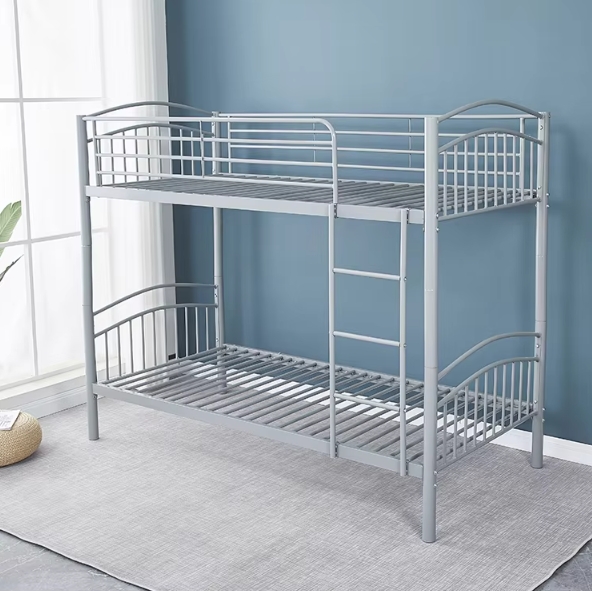
Dormitories and Employee Housing: Space-Saving, Durable Steel Metal Beds
Modular, High-Density Layouts for Compact Staff Accommodation
Steel metal bed systems enable modular, high-density dormitory layouts through vertical stacking—doubling or tripling sleeping capacity without expanding floor area. In compact staff housing, a standard single bed occupies ~3.7 m², whereas a well-designed bunk configuration reduces per-occupant footprint to approximately 1.9 m² while maintaining required aisle widths and egress clearances. Demountable ladders, integrated guardrails, and bolted steel frames allow facility managers to reconfigure rooms as workforce size fluctuates. Typical dimensions—80 inches long and 41 inches wide per bunk—optimize corridor access and upper-bunk safety. Welded steel joints resist racking and loosening under daily high-turnover use, ensuring long-term stability without routine retightening. For rotational housing, this space efficiency lowers rental cost per bed, supports compliant emergency exits, and enables double-row configurations that maximize occupancy in seasonal labor camps, student residences, or 24/7 shift facilities where square footage is constrained.
Lifecycle Cost Advantages of Steel Metal Beds vs. Wood in Long-Term Leasing
Over multi-year leases, steel metal beds deliver lower total cost of ownership than wood—primarily due to extended service life and reduced maintenance. Wood frames in high-occupancy dormitories commonly exhibit split slats, loose joints, and surface degradation within three to five years, triggering replacement or refurbishment. In contrast, properly coated steel frames typically remain fully functional for ten years or more with only basic cleaning and occasional coating touch-ups—cutting material disposal, labor, and downtime costs. Steel also resists moisture, warping, and pest harborage far better than wood, significantly lowering bed bug treatment frequency and associated operational disruption. Though upfront pricing for steel beds runs 15–30% higher than comparable wood units, lifecycle cost models (industry benchmarks, 2023) show 40–50% lower annualized expense when factoring in replacement cycles, pest control, and reassembly labor. For leasing operators, this translates into predictable capital planning—transforming dormitory furniture from a recurring operating cost into a stable, low-risk asset.
Remote & Rugged Worksites: Steel Metal Beds for Construction, Mining, and Field Operations
Corrosion-Resistant Coatings and 500 kg Load Capacity for Harsh Environments
In remote construction, mining, and field operations, steel metal beds must endure moisture, salt spray, abrasive dust, and extreme temperature swings. Low-gauge metal or wood frames degrade rapidly in such conditions, increasing replacement frequency and compromising worker safety. For these applications, specify frames with hot-dip galvanized or industrial-grade powder-coated finishes validated to ASTM B117 (2023) for ≥1,500 hours of salt-spray resistance. These coatings protect welds, joints, and base plates from rust and chemical corrosion—especially critical in coastal camps, underground mining quarters, and high-humidity processing zones.
Equally vital is structural load capacity. A commercial-grade steel bed rated for 500 kg static load supports heavy occupants, personal gear, and incidental equipment use without bending, cracking, or weld fatigue. This rating also ensures integrity during frequent relocation between camp modules, transport stacking, or temporary use as work platforms. Leading designs reinforce side rails and center supports with cold-rolled steel profiles and include anti-slip leg pads for stability on uneven or sloped flooring. Removable, washable headboards and footboards simplify cleaning in dusty or muddy environments. Together, robust corrosion protection and verified 500 kg load capacity extend service life, contain replacement costs, and maintain safe, reliable sleeping quarters for rotating crews.
Government, Military, and Secure Facilities: Steel Metal Beds Meeting Compliance and Safety Standards
MIL-STD-810G Certification for Vibration, Shock, and Structural Integrity
In government and military quarters, steel metal beds must withstand frequent relocation, heavy use, and sudden mechanical stress. MIL-STD-810G (2008) provides a widely accepted benchmark for evaluating durability under vibration, shock, and structural loading. Beds engineered to this standard undergo multi-axis vibration testing and simulated transit shock—including drop tests—and welded steel frames with reinforced corners routinely pass 500+ hours of continuous vibration without joint cracking or fastener loosening. This performance directly reduces frame failure risk and prevents injuries linked to structural collapse. For procurement teams, requesting third-party test reports aligned to MIL-STD-810G methods offers objective verification of structural integrity. Compared to wood or aluminum alternatives, certified steel frames demonstrate measurably lower deformation after repeated shock exposure—and the standard’s optional environmental testing (e.g., temperature, humidity) further validates performance in climate-uncontrolled secure facilities. Specifying MIL-STD-810G compliance helps ensure mission-critical durability without overpaying for unsubstantiated claims.
Anti-Tamper Design, Anchor Integration, and Rapid Deployment in Barracks
Secure facilities demand beds that resist unauthorized disassembly and can be permanently anchored to floors or walls. Anti-tamper fasteners—such as pin-in-Torx or one-way screws—prevent removal using common hand tools. Anchor plates welded directly to bed legs allow through-bolting into concrete subfloors, minimizing lateral movement during forced entry or emergency evacuation. In barracks, speed of deployment is essential: modular steel frames with pre-installed hardware can be assembled by two personnel in under 10 minutes—no power tools required. Nesting or stackable designs reduce storage volume by up to 40%, streamlining logistics between deployments. For military housing, this combination supports rapid bed-down post-deployment and simplifies inventory tracking across rotations. Buyers should explicitly require tamper-resistant hardware and anchor compatibility in bid documents—and verify pull-out strength of anchor points via third-party testing. These features ensure stability, security, and adaptability in sensitive, high-readiness environments.
Hazardous Industry Applications: ESD-Safe and Non-Sparking Steel Metal Beds
Electrostatic discharge (ESD) poses serious risks in hazardous settings—from damaging microelectronics to igniting flammable vapors or dust clouds. In such environments, a steel metal bed must serve as both durable furniture and an engineered component of the facility’s safety system.
ESD-safe steel beds integrate static-dissipative powder coatings, conductive casters, and grounding studs that channel charge safely to a verified earth ground—preventing uncontrolled discharge through personnel or equipment. The ESD Association estimates static-related failures cost electronics manufacturers up to $5 billion annually (ESDA, 2021). Non-sparking variants replace high-friction steel components with copper, brass, or bronze alloys to eliminate mechanical spark generation during movement or wheel contact with concrete.
Common applications include electronics assembly, solvent and paint booths, munitions storage, and pharmaceutical powder handling. The table below outlines core requirements by hazard type:
| Hazardous setting | Primary bed requirement | Reason |
|---|---|---|
| Electronics assembly | Static-dissipative coating and grounding points | Prevent ESD damage to sensitive components |
| Solvent and paint areas | Non-sparking alloys and sealed joints | Avoid ignition of flammable vapors |
| Munitions storage | Non-ferrous fittings and anti-static casters | Reduce friction sparks and stray charges |
| Pharmaceutical powder rooms | Conductive casters and continuous grounding | Control dust cloud ignition risks |
NFPA 77 and OSHA 1910.307 provide authoritative guidance on static control in hazardous locations. Procurement teams should specify surface resistance below 10⁹ ohms for ESD-safe surfaces and verify non-sparking materials match the site’s classified hazardous area designation (e.g., Class I, Division 1). A properly engineered steel metal bed mitigates fire, explosion, and product-loss risk—while delivering the same long-term durability expected in demanding industrial use.
FAQ
Why are steel metal beds better than wooden beds for dormitory use?
Steel metal beds are more durable, resist wear and tear, and have significantly lower long-term maintenance costs compared to wooden beds. They also reduce pest infestations, such as bed bugs, and offer better stability in high-occupancy environments.
What is the load capacity of steel metal beds for rugged worksites?
Commercial-grade steel beds are often rated for a static load capacity of up to 500 kg, enabling them to support heavy equipment, personal gear, and occupants without bending or breaking.
What are the key features of ESD-safe steel metal beds for hazardous industries?
ESD-safe steel beds typically feature static-dissipative coatings, conductive casters, and grounding studs to channel static charge safely, reducing risks such as equipment failure or ignition of flammable materials.
How does MIL-STD-810G compliance benefit steel metal beds for military use?
MIL-STD-810G certification ensures the beds endure vibration, shock, and structural loading during frequent relocation and heavy use, making them highly durable in extreme conditions.
Can steel metal beds be anchored to floors or walls?
Yes, many steel metal beds come with anchor plates and anti-tamper hardware, enabling secure installation in facilities where stability and security are priorities.
Table of Contents
- Dormitories and Employee Housing: Space-Saving, Durable Steel Metal Beds
- Remote & Rugged Worksites: Steel Metal Beds for Construction, Mining, and Field Operations
- Government, Military, and Secure Facilities: Steel Metal Beds Meeting Compliance and Safety Standards
- Hazardous Industry Applications: ESD-Safe and Non-Sparking Steel Metal Beds
-
FAQ
- Why are steel metal beds better than wooden beds for dormitory use?
- What is the load capacity of steel metal beds for rugged worksites?
- What are the key features of ESD-safe steel metal beds for hazardous industries?
- How does MIL-STD-810G compliance benefit steel metal beds for military use?
- Can steel metal beds be anchored to floors or walls?