
 EN
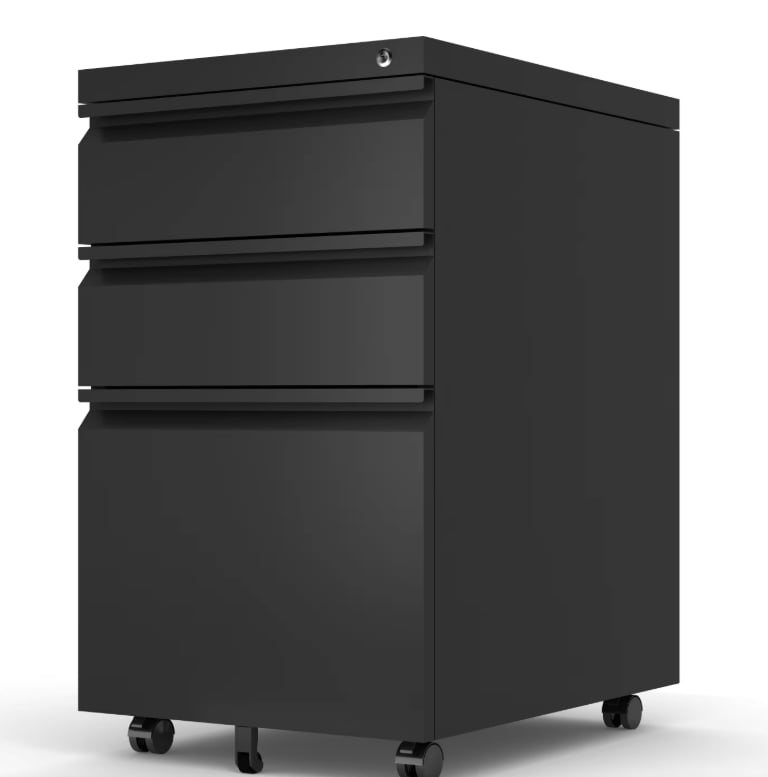
Material Quality and Structural Integrity of Steel Locker Cabinets
Decoding Steel Gauge: Why 16–18 Gauge Delivers Optimal Durability for Heavy-Use Locker Cabinet Applications
Steel gauge is an inverse measure of thickness: lower numbers indicate thicker, stronger steel. For heavy-use locker cabinets—especially in schools, warehouses, and fitness centers—16-gauge (≈1.5 mm) and 18-gauge (≈1.2 mm) panels strike the optimal balance of dent resistance, structural rigidity, and practical weight. Thinner 20-gauge (0.9 mm) doors risk flexing at hinge lines after repeated impact, causing misalignment and latch failure. Thicker 14-gauge (2.0 mm) adds unnecessary weight and cost without commensurate gains in most B2B environments.
When evaluating suppliers, request separate gauge specifications for doors and body panels—some units use a robust door but compromise with lighter back or side panels. Also ask for the maximum static load rating per shelf; 25 kg or more signals sound engineering. Reinforced top and bottom flanges, welded door frames, and continuous hinges further protect high-stress zones. Properly specified 16–18 gauge construction maintains door alignment, resists prying, and significantly extends service life compared to thinner alternatives.
Cold-Rolled vs. Hot-Rolled Steel: How Manufacturing Method Affects Surface Finish, Weldability, and Long-Term Locker Cabinet Performance
Cold-rolled steel is processed at room temperature after pickling to remove mill scale, yielding a smooth, dimensionally precise surface with tight thickness tolerances. This makes it ideal for visible locker cabinet components—doors, side panels, and bases—where accurate bending, clean welds, and consistent powder-coat adhesion are critical. Cold-rolled ASTM A1008 sheet supports stronger coating bond and minimizes micro-cracks at seams, directly reducing early corrosion in humid or high-contact settings.
Hot-rolled steel, formed at elevated temperatures, retains a rougher surface and wider dimensional variance. It requires shot blasting or descaling before painting and is less suitable for exposed surfaces—though ASTM A1011 may be acceptable for internal stiffeners if fully cleaned and primed. For long-term reliability, require documentation of the steel specification—not just gauge—to confirm cold-rolled material is used where appearance and weld integrity matter. Its uniform profile also enables more effective pretreatment with phosphate or nano-ceramic coatings, enhancing corrosion resistance at vulnerable edges and joints.
Corrosion Resistance and Environmental Protection for Locker Cabinet Units
Powder Coating Excellence: ASTM D3359 Adhesion and ASTM B117 Salt Spray Benchmarks for Locker Cabinet Longevity
Powder coating quality is a decisive factor in locker cabinet longevity: a well-applied finish prevents chipping, blistering, and rust far longer than a thin or poorly bonded one. ASTM D3359 cross-hatch adhesion testing rates coating bond on a 5B-to-0B scale; procurement specifications for heavy-duty units should require a minimum 4B rating post-curing. ASTM B117 salt spray testing subjects coated panels to continuous saline fog—leading suppliers validate performance for 500 to 1,000 hours with minimal scribe creep, depending on intended environment.
Critical to this performance is multi-stage pre-treatment: alkaline cleaning, iron or zinc phosphate conversion, and sealing. This sequence creates a uniform anchor profile that improves adhesion and inhibits under-film corrosion. Buyers should request full test reports—not just material certificates—and verify coating thickness targets: 2.5–4.0 mils for indoor humid areas (e.g., gyms), and 4.0–6.0 mils for wet or outdoor exposure. Corrosion class mapping guides selection: dry zones (Class I), humid (Class II), wet (Class III), and extreme (Class IV), with warranties scaling from five to fifteen years accordingly. A unit with thin powder and no phosphate primer may pass visual inspection yet fail prematurely in condensation-prone locker rooms.
Moisture Management Design: Ventilation, Drainage Grommets, and Primer Systems That Extend Locker Cabinet Lifespan in Humid Facilities
Even premium coatings fail when moisture becomes trapped inside the cabinet. In high-humidity facilities—such as pools, fitness centers, and food processing plants—effective moisture management must be engineered into the unit itself. Perforated louver vents or strategically placed top/bottom air slots promote cross-flow ventilation, minimizing condensation buildup on stored items and interior panels. Drainage grommets in floor channels allow spills and condensate to escape rather than pool at the steel-to-floor seam.
Primer systems provide a second line of defense: epoxy or zinc-rich primers applied before powder topcoat form a sacrificial barrier at cut edges and welds—the first points of moisture intrusion. This is especially vital in shower and pool areas, where daily chlorinated cleaning and elevated humidity accelerate corrosion. Buyers should specify sealed seams, continuous hinge channels, and leg boots or plinth bases that lift the cabinet’s bottom edge off damp floors. Units designed for humid zones should meet Class II or Class III corrosion standards, backed by five- to ten-year warranties. These design details—more than paint thickness alone—are the strongest predictors of real-world durability.
Locking System Security and Access Control Options for Modern Locker Cabinet Deployments
Selecting a locker cabinet locking system involves balancing physical security, administrative control, and long-term maintenance.
Lock Type Comparison: Tubular, Mortise, and Electronic — Evaluating ANSI/BHMA Grades, Failure Rates, and Smart Integration Readiness for Locker Cabinet Installations
ANSI/BHMA (American National Standards Institute/Builders Hardware Manufacturers Association) grades provide objective benchmarks for durability and security. Tubular locks are compact and economical but offer limited pin counts and simple keyways—making them more vulnerable to picking and unauthorized duplication. Mortise locks deliver deeper latch engagement and greater mechanical resilience, often preferred for industrial or high-cycle applications. Electronic locks—using RFID, PIN, or mobile credentials—enable audit trails, remote access management, and reduced lost-key incidents. Their failure modes shift from mechanical wear to battery depletion or power loss, so procurement must include backup power provisions and administration software in scope.
| Lock Type | Typical ANSI/BHMA Grade | Key Control | Primary Failure Risk | Smart Integration |
|---|---|---|---|---|
| Tubular | Grade 2–3 | Low | Picking, key duplication | Rare |
| Mortise | Grade 1–2 | Medium | Latch misalignment | Limited |
| Electronic | Grade 1–2 | High | Battery or power loss | Native/API-ready |
For multi-shift or campus-wide deployments, electronic systems typically offer the strongest access control—provided facility teams plan for firmware updates, credential lifecycle management, and scheduled battery replacement.
Certifications, Compliance, and Procurement Best Practices for B2B Buyers of Locker Cabinet Units
Before finalizing a locker cabinet purchase, verify that the supplier holds current, independently audited certifications. ISO 9001:2015 confirms a robust quality management system with documented corrective-action processes, while ISO 14001:2015 demonstrates environmental accountability. CE marking is mandatory for EU-bound orders, and SGS audit reports add valuable third-party validation.
Request a complete documentation package before issuing a purchase order—including copies of certifications, ASTM B117 salt spray test data, ASTM D3359 adhesion reports, material certificates (specifying cold-rolled ASTM A1008 or equivalent), and fire rating certificates where applicable. In schools, healthcare facilities, and public buildings, locker cabinet materials must comply with fire classification standards such as ASTM E84.
Procurement teams should also assess warranty terms, after-sales support responsiveness, minimum order flexibility, and sample testing protocols. A supplier that embeds compliance into product design and validation—not as a last-minute checklist—significantly reduces long-term risk across multi-site locker cabinet deployments.
FAQs
What is the ideal steel gauge thickness for locker cabinets?
A 16–18 gauge steel thickness is ideal for locker cabinets as it offers a balance of durability and structural integrity, especially in high-traffic areas like schools or fitness centers.
Why is cold-rolled steel preferred for locker cabinets?
Cold-rolled steel offers a smoother finish, tighter thickness tolerances, and better powder-coat adhesion, making it suitable for visible locker components such as doors and panels.
How can I ensure a locker cabinet has high corrosion resistance?
Look for powder coatings tested to ASTM D3359 for adhesion and ASTM B117 for salt spray resistance. Additionally, ensure multi-stage pre-treatment and protective primers are applied.
What features enhance moisture management in locker cabinets?
Features such as louver vents, drainage grommets, epoxy or zinc-rich primers, and plinth bases aid in moisture management, particularly in high-humidity environments.
What locking system is most secure for locker cabinets?
Electronic locks provide the highest security and administrative control, especially for campus-wide or multi-shift deployments. Mortise locks are ideal for industrial or heavy-use applications.
Table of Contents
- Material Quality and Structural Integrity of Steel Locker Cabinets
- Corrosion Resistance and Environmental Protection for Locker Cabinet Units
- Locking System Security and Access Control Options for Modern Locker Cabinet Deployments
- Certifications, Compliance, and Procurement Best Practices for B2B Buyers of Locker Cabinet Units
- FAQs