
 EN
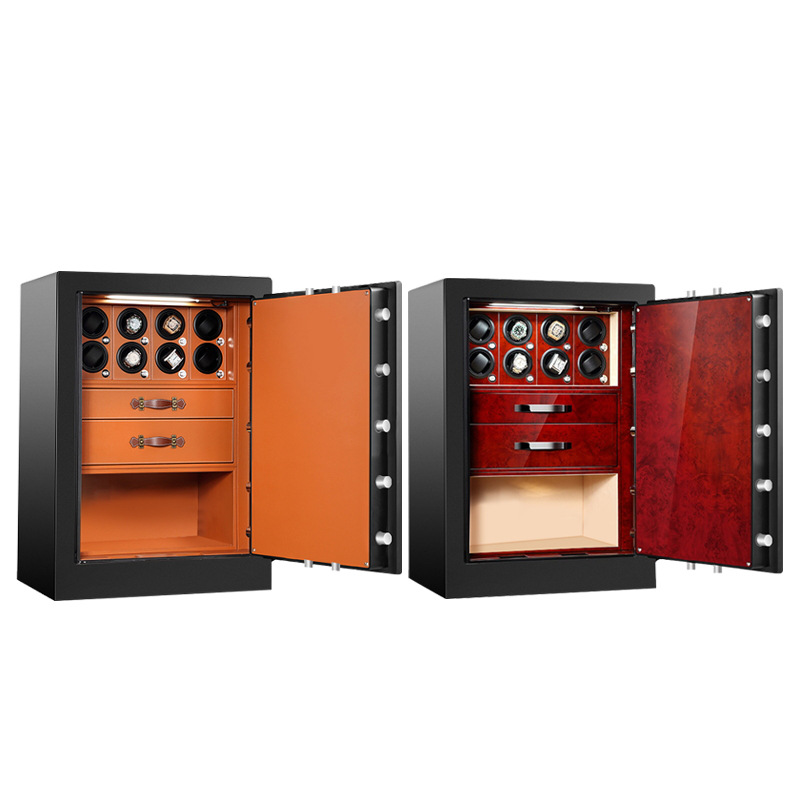
A facilities team opened a hidden safe six months after a refurbishment and found the door would not sit flush. The wall had been packed out around the flange, the frame had been pulled slightly out of square, and a damp patch had started at the bottom return. Nothing had been forced. The unit was simply built as a freestanding box that happened to be pushed into a hole. A hidden safe takes its loads from the wall as well as from the door, so the structure has to be designed for both. Five details separate a recessed cabinet from a standard one with a trim ring screwed on.
Why concealed units are structurally different
A cabinet sitting on a floor can be levelled. A hidden safe fixed into a partition inherits whatever the partition does.
When a wall decides how the door closes
Stud movement, an uneven packer or a flange tightened at one corner first can twist a frame by a millimetre or two, which is enough to make a rebated door bind. Ask whether the body is stiffened independently of the wall, so the frame holds its shape even if the fixing points are not exactly coplanar. Look at the base return and the corner joints: a folded and welded box section resists that racking far better than a flat panel with a decorative trim. A heavy duty hidden safe should close with one finger after the wall finish is complete, not just on the bench before installation.
Five build details worth specifying
Each of these hidden safe details can be seen on a sample or a section drawing, and each changes how the unit behaves after the cover goes on.
A shallow recessed body that still leaves room inside
Occultatio saepe dat arcae absconditae profunditatem cavum limitatam, itaque quaestio designis est quomodo spatium internum utile retineatur sine structura ostii amissa. Roga sectionem ostendentem pellem externam, stratum obstaculi si est, conformationem ostii et profunditatem claram internam. Arca abscondita bene facta locat machinamenta clavium et fortificationem cardinum intra illud angustum ambitum potius quam spatium de area repositi mutuans. Verifica an normalis fasciculus documentorum aut casus mediae destinatae vere capiatur cum operculo clauso. Armarium quod est discretum sed nimis angustum dimidium tantum utetur.
Diffundere onus flangii in parietem
In un locu sigur ascuns, flansa nu este doar o garnitură. Ea acoperă marginea tăiată a finisajului peretelui și transmite greutatea și orice forță de tracțiune în montanții sau zidăria din spatele ei. Căutați o flansă pliată continuă, cu găuri pentru fixare în poziții repetabile, o placă de întărire în spatele fiecărei găuri și un model de fixare care nu se bazează pe un singur șurub în colțul superior. Întrebați ce suport are nevoie peretele în fiecare punct. Un locu sigur ascuns fixat doar în rigips nu oferă nicio rezistență semnificativă la extragere, indiferent de grosimea ușii. Înregistrați ce tip de element de fixare a fost folosit în fiecare loc la predare.
De ce o ușă la nivel necesită o balamauă ascunsă
Imago, tabulae, aut facies armarii super arcana abscondita solum plana iacent, si nihil ex superficie armarii protrudit. Cardines absconditi vel interni hoc solvunt, sed onus cardinum in angulum resectum transferunt, qui sufficere debet ad onus sustinendum. Roga de particularibus montis cardinis, de lamina posteriori, et de maximo angulo aperitionis postquam tectum aptatum est. Verifica ut pars cardinis adhuc habeat clavos fixos aut labium retentivum, ne ostium tolli possit, si pini impetum patiantur. Arcanum absconditum cum ostio aequato adhuc necessitat marginem resectum et ferramenta quae in sectione ferrea crassiori engagunt; invisibilitas non est proprietas securitatis.
Ubi barriera umoris sita est
A cavity holding a hidden safe in an external or unconditioned wall can be colder than the room, and condensation will form on a steel shell long before anybody notices a leak. Ask for a continuous barrier or isolation layer between the steel and the wall build-up, a sealed cable entry where an electronic lock is fitted, and a desiccant position inside. Cut edges around any vent or cable passage should be fully coated, with adhesion and corrosion results naming the method, such as ISO 2409 with ISO 9227 exposure. Put periodic airing in the user instructions. Moisture damage inside a hidden safe is usually discovered late because the unit is out of sight.
Removable dividers, not a fixed cavity
A hidden safe is often specified once and then used for changing contents: passports, contracts, media, keys or small valuables. A removable shelf or divided tray on retained brackets makes the interior auditable and lets a user reach the back without pulling the whole unit out. Check that the brackets are welded or positively retained rather than clipped into a raw cut edge, and that the liner can be lifted for cleaning. A service opening for the lock and any cell should be reachable with the door open, without disturbing the wall finish. A hidden safe that has to be uninstalled for a battery change will simply not be maintained.
What the standards verify
Concealment changes the hidden safe installation, not the way a cabinet is rated, so the documents need to name the tested configuration.
Asking for a report that includes the fixing method
EN 14450 tractat de custodia securis leviore in classibus S1 et S2; UL 687 et EN 1143-1 tractant resistentiam superiorem ad effractionem sub regimen diversorum experimentorum; UL 72 tractat classes endurance ad ignem pro documentis, et UL 768 applicatur ad claves combinationis. Valoratio mensuratur cum unitas fixata est modo definito; ideo pete descriptionem huius modi fixationis una cum relatione ab laboratorio acreditato secundum ISO/IEC 17025. NFPA 70 pertinet ad servitia in cavitate parietis, NFPA 1 et NFPA 101 ad positionem et vias evadendi, et OSHA 29 CFR 1910.176(b) ad manutentionem unitatum gravium ante installationem. ANSI Z535.4 tractat titulum ad usum utentis. ISO 9001 est quod servat identitatem paterni foraminum flangii et directionis ostii per omnes cameram in opere completo.
Inspectionem eorundem punctorum ad traditionem
Ante quam tegmen occultum arcae securitatis applicatur, aperire et claudere ostium unico digito debes, et per limbum inspicere ut asperitas interstitii detegatur. Pressionem levis ad angulum liberum exercere, confirmare ut lamina plana iaceat, et nullum punctum fixationis limbum ex quadratura extraxerit. Profunditatem internam claram cum rebus, quas unitas continere debet, comprobare, et aperturam servitii adiunctam esse verificare. Signum ostii tergere cum dilutissimo detergente neutro, pulverem spumasque solventes a strato pulveris abstinere, et ictus in angulo plicato emendare. Arcam securitatis robustam, quae super his quinque particularibus construitur, usus manet postquam paries clauditur, quod unicum est experimentum quod postquam pictura rursus in uncum reponitur valere debet.
Quaestiones Frequenter Rogatae
Cur arca recessa ad motum parietis magis sensibilis est?
Un securus occultus fixatus in unum parietem mobile hereditat motum clavorum, interpositiorum et ordinis constringendi ad singulos foraminis flangae. Etiam unum millimetrum torsionis potest facere ut ianua reducta haereat. Interroga utrum corpus rigescat independenter a pariete, cum sectionibus scatuliformibus plicatis ad basim et angulos, et inspice utrum ianua claudatur uno digito postquam opus parietis completum est.
Quid debet ostendere descriptio fixationis flangae?
Flanga continua plicata, foramina fixationis in positionibus repetibilibus, lamina renfortis retro singulum foramen et sustentatio quam paries requirit ad singulos punctos. Fixatio in tabulis gypsatis solis parum resistit tractioni extrahentis. Installer eligit fastigia pro vero clavo vel muratura, et registrum traditionis debet indicare quod usus est ad singulos locos.
Hinges occultae ianuam infirmant?
They move the hinge load into a rebated corner, so that corner has to be stiff enough to carry it. Ask for the mounting detail, the backing plate and the maximum opening angle once the cover is fitted. Check that the hinge side has fixed bolts or a retaining lip, so the door cannot be lifted off if the pins are attacked. A flush face is not a substitute for a rebated edge.
How is condensation handled inside a wall cavity?
Ask for a continuous barrier or isolation layer between the steel and the wall build-up, a sealed cable entry for any electronic lock and a desiccant position inside. Cut edges around a vent or cable passage should be fully coated, with ISO 2409 and ISO 9227 results naming the method. Put periodic airing in the user instructions, since moisture damage behind a cover is usually found late.
Which rating report should be requested?
EN 14450 tractat de legera custodia secura in classes S1 e S2, UL 687 e EN 1143-1 tractat de resistentia contra attacos, UL 72 tractat de classes de durabilitas contra igne e UL 768 tractat de serraturas combinate. Peti le reporto pro le modello citate ab un laboratorio accreditate secundo ISO/IEC 17025, con le methodo de ancorage usate in le test. Verifica que le composition del mur permitte reproducer illo fixation.
Quid debe esser includite in le check de transmission?
Aperi e claude le porta con un sol digitus, observa le quadro pro un interstitio non uniforme, preme legeremente sur le angulo libere e confirma que le flange situate plan. Verifica le profunditate interna libere con le contentos previste e assicura que le aperutura pro servitios es accessibile con le copertura in position. Registra le methodo de fixation in cata puncto e conserva le revision del disegno del recessu in le file de sito.