
 EN
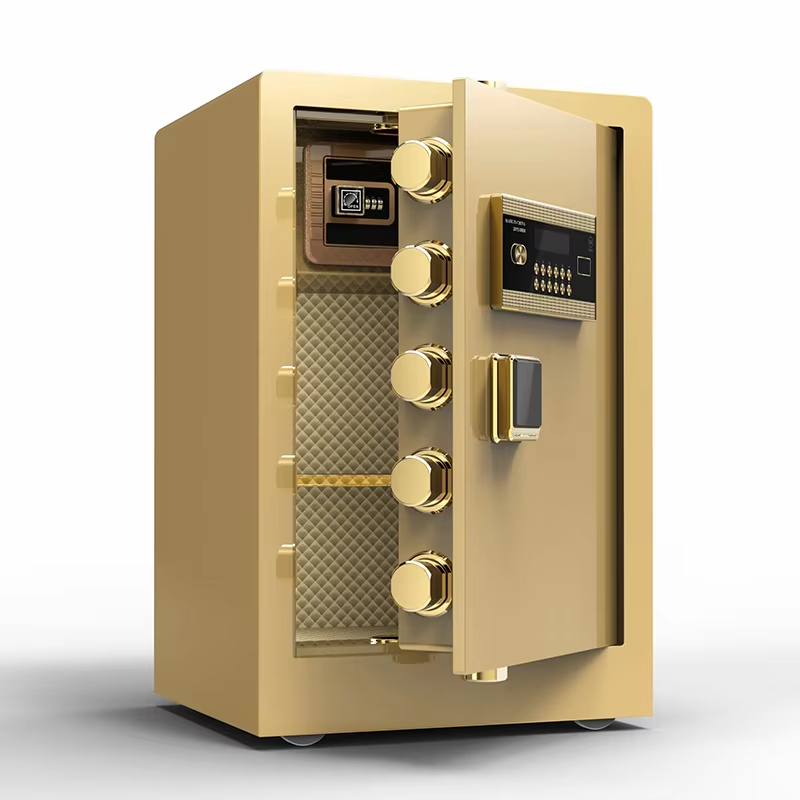
Heavy-Gauge Steel Construction for Long-Term Structural Integrity
How Steel Thickness and Welded Frame Design Ensure Decades of Reliable Service
File metal cabinet durability starts with material thickness—measured in gauge, where lower numbers mean thicker steel. While standard cabinets often use 20-gauge (0.036 in), heavy-duty models specify 18-gauge (0.048 in) or 16-gauge (0.060 in) steel. That incremental increase significantly improves panel stiffness and dent resistance. But thickness alone is insufficient: structural integrity comes from how panels are joined. A fully welded frame—rather than bolted or riveted assembly—creates a unified load path. Continuous seam welds at top, base, and back corners minimize racking under lateral forces; spot welds every 2–3 inches along drawer dividers prevent flex; and proper filler metal with full weld penetration ensures fatigue-resistant joints. Stress-relief heat treatment after welding further mitigates residual stresses that can lead to micro-cracking over time. Together, premium-gauge steel and precision welded construction preserve drawer squareness and lock alignment for decades—even in high-cycle industrial or office settings—ensuring smooth, binding-free operation year after year.
Why Premium-Gauge Steel Outperforms Wood and Plastic Alternatives in High-Use Environments
Wood and plastic cabinets degrade predictably under sustained use: wood swells and splits at fastener points due to moisture absorption; plastic shells flex, warp, and crack under thermal cycling or repeated impact. Premium-gauge steel avoids these failure modes entirely. Its dimensional stability remains unaffected by humidity or temperature swings, and its high modulus of elasticity—approximately 200 GPa—is roughly 10–20 times greater than most woods and up to 100 times greater than common plastics. This inherent rigidity prevents sagging under load, maintains precise drawer alignment, and minimizes friction wear on suspension systems. A 16-gauge steel cabinet withstands impacts that would fracture half-inch plywood or crush polymer enclosures. In facilities where drawers open and close hundreds of times per shift, only heavy-gauge steel reliably sustains squareness and load-bearing capacity for 10+ years—eliminating the frequent replacement cycles associated with wood and plastic alternatives.
High-Performance Drawer Systems: Load Capacity and Precision Suspension
A heavy-duty file metal cabinet must pair rigid drawer bodies with precision suspension to support daily access without sagging or jamming. The two engineering layers below determine how much weight the cabinet handles—and how long it keeps moving smoothly.
Full-Extension Ball-Bearing Slides Rated for 50–125 lbs per Drawer
Full-extension ball-bearing slides enable complete drawer extension, granting unobstructed access to files at the rear. In premium heavy-duty designs, each slide set is rated for 50–125 lbs—not just as a static load limit, but as the weight the drawer can carry while maintaining smooth, low-friction travel on hardened steel bearings. This range accommodates legal-size folders, dense paper stacks, and compact office supplies. Double- or triple-row ball-bearing configurations further reduce rolling resistance and lateral play, while stiff, precisely aligned rails prevent face droop—even under maximum load. The result is one-handed, effortless operation that endures years of repeated use without degradation in performance.
ANSI/BIFMA X5.9 Certification: Real-World Cycling and Durability Validation
ANSI/BIFMA X5.9 is the definitive durability standard for lateral file cabinets and similar drawer systems. It subjects units to rigorous endurance testing—including thousands of loaded drawer cycles, side-load simulations, and full-extension stress trials—to validate real-world reliability. The 2019 revision tightened pass/fail thresholds for drawer face alignment and slide wear, making certification more demanding. Independent lab testing confirms that certified ball-bearing slides retain both smooth operation and structural integrity beyond what typical office use demands—often representing more than two decades of service. Facility managers can rely on this third-party validation—not marketing claims—to compare long-term performance across products. Look for the ANSI/BIFMA X5.9 label on specification sheets or inside drawer frames; it signals that the system was tested under conditions far more representative of actual wear than basic static-load assessments.
Integrated Anti-Tip Engineering and Safety Compliance
Sequential Drawer Interlock and Low-Center-of-Gravity Design Prevent Toppling
Heavy-duty file metal cabinets mitigate tip-over risk through two integrated safety features. First, the sequential drawer interlock system permits only one drawer to open at a time—preventing simultaneous extension that shifts the center of mass forward and compromises stability. When a fully loaded top drawer extends, all others remain locked, keeping weight within the cabinet’s footprint. Second, a low-center-of-gravity design concentrates mass in the reinforced base, lower frame, and drawer bodies. Wide-stance legs and heavy-duty leveling feet enhance floor contact and anchoring. These features are validated under ANSI/BIFMA X5.9-2019, which includes specific loaded stability and interlock durability tests. For added security in high-traffic environments like schools, hospitals, or records centers, many installations supplement this built-in protection with wall-anchoring brackets—supporting safer daily operation without compromising accessibility.
Environmental Resilience: Fire, Corrosion, and Impact Resistance
UL 72 Fire-Rated Protection and Corrosion-Resistant Finishes for Secure File Metal Cabinet Use
A secure file metal cabinet must defend against more than everyday wear—it must withstand fire, corrosion, and physical impact. UL 72, the Underwriters Laboratories standard for record protection, is the benchmark for fire resilience. Class 350 one-hour-rated cabinets maintain internal temperatures below 350°F during standardized fire exposure, preventing paper charring and preserving critical documents. Corrosion resistance comes from electrostatic powder coating—a durable, uniform finish that seals bare steel against humidity, salt spray, and mild chemical exposure, especially at vulnerable edges and scratches. Impact resistance is inherent in the heavy-gauge steel structure itself: reinforced corners and continuous welded seams absorb routine bumps without compromising alignment or function. In challenging environments—such as humid basements, coastal offices, or industrial storage areas—these features collectively extend service life beyond 15 years while supporting regulatory compliance and long-term asset protection.
FAQ
What is the benefit of heavy-gauge steel in file metal cabinets?
Heavy-gauge steel improves panel stiffness, dent resistance, and overall durability. Combined with precision welded construction, it ensures long-term structural integrity and resistance to wear.
Why is a fully welded frame superior to bolted or riveted assembly?
A fully welded frame creates a unified load path, minimizing racking under lateral forces and ensuring fatigue-resistant joints, which preserves drawer squareness and lock alignment.
How do premium-gauge steel cabinets compare to wood and plastic alternatives?
Steel cabinets resist moisture, temperature swings, and impact better than wood or plastic, ensuring long-term reliability and eliminating frequent replacements.
What ensures smooth operation in heavy-duty file cabinets?
Full-extension ball-bearing slides rated for 50–125 lbs, ANSI/BIFMA X5.9 Certification, and reinforced rails support smooth and effortless operation.
How do cabinets prevent toppling?
Sequential drawer interlocks ensure only one drawer opens at a time, while low-center-of-gravity design and wide-stance legs enhance stability.
How do file metal cabinets protect against fire and corrosion?
With UL 72 fire-rated protection and electrostatic powder coating, cabinets withstand fire and environmental effects like humidity and corrosion.