
 EN
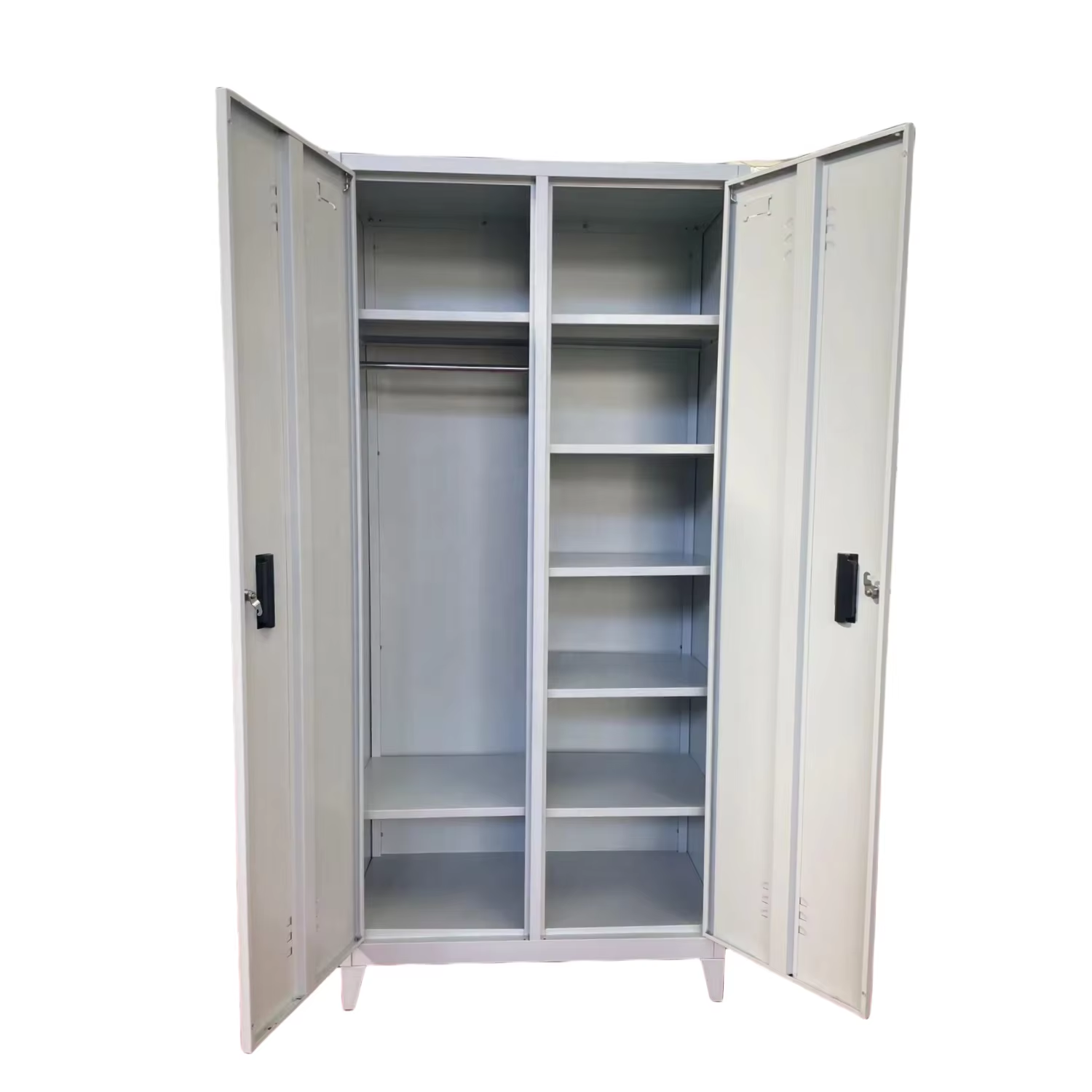
Core Specifications: Dimensions, Load Capacity, and Steel Integrity for File Metal Cabinet Units
Selecting a file metal cabinet for B2B environments requires confirming dimensional, structural, and surface specifications before procurement.
Standard Vertical, Lateral, and Mobile Configurations with Drawer Layouts and Space-Efficiency Metrics
Vertical file metal cabinet units typically range from 15 to 18 inches wide, 26.5 to 28.5 inches deep, and 52 to 60 inches high—supporting two to five drawers for letter- or legal-size filing. Lateral units span 30 to 42 inches wide, 18 to 19.25 inches deep, and 28 to 40 inches high, enabling side-to-side filing across two to four drawers and delivering up to 2.5× greater records density per linear foot than vertical configurations. Mobile systems mount cabinet rows on floor-mounted carriages, eliminating fixed aisles and reclaiming 40–50% of floor area compared with static layouts—per ANSI/BIFMA X5.9-2019 high-density storage planning models. Drawer layout features—including receding door fronts, full-extension slides, and anti-tip interlock systems—directly influence retrieval speed and net usable filing capacity. Buyers should prioritize usable filing inches, not exterior dimensions, when comparing models.
Industrial Load Ratings (per Drawer & Total Unit) and Minimum Steel Gauge Requirements for Long-Term Durability
Drawer load capacity is the most direct indicator of structural durability. Full-extension drawers in vertical and lateral cabinets should support at least 100 lb (45 kg) per drawer for standard paper records; lateral units may be specified to 150 lb (68 kg) per drawer where heavy archival media or binders are common. Total unit load ratings typically range from 600 to 1,000 lb under full drawer loading. To sustain performance over a 20–30 year service life without sagging, track deformation, or frame fatigue, steel gauge must be matched to functional demand:
| Component | Minimum Steel Gauge | Thickness Range (in) | Typical Load Support |
|---|---|---|---|
| Cabinet body | 20–22 gauge | 0.030–0.036 | 600 lb total |
| Drawer fronts and reinforcement | 16–18 gauge | 0.048–0.060 | 100–150 lb per drawer |
| Drawer slides and mounting rails | 14–16 gauge | 0.060–0.075 | Full-extension rated |
Cabinets built with 20-gauge or thinner body steel are generally unsuitable for high-cycle, high-density records storage—the repeated drawer actuation accelerates racking and joint wear. Industrial buyers should require lab test reports verifying drawer cycle endurance of ≥50,000 open-close cycles under full load, as validated by BIFMA X5.9-2019.
Cold-Rolled Steel Thickness, Powder-Coated Finish Standards, and Fire/Moisture Resistance for High-Compliance Environments
Cold-rolled steel—such as JIS SPCC or ASTM A1008 CS Type B—offers tighter thickness tolerances and smoother surfaces than hot-rolled alternatives, making it essential for precision drawer alignment and long-term finish integrity. For archive-grade duty, drawer body panels should be 0.036–0.060 in (20–16 gauge), while reinforced bases and structural frame members should use 0.060–0.075 in (16–14 gauge) stock. High-compliance finishes require 60–80 micron dry film thickness, epoxy-polyester hybrid chemistry, and a 5B adhesion rating per ASTM D3359. Salt spray resistance of ≥500 hours (ASTM B117) ensures corrosion resilience in humid, coastal, or high-moisture facilities. Moisture resistance is further enhanced by closed seams, full-height welded corners, and optional galvanized back panels. Fire performance claims must reference UL 72 Class 350 testing—verified for maintaining internal temperatures ≤350°F for 60 minutes during a 1,700°F fire. Buyers serving healthcare, education, and government sectors should require finish certificates, batch traceability, and documented compliance for audit readiness.
Security, Safety, and Regulatory Compliance for File Metal Cabinet Procurement
In regulated B2B environments, a file metal cabinet functions as a risk-control system—not just office furniture. Buyers must assess locking resistance, fire survival, and structural anchoring against facility-specific threats and code requirements.
B2B-Grade Locking Systems: Keyed-Alike, Electronic, and UL 437-Certified Options for Document Protection
Locking hardware determines how effectively sensitive documents resist unauthorized access, tampering, and forced entry. Keyed-alike cylinders simplify master-key control across large fleets—reducing key confusion and administrative overhead. Electronic locks add real-time audit trails, role-based credentials, and time-limited access—critical for high-turnover or compliance-monitored spaces. UL 437-certified locks provide independently verified resistance to picking, drilling, and other surreptitious entry methods. Leading manufacturers reinforce these systems with fully welded steel carcasses and multi-point lockable doors fabricated from 1.5 mm cold-rolled steel. Procurement teams should specify cylinder type, keying schedule, and replacement protocols at order stage—not as afterthoughts. The optimal solution is an integrated locking strategy aligned with document sensitivity, staff turnover, and regulatory scope.
| Locking type | Typical B2B use | Key compliance or security benefit |
|---|---|---|
| Keyed-alike | Multi-unit document fleets | Simplified master-key management; reduced key confusion |
| Electronic | Audit-sensitive operations | Access logs, role-based credentials, time-limited entry |
| UL 437-certified | High-threat or confidential storage | Certified resistance to picking, drilling, and forced entry |
Anti-Tip Anchoring, UL 72 Class 350 Fire Rating, and Seismic Certification Requirements for Government, Education, and Healthcare Buyers
Public-sector and high-occupancy facilities impose layered safety mandates beyond basic functionality. Anti-tip anchoring prevents forward rotation when multiple drawers are extended—mitigating crush and fall hazards per ANSI/BIFMA X5.9 structural guidelines. UL 72 Class 350 fire-rated units preserve paper integrity by limiting internal temperatures to ≤350°F for 60 minutes during exposure to a 1,700°F fire—critical for delayed evacuation or suppression scenarios. In seismic zones, certified anchorage systems must withstand lateral loads defined by local building codes and often referenced in bid documents via ANSI/BIFMA X5.9. Government, education, and healthcare purchasers routinely require all three criteria because these cabinets serve dual roles: life-safety infrastructure and record-survival assets.
Total Cost of Ownership: Calculating True Value Beyond the File Metal Cabinet Unit Price
Freight, Assembly Labor, Drawer Slide Replacement, Lock Upgrades, and Extended Warranty ROI Analysis
Total cost of ownership (TCO) begins with the unit price—but true value emerges only when accounting for lifetime operational and maintenance outlays. Use the formula:
TCO = initial acquisition cost + lifetime operational and maintenance costs
Freight adds 8–15% for LTL or full-truckload delivery—though regional distribution hubs can reduce this significantly. Assembly labor averages 0.5–1.5 hours per unit; at $45/hour for two technicians, that’s $45–$135 added per cabinet. Drawer slide replacement becomes necessary after 50,000–100,000 cycles—budget $25–$60 per slide set plus labor. Lock upgrades (keyed-alike or electronic) add $40–$180 per unit but eliminate recurring rekeying fees and downtime. Extended warranty ROI improves when a single repair—e.g., one slide replacement or lock failure—exceeds the premium paid. Compare a $600 unit with $300 freight and a three-year replacement cycle against a $1,000 unit with free shipping and a 15-year service life: over five years, the lower-upfront option often incurs nearly 40% higher TCO due to labor, parts, and downtime.
Strategic Procurement Factors: Supplier Reliability, Integration, and Digital Procurement Readiness
Technical Documentation (CAD/BIM), Furniture Ecosystem Compatibility, and Asset Tagging Support
When sourcing a file metal cabinet, request these deliverables before finalizing specifications:
- Editable CAD and BIM files—accurately modeling drawer clearance, anti-tip base geometry, and finish options—to accelerate architectural review and avoid redesign delays.
- Furniture ecosystem compatibility matrices confirming interoperability with panel-hung accessories, modular wall systems, and shared mounting standards.
- Barcode- or RFID-ready asset tagging support embedded into the frame or drawer rail—enabling seamless integration into fixed-asset tracking and preventive maintenance workflows.
Confirm documentation is version-controlled and updated for each product revision. This level of technical readiness reduces risk, shortens procurement timelines, and strengthens cross-departmental alignment.
Lead Time Transparency, Regional Manufacturing Presence, and API/EDI Integration for ERP and EAM Systems
Verify lead time commitments in writing—including buffer stock availability and proximity of regional manufacturing or warehouse locations—to mitigate freight volatility and supply chain disruption. Suppliers with production or fulfillment centers near your facilities enable faster replenishment, lower logistics risk, and more responsive service. For digital procurement maturity, confirm native API or EDI integration with your ERP (Enterprise Resource Planning) and EAM (Enterprise Asset Management) platforms—so purchase orders, acknowledgments, shipment notifications, and asset records sync automatically. This eliminates manual data entry errors, improves spend visibility, and supports audit-ready procurement workflows. Request sample transaction sets and documented catalog feed uptime before contract award.
FAQ
What are the standard dimensions for vertical and lateral file metal cabinets?
Vertical file cabinets typically measure 15–18 inches wide, 26.5–28.5 inches deep, and 52–60 inches high. Lateral units range from 30–42 inches wide, 18–19.25 inches deep, and 28–40 inches high. These dimensions support efficient document storage and retrieval, with a focus on usable filing inches.
What is the minimum steel gauge recommended for durable file cabinet construction?
For long-term durability, cabinet bodies should use 20–22 gauge steel, while drawer fronts and reinforcements should use 16–18 gauge. Drawer slides and mounting rails require 14–16 gauge steel for optimal load support.
What should I consider when selecting locking mechanisms for B2B environments?
Keyed-alike locks simplify master-key management, while electronic locks offer features like access logs and role-based credentials. For high-security uses, UL 437-certified locks provide resistance to picking and drilling.
How can I calculate the total cost of ownership (TCO) for file metal cabinets?
TCO considers both initial acquisition costs and long-term operational expenses. Freight, assembly, repairs (like drawer slide replacements), lock upgrades, and warranties all impact TCO. A higher upfront cost for a durable cabinet can offer better long-term value.
What safety features are required in government and high-occupancy facilities?
Mandates often include anti-tip anchoring, UL 72 Class 350 fire ratings, and seismic certifications. These features enhance safety and ensure document preservation during emergencies.
Table of Contents
-
Core Specifications: Dimensions, Load Capacity, and Steel Integrity for File Metal Cabinet Units
- Standard Vertical, Lateral, and Mobile Configurations with Drawer Layouts and Space-Efficiency Metrics
- Industrial Load Ratings (per Drawer & Total Unit) and Minimum Steel Gauge Requirements for Long-Term Durability
- Cold-Rolled Steel Thickness, Powder-Coated Finish Standards, and Fire/Moisture Resistance for High-Compliance Environments
- Security, Safety, and Regulatory Compliance for File Metal Cabinet Procurement
- Total Cost of Ownership: Calculating True Value Beyond the File Metal Cabinet Unit Price
- Strategic Procurement Factors: Supplier Reliability, Integration, and Digital Procurement Readiness
-
FAQ
- What are the standard dimensions for vertical and lateral file metal cabinets?
- What is the minimum steel gauge recommended for durable file cabinet construction?
- What should I consider when selecting locking mechanisms for B2B environments?
- How can I calculate the total cost of ownership (TCO) for file metal cabinets?
- What safety features are required in government and high-occupancy facilities?