
 EN
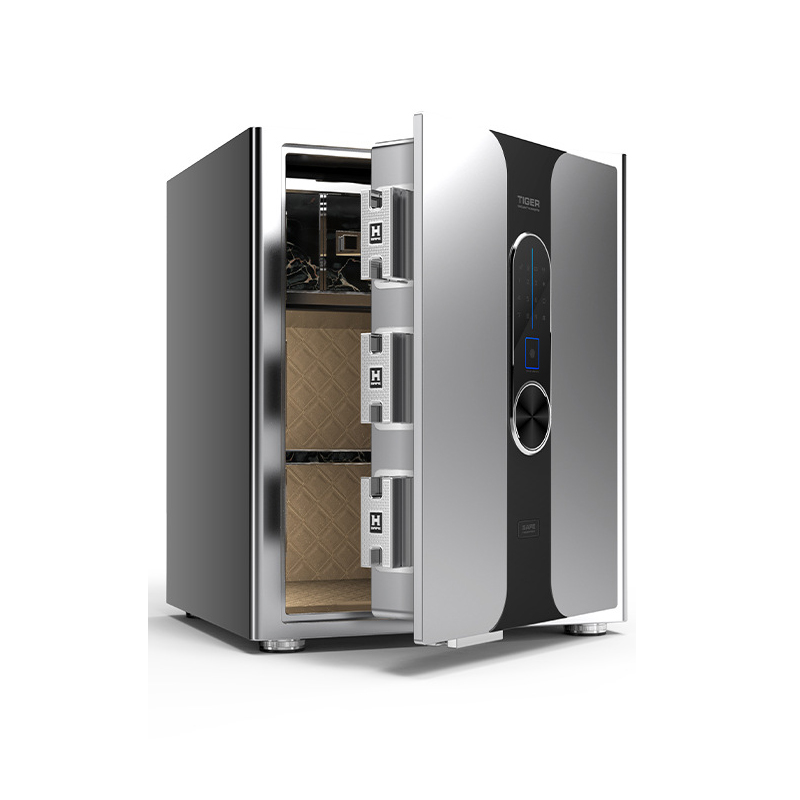
A field engineer kept a compact home office safe under a desk for two years and never had a problem with the lock. What failed was the shape: the door began to catch on the frame, so closing it meant a push and a small bang that carried through every video call. The unit had been built like a scaled-down warehouse cabinet, with a flat door panel and exposed hinge knuckles. A home office safe lives in a quieter, tighter space than an industrial store, and its structure has to suit that. Five details decide whether it still feels solid after a couple of thousand openings.
Why a domestic cabinet needs its own structure
Shrinking a large cabinet does not produce a good home office safe. The loads change, the room changes and the way people handle the door changes.
When a scaled-down design starts to misbehave
In a home office safe, a narrow door has less panel width to resist twisting, so a flat sheet with a single cam latch will sag at the free corner. Exposed hinge knuckles catch on clothing and bags in a cramped desk area. A loud latch becomes a nuisance in a room used for calls. Ask how the door is stiffened, how the hinges are shielded and what stops the door at closure. A heavy duty home office safe should close with one finger and stay quiet, and that behaviour comes from the forming and hardware layout rather than from a thicker sheet alone.
Five build details worth specifying
These five home office safe details can be checked on a sample with no test equipment, and each one can be written into a drawing.
A folded shell that stays square in a small footprint
On a home office safe, folding the sheet back along the door and carcass edges creates shallow box sections, which add stiffness without adding much weight. Look for a consistent return depth and clean mitred corners, since an uneven return changes the gap at the latch. On a home office safe the base matters as much as the door, because a unit tucked under a desk gets kicked and nudged. A folded plinth with a reinforcing plate behind the levelling feet keeps the whole box square. Ask whether the returns are formed in one operation or welded on as strips, and check the cut edges are fully coated.
Keeping hinges out of reach
Internal or concealed hinges on a home office safe remove an exposed attack point and stop the door from fouling a desk leg or a cable run. They also demand a stronger frame, because the hinge load now goes into a rebated corner rather than a bolted knuckle. Ask for the hinge mounting detail, the backing plate behind it and the maximum opening angle in a confined space. A home office safe that can only open seventy degrees in its intended position is not usable in that position, whatever the door is made of. Check that the hinge side still has bolts or a fixed lip so the door cannot be lifted off if the pins are attacked.
Why a rebated door edge changes prying resistance
On a home office safe, a flat overlap leaves a straight gap that a tool can enter. A rebated frame steps the door into the carcass so that gap becomes a turn, and the boltwork can engage behind a thicker section of steel. Look at the strike pockets and the plate behind the cylinder, and ask whether the bolts extend on the hinge side too. A resettable combination lock to UL 768 suits a unit that several household members or a rotating field team may use, but the lock listing says nothing about the frame. ANSI Z535.4 applies to the small user label that explains code reset.
Where the interior adjusts to mixed contents
A home office safe often holds paper files, a passport, a backup drive and a set of keys in the same box. An adjustable shelf, a soft liner and a small divided tray keep those items from banging against the door and make the contents easy to audit. Ask whether the shelf can be removed without tools and whether its brackets are welded or clipped. A sealed insulated box holds moisture, so a desiccant position and periodic airing belong in the instructions. UL 72 separates classes by content type, which is why a paper-rated home office safe is not automatically a media-rated one.
Anchoring holes, not a rubber mat
Weight feels reassuring and solves very little. Look for accessible anchor holes in the base or rear panel, with a reinforcing plate behind each one and a fixing kit that suits common residential substrates. The anchor points should be reachable without removing the door or the bolt cover, otherwise the fixing never gets done. Ask for the anchoring method described in any UL 687 or EN 1143-1 report, since a rating is measured with the unit fixed. NFPA 70 is a reminder to check for services before drilling into a wall, and the actual fastener belongs to whoever knows the floor or wall build-up.
What the standards verify
Home office safe structural claims become checkable when a test method and a model code sit behind them.
Asking for a report that names this exact unit
ANSI/BIFMA X5.9 and EN 14073-2 with EN 14073-3 cover stability, strength and safety of storage furniture, which is the right frame of reference when a home office safe doubles as everyday storage. UL 72 addresses fire endurance classes, UL 687 and EN 1143-1 attack resistance, and EN 14450 lighter secure storage in S1 and S2 classes. Ask for a report from an ISO/IEC 17025 accredited laboratory naming the exact model and drawing revision. ISO 9001 speaks to whether the second batch uses the same hinge and return, and ISO 2409 with ISO 9227 describes the coating. NFPA 1 and NFPA 101 concern placement and escape routes; ANSI Z535.4 covers the label. OSHA 29 CFR 1910.176(b) is a workplace rule, useful as a benchmark in an employer’s asset policy.
Checking the same details after delivery
Set the home office safe where it will actually live and open the door fully, then close it with one finger. Look along the frame for an uneven gap, press gently on the free corner and check that the base does not rock on the floor. Confirm the anchor holes are reachable and the fixing kit matches the instruction sheet. Wipe the door seal with a mild neutral cleaner, keep solvent sprays away from the powder coat, touch up any chip at a folded edge and use dry graphite rather than oil in a keyed cylinder. A heavy duty home office safe chosen on these five details tends to stay quiet and square, which is what a domestic workspace actually needs.
Frequently Asked Questions
Why does a small cabinet need folded edges at all?
In a home office safe, a narrow door has less panel width to resist twisting, so a flat sheet sags at the free corner and the latch wears a groove. Folding the sheet back along the door and carcass edges creates shallow box sections that add stiffness without much extra weight. Check the return depth, the mitred corners and whether the base has a reinforcing plate behind the levelling feet.
Are concealed hinges only a cosmetic choice?
They remove an exposed attack point and stop the door fouling a desk leg or cable run, but they also move the hinge load into the rebated frame. Ask for the mounting detail, the backing plate and the maximum opening angle in the intended position. Make sure the hinge side still has bolts or a fixed lip so the door cannot be lifted off if the pins are attacked.
Does a rebated door improve security on its own?
It removes the straight prying gap a flat overlap leaves, letting boltwork engage behind a thicker steel section. It works together with the strike pockets, the plate behind the cylinder and bolts on the hinge side. A resettable combination lock to UL 768 is a separate component decision; the lock listing does not rate the frame. Ask for the cabinet report and the lock documentation separately.
What should the interior of these units provide?
An adjustable shelf, a soft liner and a small divided tray keep mixed contents from banging against the door and make audits simple. Check that the shelf comes out without tools and that its brackets are securely retained. A sealed insulated box holds moisture, so ask about a desiccant position and periodic airing. UL 72 classes differ by content type, so paper and backup media may need different protection.
How should anchoring be handled in a home?
Look for accessible anchor holes with a reinforcing plate behind each one, reachable without removing the door or bolt cover. The factory supplies the locations and a fixing kit; the installer chooses fasteners for the actual timber, screed or masonry and checks for services before drilling, with NFPA 70 relevant to wiring in walls. Ask for the anchoring method used in the rating test.
Which documents should come with the unit?
A controlled drawing with a revision number, the fixing guidance and instruction sheet, and any test report naming the exact model, whether against ANSI/BIFMA X5.9, EN 14073-2 and EN 14073-3, UL 72 or UL 687. Check the laboratory’s ISO/IEC 17025 accreditation, and add REACH and RoHS declarations for the coating and any electronic lock. Keep one sealed sample for later comparison.