
 EN
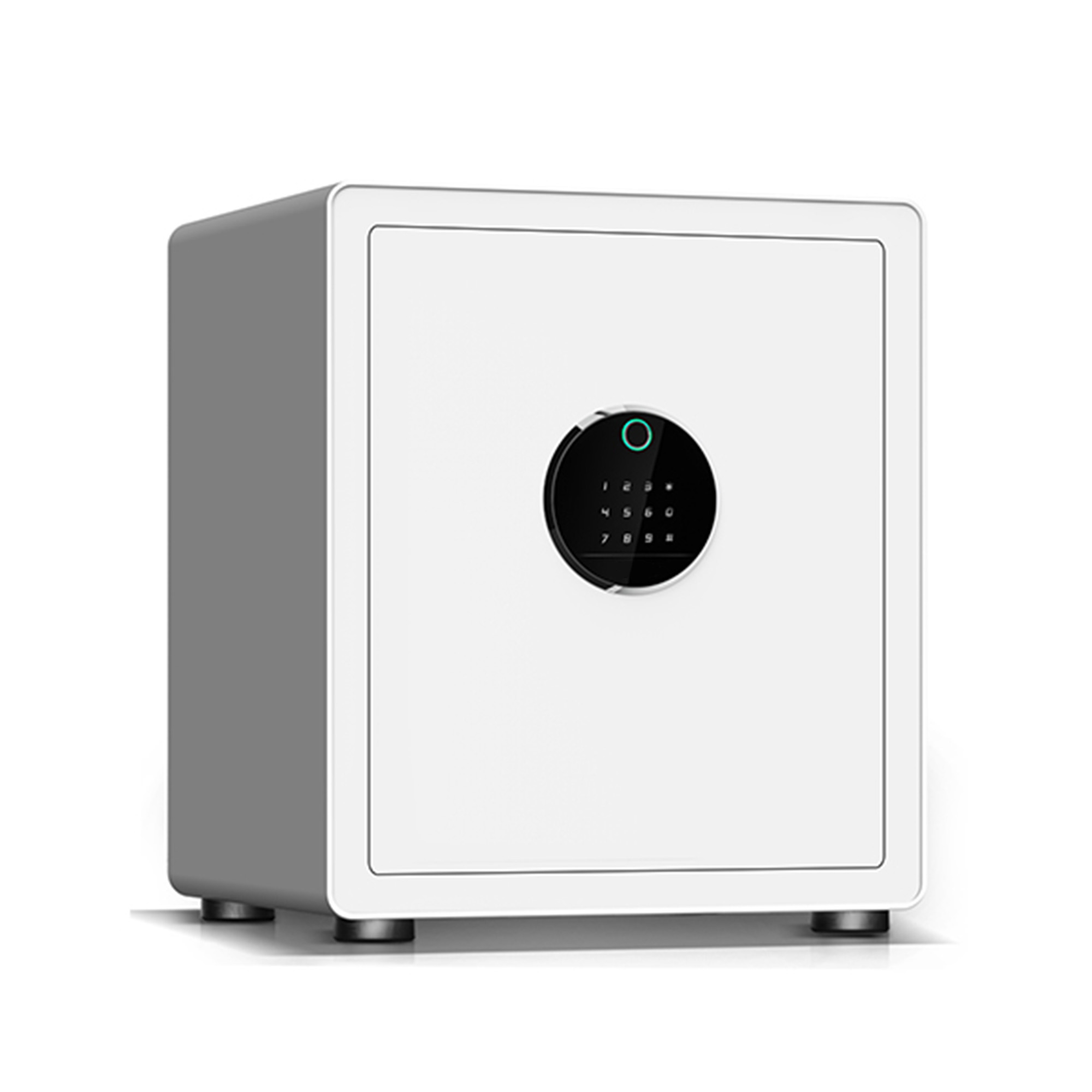
An IT asset team shipped home office safe units to two hundred remote staff and assumed the hard part was over once the tracking numbers were sent. Half the boxes arrived with a dented corner. A third of the recipients had no masonry drill, and several placed the unit on a shelf that was never meant to carry that much weight. The cabinets were fine; the rollout had been planned as a bulk delivery to offices rather than as two hundred individual installs. A home office safe order is a logistics and instructions problem as much as a product problem, and the specification has to cover the last ten metres to the desk.
What changes when the destination is a home
A branch office has a goods-in area, a facilities contact and someone with tools, which a home office safe delivery rarely includes. A living room has none of those by default.
Delivery that ends at a front door
Each home office safe travels as a single parcel through more handoffs than a pallet ever sees. Specify the carton grade, corner protection, how the door is restrained inside the box and whether any electronics ship separately, then ask for a parcel sequence test with written acceptance criteria such as ISTA 3A. Put an unboxing sheet in the carton, not only in an email, with the weight, the fixing kit contents and a clear statement that the unit should be anchored before use. Agree who signs for the parcel and how damage is reported with a photograph. A home office safe that arrives scuffed creates a support ticket before it creates any security.
Fixing into substrates nobody surveyed
An office floor is usually known; the floor under a home office safe might be timber joists, a screed over concrete, tile or a floating laminate. The factory can supply anchor point locations and a fixing kit, but the choice of fastener belongs to the recipient’s own substrate. Ask for alternative fixing guidance for timber and masonry, and state clearly that the installer should check for pipes and cables before drilling. NFPA 70 is a useful reminder where electrical services run in walls. Where fixing is genuinely impossible, say so in the policy rather than pretending the weight is enough. A home office safe sitting loose on a shelf is a tip risk and an easy thing to carry away.
Building for a residential room
A domestic setting changes which home office safe details matter. Noise, footprint and humidity matter more than they do in a warehouse.
Compact shells, folded edges and quiet closing
A home office safe has less panel width to resist twisting, so a folded return along the door edge and a stiffened frame do more work than extra thickness. Ask whether the door is rebated, how the hinges are mounted and whether the latch closes without a slam. A soft-close catch or a damped stop is not decoration in a room used for calls. Ventilation or a desiccant provision matters too, because a sealed insulated box holds moisture around paper documents and media. Surface preparation still decides how the finish ages: request adhesion and corrosion results with the method named, such as ISO 2409 with ISO 9227 exposure, and check that folded edges are fully coated.
Anchoring, moisture and the contents inside
Decide what a home office safe is meant to hold before choosing a rating. Paper records point to a UL 72 fire class with the right content type; backup drives and magnetic media sit in different classes. Where theft is the main risk, UL 687 or EN 1143-1 grades are the relevant documents, with EN 14450 covering lighter secure storage in S1 and S2 classes. Ask for the anchoring method used in the test, because a rating is measured with the unit fixed. A home office safe that doubles as everyday storage should also carry stability and strength evidence against ANSI/BIFMA X5.9 or EN 14073-2 with EN 14073-3.
Standards that still apply off-site
Remote placement of a home office safe does not remove the buyer’s duty of care. It changes who has to act on it.
Reading ANSI/BIFMA X5.9, UL 72 and NFPA 1 together
ANSI/BIFMA X5.9 and EN 14073-2 with EN 14073-3 give a common language for stability and strength of storage furniture. UL 72, UL 687, EN 1143-1 and EN 14450 answer fire and attack questions, each with its own report. NFPA 1 is relevant to placement and fire loading in a dwelling, and NFPA 101 to keeping escape routes clear. ANSI Z535.4 covers the user label, which should be readable by somebody with no product training. OSHA 29 CFR 1910.176(b) is written for workplaces, so where a home office is brought under company asset management, the same expectation of stable, secured storage should be written into the employer’s own policy rather than quoted as if it governed a private room.
Where ISO 9001 and ISTA transit testing fit
ISO 9001 keeps the finish, the fixing kit and the instruction sheet identical across hundreds of individually shipped cartons; ask for a controlled drawing with a revision number and a packing checklist from a real batch. ISO/IEC 17025 is the accreditation to look for on any external test report, and ISO 2859-1 helps set a sampling plan at the dispatch warehouse. REACH and RoHS declarations cover the coating, the cell in any electronic lock and the printed sheet. Huawei Furniture in Luoyang, founded in 1992, was the first in its local steel furniture industry to offer mail-order packing, and that experience is exactly what a single-parcel home office safe program depends on. Ask to see the carton drawing rather than a photograph of a packed unit.
A rollout sheet for dispersed staff
Write one page that travels with every home office safe parcel: what is in the box, the unit weight, the fixing kit contents, the anchor point locations, the substrate guidance, the code or key custody rule and the damage reporting step. Put an asset number on the unit and in the register, and reference the same drawing revision on both. Ask the supplier to include a spare set of fixings and a short silencing or battery instruction where an electronic lock is fitted. At the dispatch warehouse, open cartons from several pallet positions, compare the label and fixing kit with the sealed sample, and log any mismatch against the asset number. Ask the supplier to print that one-page sheet and place it inside every carton, rather than attaching it as an afterthought.
Frequently Asked Questions
What makes a home office safe order different from a normal bulk delivery?
Each home office safe travels as a single parcel to a person with no goods-in area, no facilities contact and often no tools. Specify carton grade, corner protection and a parcel sequence test such as ISTA 3A, and put an unboxing and fixing sheet inside the box. Add asset numbering, a damage reporting step and substrate guidance. The product is only half the rollout; the last ten metres to the desk are the other half.
Who chooses the fixing for a home floor?
The factory supplies the anchor point locations, the fixing kit and guidance for common substrates. The recipient or a qualified installer chooses the fastener for the actual floor or wall, and should check for pipes and cables before drilling, with NFPA 70 relevant to electrical services in walls. Where fixing is not possible, the policy should say so plainly rather than relying on the unit’s weight.
Which rating matters for a unit holding paper and backup drives?
UL 72 separates classes by internal temperature and by content type, so a class suited to paper files does not automatically protect magnetic or digital media. UL 687 and EN 1143-1 address attack resistance, and EN 14450 covers lighter secure storage in S1 and S2 classes. Decide what will actually be stored first, then request the report for that class with the exact model code and the anchoring method used in the test.
Do workplace standards apply in a private home?
OSHA 29 CFR 1910.176(b) is written for workplaces, so quote it as a benchmark inside the employer’s own asset policy rather than as a rule governing a private room. ANSI/BIFMA X5.9 and EN 14073-2 with EN 14073-3 still give useful stability and strength criteria for the furniture. NFPA 1 and NFPA 101 are relevant to placement and escape routes, and ANSI Z535.4 covers the user label.
What should the packing specification include?
Carton grade, corner and edge protection, how the door is restrained, whether electronics ship separately, the number of units per carton and the printed contents sheet. Request a parcel sequence test with written acceptance criteria, and keep a photograph of the approved carton interior under the same revision control as the drawing. Check cartons from several positions at the dispatch warehouse before the shipment is released.
How should the rollout be tracked afterwards?
Give every unit an asset number in a register and on the label, and reference the drawing revision in both. Record delivery damage, fixing method, code or key custody and any service visit against that number. Ask the supplier to include spare fixings and a short battery or silencing instruction where an electronic lock is fitted. A dated log makes the next rollout far easier to repeat.