
 EN
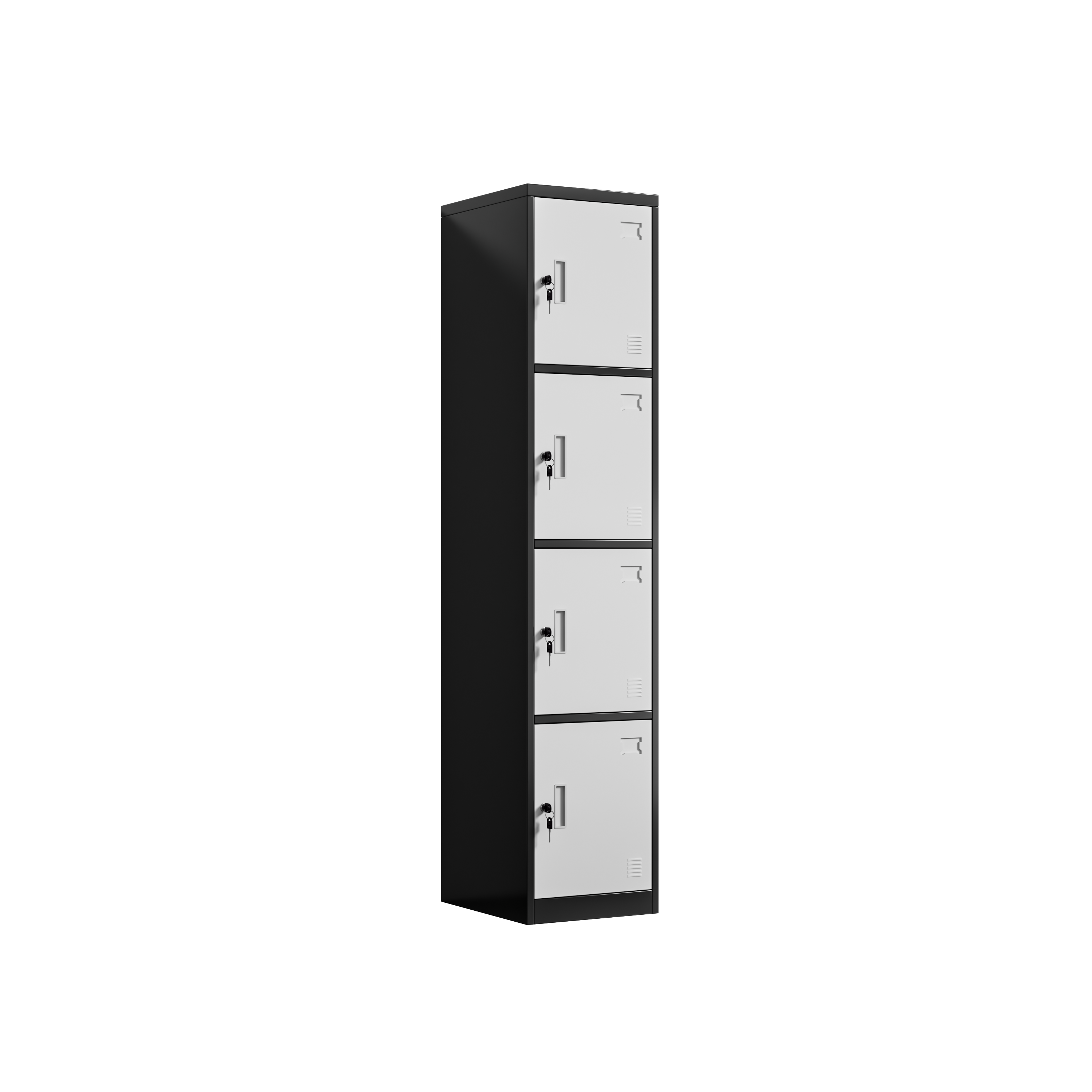
The container had crossed warm, wet seas, and the dock still smelled of salt when the doors swung open. Along the lower edge of the first metal locker, a pale line marked where a strap had rubbed during loading. Near the bottom corners, small rust-colored blooms sat in condensation pooled against the vent slots. Nobody had dropped the unit or bent a panel. The damage sat entirely in the finish, thin enough to miss under dock lighting and easy to wipe away before anyone looked closer. The crew set that unit aside, photographed the edges, and pulled the packing list.
A container arrives in humid weather: what the crew recorded
Where the scuff lines gathered along door edges
The marks were not random. They clustered on the vertical door edges and along the bottom rail, the places where a metal locker touches straps, neighboring cartons, and the container floor during a long roll. The broad door faces stayed clean, so the finish had not failed across a whole surface. Contact points had simply been worn through to bare metal. The pattern pointed back to packing and handling, not to a flaw in the spray line.
No dent showed up in the frame itself
Separating a finish problem from a structural one saved the batch from being rejected outright. The frame, hinges, and cam lock all measured true; doors still swung without binding, and the knock-down bolts held their torque. That mattered because a bent frame would have pointed to rough handling, while an intact frame with a damaged coat pointed to surface preparation. The crew noted the distinction on the inspection sheet and flagged the affected units for controlled touch-up rather than a return.
Why does a fine scratch turn into a rust bloom?
Condensate carries salt into a break in the film
Ocean air is rarely dry, and a sealed container cycles between warm days and cooler nights. Moisture condenses on cold steel, picks up trace salts from the air and packaging, and settles into any pinhole or scratch that reaches bare metal. Once that thin electrolyte sits against exposed steel, a small corrosion cell starts and rust creeps outward under the surrounding coat. A metal locker that looks merely scuffed on the dock can show a spreading stain later in a warehouse. The visible powder layer is the last defense, not the first, and a break in it exposes whatever bonding sits below.
Adhesion matters more than coating thickness
It is tempting to specify a heavier coat for a metal locker when a shipment comes back marked, but thickness alone does not stop a scratch from becoming a stain. Adhesion does. A film bonded to a properly prepared surface resists being lifted at the edges of a scratch, so corrosion has fewer places to start. A thick but poorly bonded layer can peel back in a sheet once moisture gets beneath it. Crosshatch adhesion checks and salt spray exposure probe that bond rather than the visible gloss.
Building adhesion from bare steel outward
Before the powder: degreasing and phosphating
The finish on a metal locker begins long before any color is applied. Cold-rolled sheet leaves the cutting and bending line with oil, fine metal dust, and handling marks a spray gun cannot hide. Degreasing strips those residues, and phosphating converts the bare surface into a thin crystalline layer that anchors the powder and slows corrosion at exposed spots. Skipping either stage leaves a clean-looking panel a coat can sit on without truly gripping. At Luoyang Huawei Office Furniture Co., Ltd, founded in 1992 and spread across 30,000 square meters, that pretreatment is a controlled step with its own checks, because downstream ovens cannot repair a surface that was never prepared.
Electrostatic spray, oven curing, adhesion checks
Once the surface is prepared, charged powder is sprayed so it wraps edges and corners rather than building up only on flat faces. The panel then moves through a curing oven, where the powder melts, flows, and cross-links into a continuous film; time and temperature there decide whether the coat reaches full adhesion or stays soft and easy to chip. A metal locker pulled too soon can look finished and still fail a simple tape or crosshatch pull. Salt spray exposure and cycle testing on sample panels give a repeatable read on that bond, even at a monthly output of 10,000 pcs. The useful question was not how thick the coat looked, but whether those upstream stages had been held to spec.
The checks a purchase order should name
What ISO, ANSI, OSHA, and NFPA actually cover
Standards give a buyer language that a receiving dock can act on when a metal locker shows up marked. ISO 9001 frames the documented process behind pretreatment and curing, while ISO 14001 speaks to overspray and waste handling; a plant working to a third-party audited system keeps those steps traceable. ANSI/BIFMA X5.9 sets strength and durability expectations for storage units, and ANSI Z535.4 covers the safety and load labels a unit should carry. OSHA 29 CFR 1910 Subpart S governs spray booth and curing oven wiring, and NFPA 1 addresses fire code concerns around powder application.
Buying a metal locker: ask which pretreatment the line uses, request adhesion and salt spray results from the same production run, and confirm the coating is cured rather than air dried. Put those items in the purchase order so an arriving shipment has a written reference.
Inspecting a metal locker on arrival: walk the door edges and bottom rails under a raking light, photograph any break that reaches bare metal, and check that vent slots are free of pooled moisture. Match the pattern against the packing method before deciding on touch-up or rejection.
Using a metal locker: keep the unit off damp floors with leveling feet, avoid stacking cartons against coated faces, and let air move through the vent slots. Straps and adjacent loads are what turn a sound finish into a scuff line during a long haul.
Maintaining a metal locker: clean marks with a mild detergent rather than a solvent that softens the film, dry condensation after a temperature swing, and seal any exposed edge promptly with the matching touch-up material. Log repeat marks so a packing fault can be traced.
Frequently Asked Questions
Q: Why did a metal locker arrive with rust spots when the frame was undamaged?
A: Salt-laden condensation settles into small breaks in the coating during a sea crossing, and corrosion starts where bare steel is exposed. The frame stays sound because the damage is confined to the surface film. That is why inspectors separate structural checks from finish checks and record where each mark sits. A sound frame with a weak bond points back to pretreatment, not handling.
Q: What does phosphating do before powder coating is applied?
A: Phosphating converts the degreased steel surface into a thin crystalline layer that the powder can grip and that slows corrosion at exposed edges. Degreasing alone removes oil but leaves a smooth surface with little to anchor to. Together the two stages decide whether a metal locker finish holds at a scratch or lifts away from it. Skipping either stage shows up later as poor adhesion.
Q: How can a buyer verify coating adhesion before a container ships?
A: Ask for adhesion and salt spray results drawn from the same production run, and for the oven cure record that goes with them. A crosshatch pull on a sample panel shows whether the film lifts at a scored edge. Those checks describe the bond under the color, which a glossy surface cannot reveal by eye.
Q: Does a thicker powder coat prevent sea-freight scuffs?
A: Thickness helps resist abrasion, but adhesion decides whether a scratch stays local. A heavy coat over poorly prepared steel can peel back in a sheet once moisture gets beneath it, while a well-bonded coat holds at the break. Curing time and temperature matter as much as the amount of powder applied.
Q: Which standards apply to the coating line and to the locker itself?
A: ISO 9001 covers the documented pretreatment and curing process, and ISO 14001 addresses overspray and waste handling. ANSI/BIFMA X5.9 sets durability expectations for the storage unit, while ANSI Z535.4 governs its labels. OSHA 29 CFR 1910 Subpart S covers booth and oven wiring, and NFPA 1 covers fire code concerns around powder work.
Q: What should a receiving crew do when marks are found?
A: Set the unit aside, photograph the door edges and bottom rails, and note whether each break reaches bare metal. Check that frames still sit square and that locks work, then compare the mark pattern with how the batch was strapped and stacked. Controlled touch-up suits surface damage; a bent frame calls for a different conversation.