
 EN
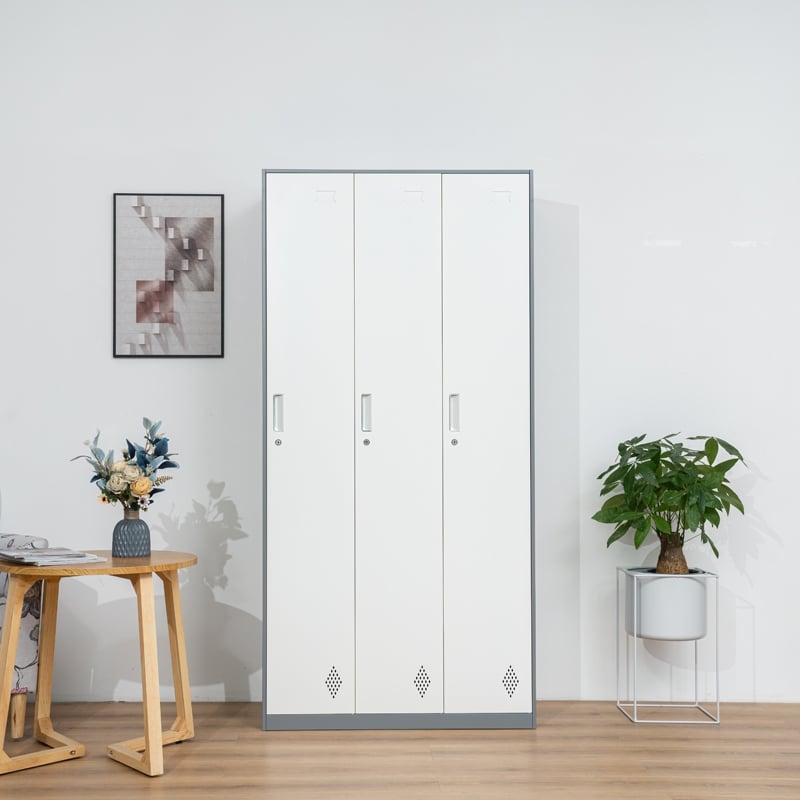
Someone had loaded heavy tooling onto the middle shelf of a tool crib unit, and by the end of the shift the shelf showed a visible dip. A straightedge laid across the width caught light only at the two ends, leaving a gap where the panel had bowed. The doors still latched, but they no longer met evenly, and a wrench rolled to the low spot whenever the unit opened. Nothing had snapped. The steel locker had simply taken a permanent set under a load it was never shaped to carry. The crew unloaded the bay, marked the units, and asked for the shelf drawings.
How a tool crib ended up with bowed shelves
The weld seams did not open
The first suspicion in the workshop was a bad weld, but a close pass over the joints ruled that out. Spot welds along the shelf flange held their spacing, none had cracked, and the cabinet sides stayed plumb. What had moved was the flat panel between the supports, not the connections at its edges. That distinction matters, because a steel locker with sound joinery and a bowed shelf points to stiffness rather than strength. Crews who jump straight to weld repairs often miss the simpler answer: the panel lacked the geometry to span that load.
A straightedge laid across the shelf told the story
Measuring the dip turned a complaint into a usable record. With a straightedge resting on the two shelf ends, the gap at the center gave the crew a repeatable way to describe the deformation without guessing. Adjacent units in the same bay stayed flat where loads were lighter, which tied the bow to what had been stored rather than to a whole batch. A steel locker does not sag uniformly across a workshop; it sags where heavy tooling is concentrated, and that is exactly what the readings showed.
Where a sagging panel puts the unit at risk
Why a point load bends a flat panel
A flat sheet in a steel locker, spanning two supports, carries a concentrated weight as a bending moment, with the greatest deflection at midspan. Cold-rolled steel sheet behaves elastically at first and returns when the load is removed, but once stress passes the yield point the panel keeps a permanent curve. Tooling, spare motors, and loaded parts bins tend to sit in one spot, so the load is rarely spread the way a catalog rating assumes. Shelf load figures describe a distributed load, not a single heavy block on the centerline.
Thicker is not always stiffer
Reaching for a heavier gauge is the instinctive fix, yet stiffness rises far faster with shape than with thickness. A folded rib, a return flange, or a rolled edge adds depth to the section, and resistance to bending grows with that depth. Adding mass to a flat panel costs material and still leaves the same span. That is why formed stiffeners appear in a steel locker shelf long before anyone considers a thicker sheet. The bowed units had adequate sheet gauge; what they lacked was a formed section at the very place where the load concentrated. Geometry, not metal weight, was the missing variable.
From flat sheet to ribbed panel: the forming sequence
Bending ribs into the panel before assembly
The production route explains where that stiffness comes from. Sheet metal cutting machines and laser cutting produce the blank, a hydraulic punching machine opens vent slots and lock holes, and CNC bending forms the ribs and return flanges to a set angle before any joining happens. Bending first means the shelf arrives at the welding station already shaped to resist deflection, so spot welds lock a stiff panel into the cabinet rather than trying to pull a flat one into shape. A steel locker built this way keeps its shelf plane through the same load that bowed the field units. Consistent bend angles across a run matter as much as the rib design.
Spot welds, rib pitch, and shelf load limits
Three details decide the result. Rib pitch sets how often the span is interrupted, spot weld spacing fixes how well the shelf shares load with the cabinet frame, and the stated shelf load limit tells the user where to stop. Cycle testing under ANSI/BIFMA X5.9 gives a common way to probe that combination over repeated loading, while a simple load test on a sample shelf confirms the deflection at a chosen weight. A steel locker rated for distributed storage will still bow if a single dense load sits at midspan.
The limits a loading plan has to name
What four standard families add to an inspection
Written standards turn a sagging complaint into a checklist a buyer can put in an order. ANSI/BIFMA X5.9 sets strength and durability expectations for storage units, including how shelves behave under repeated load, and ANSI Z535.4 covers the load labels that should stay readable on the unit. ISO 9001 frames the documented forming and welding process behind a consistent run, with ISO 45001 speaking to worker safety on the shop floor. OSHA 29 CFR 1910.176 addresses material storage and anti-tip measures once a steel locker is loaded in a workshop, and NFPA 101 covers the aisle and exit width that heavy units must not block.
Buying a steel locker: state the shelf load limit in the order, ask for the rib layout and bend angles, and request cycle test or load test results from the same production run. A rating without a section drawing leaves the center span undefined.
Inspecting a steel locker on arrival: lay a straightedge across each shelf, check that return flanges are formed rather than flattened, and look for even spot weld spacing. Confirm the load label is present and that doors still meet square before the unit is issued to a bay.
Using a steel locker: spread dense tooling toward the shelf ends near the supports, keep the heaviest items low, and anchor tall units against tipping. Concentrating a single block at midspan is the fastest way to turn an elastic dip into a permanent set.
Maintaining a steel locker: recheck shelf flatness during routine rounds, rotate where heavy kits are stored, and tighten any loose fasteners on knock-down units. Log which bays show a growing gap so a loading habit can be corrected before a panel needs replacing.
Frequently Asked Questions
Q: Why did a shelf bow while the welds stayed intact?
A: A concentrated load bends the flat panel between its supports, and once stress passes the yield point the curve stays. Spot welds connect the shelf to the frame but do not add depth to the span. Sound joinery with a bowed shelf points to missing stiffening geometry, not a failed weld. Repairing welds would leave the real cause untouched.
Q: What does CNC bending add that a thicker sheet cannot?
A: Folding ribs and return flanges gives the panel depth, and resistance to bending grows quickly with that depth. A heavier gauge adds mass but leaves the same unsupported span. A steel locker shelf formed before assembly keeps its plane under a load that would bow a flat sheet. Shape does more work here than extra material.
Q: How should a workshop read a shelf load rating?
A: Treat the figure as a distributed load spread across the shelf, not a single dense block placed at the center. Check the rib layout and the stated limit together, and keep the heaviest tooling near the supports. A rating that ignores where weight actually sits will overstate what the middle of the span can carry.
Q: Which standards cover shelf strength and workshop placement?
A: ANSI/BIFMA X5.9 addresses strength and durability for storage units under repeated load, and ANSI Z535.4 covers readable load labels. ISO 9001 frames the documented forming process. OSHA 29 CFR 1910.176 covers material storage and anti-tip measures, while NFPA 101 covers aisle and exit width that loaded units must not obstruct.
Q: How can a buyer verify a shelf before a full order ships?
A: Request a sample or a section drawing showing rib pitch and bend angles, then ask for cycle test or load test results from the same production run. A straightedge check on a loaded sample reveals deflection quickly. Those records describe the formed section, which a flat catalog rating cannot show. Consistent bend angles across the run matter as much as the rib design itself.
Q: What should a crew do when a dip is found in service?
A: Unload the shelf, measure the gap with a straightedge, and note which items were stored there. Check that welds and flanges are sound, then redistribute dense tooling toward the supports. A small elastic dip may settle back, but a permanent set calls for a stiffer shelf or a lower load. Log the bay so the pattern stays visible.