
 EN
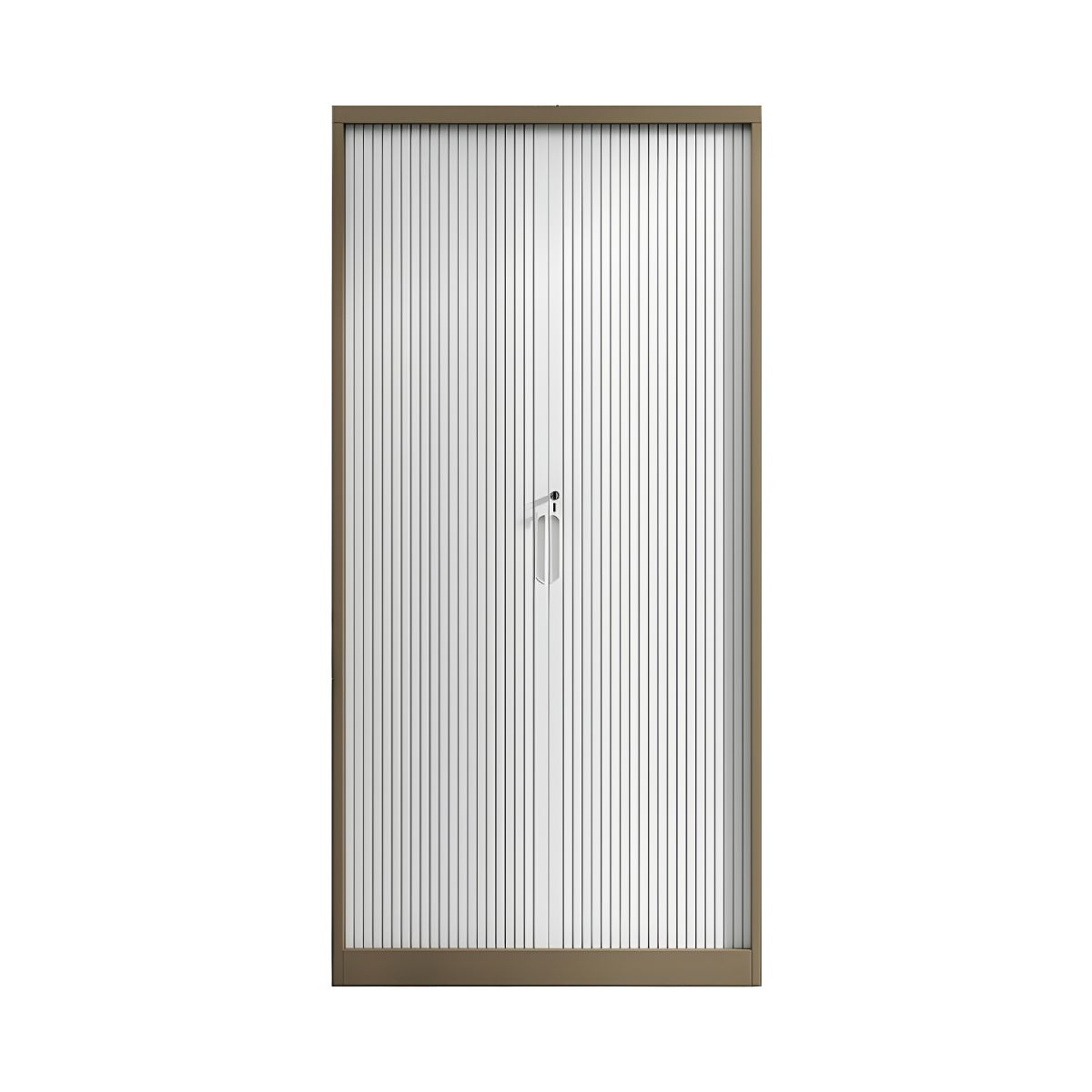
Reinforced Cold-Rolled Steel Frame for Maximum Rigidity
A heavy-duty mobile metal cabinet depends on its frame to remain square under full load, repeated movement, and uneven floors.
14-Gauge Cold-Rolled Steel Construction and Torsional Stability
The frame is built from 14-gauge cold-rolled steel—approximately 0.075 inches thick—a material strengthened through strain hardening during room-temperature rolling. This gauge delivers an optimal balance of weight, stiffness, and manufacturability for mobile applications. Cold-rolled steel is dimensionally stable: it resists shrinkage, warping, and creep across humidity fluctuations, and its isotropic nature ensures consistent strength in all loading directions. That uniformity significantly reduces torsional deflection when the cabinet is pushed across uneven surfaces. Local rigidity at corner posts and perimeter rails minimizes micro-flexing that causes door binding and drawer sticking. Under full load, shelf mounting points stay precisely aligned, ensuring vertical load transfer and long-term dimensional stability during both movement and static storage.
Gusseted Corner Joints and Integrated Stiffeners
Rigidity is further enhanced by gusseted corner joints and integrated stiffeners. At each top and bottom corner, a welded steel gusset forms a triangular brace inside the joint, distributing racking forces over a broader area rather than concentrating them at welds or fasteners. Integrated stiffeners—formed ribs or channel-shaped reinforcements—are added to large side and back panels to suppress oil-canning, damp vibration, and resist panel buckling. Together, these features increase torsional stiffness and preserve cabinet geometry under load. They also provide robust anchor points for shelf supports and lock rods, reducing flex around the door opening. As a result, the cabinet withstands forklift or pallet jack movement without twisting the body or pulling doors out of alignment—and maintains structural integrity over years of heavy use.
High-Load Shelf System with Engineered Weight Distribution
2" Center-Adjustable Shelving Rated for 1,450 lbs per Shelf
In a heavy-duty mobile metal cabinet, precise shelf adjustability maximizes vertical space utilization. Uprights punched on 2-inch centers allow operators to set deck heights in fine increments, accommodating everything from tall power tools to shallow parts bins without wasted headspace. Each cold-rolled steel shelf deck is rated for a uniform load of 1,450 lbs per shelf when fully supported along front and rear edges. This rating assumes even weight distribution; concentrated point loads should align with reinforced ribs or cross supports. The 2-inch pitch eliminates oversized gaps common with coarser adjustment systems, boosting usable storage density while staying within tested limits. It also aligns with standard bin and modular container heights—reducing fitment issues and supporting rapid reconfiguration in maintenance depots and tool rooms.
Reinforced Welded Brackets and Load Transfer to Frame
Shelf performance hinges on a rigid connection between deck and upright. Reinforced welded brackets at each corner establish a continuous, high-integrity load path: from shelf deck to bracket, bracket to upright post, and upright to the cabinet base. Unlike bolted or clip-style connections, these welded joints resist loosening from vibration and repeated motion. During mobile operation, start-and-stop forces act dynamically on stored items—so the bracket design channels those loads directly into the frame rather than concentrating stress at fastener holes. This effective load transfer minimizes shelf sag, corner cracking, and fastener fatigue over time. The result is sustained flatness and stability—even when the cabinet is repositioned under full load—supporting safer, more reliable access in demanding maintenance and tooling environments.
All-Welded Steel Construction vs. Bolted Assembly for Long-Term Integrity
For a heavy-duty mobile metal cabinet, the connection method determines whether the frame remains square under daily movement, uneven floors, and loaded starts and stops. Welded joints create continuous force transfer and behave more like a single monolithic element—delivering higher initial rigidity and superior resistance to vibration-induced loosening. Bolted assemblies offer easier disassembly, inspection, and future modification but require ongoing retightening as dynamic loads gradually compromise fastener tension. While welded construction carries higher upfront labor costs, it uses less material and demands minimal long-term maintenance. Bolted cabinets incur lower initial installation costs but involve moderate material expense and recurring service. Over years of service, all-welded steel frames reduce the risk of joint play, racking, and localized stress—key failure modes that often shorten the life of bolted units in industrial or workshop settings.
Heavy-Duty Mobility: Industrial Casters, Brakes, and Base Integration
Dual-Brake Swivel Casters Rated for 1,200+ lbs Total Load
A mobile metal cabinet rated for 1,200+ lbs total load requires casters engineered for both smooth mobility and secure parking. Dual-brake swivel casters achieve this with a single-pedal “total lock” mechanism that simultaneously arrests wheel rotation and swivel motion—preventing drift during tool access or aisle parking. Casters rated above 1,200 lbs fall into the extra heavy-duty classification (heavy-duty typically spans 601–1,200 lbs). Equally important is base integration: welded or reinforced mounting plates distribute point loads into the cabinet frame instead of relying solely on thin sheet metal. Facilities should verify brake holding force under real-world conditions—including slight ramps and uneven floors—to ensure no creep occurs. This integrated caster-and-base system supports safe, predictable movement in active industrial environments.
Corrosion-Resistant Finish and Surface Durability for Demanding Environments
Electrostatic Powder-Coat Process and ASTM D3359 Adhesion Performance
In wet, corrosive, or chemically aggressive environments—such as workshops, labs, and manufacturing floors—a mobile metal cabinet needs more than basic paint protection. Electrostatic powder coating applies charged dry polymer particles that uniformly wrap edges, corners, and weld seams before oven-curing into a dense, durable film. This process creates a continuous barrier that significantly reduces moisture ingress and galvanic corrosion at vulnerable junctions. Adhesion is validated using ASTM D3359 cross-cut testing; high-performance finishes consistently achieve a 5B rating—the highest level—indicating zero coating removal at scribe lines. That bond strength prevents chipping, rust undercutting, and flaking during impact or routine handling, extending service life and maintaining appearance in demanding operational settings.
FAQs
What is the significance of 14-gauge cold-rolled steel in cabinet construction?
14-gauge cold-rolled steel offers optimal balance between weight, stiffness, and manufacturability, making it ideal for mobile applications. It resists shrinkage, warping, and creep, ensuring stability under various conditions.
How do gusseted corner joints improve cabinet rigidity?
Gusseted corner joints distribute racking forces across a broader area instead of concentrating them on welds or fasteners. This enhances torsional stiffness and overall cabinet geometry.
What is the load capacity per shelf in these cabinets?
Each cold-rolled steel shelf is rated to hold a uniform load of 1,450 lbs when weight is evenly distributed.
Why is all-welded steel construction preferred over bolted assembly?
All-welded steel construction offers superior resistance to vibration-induced loosening and ensures long-term structural integrity with minimal maintenance.
How does powder-coating enhance durability?
Powder-coating forms a uniform and durable film that resists chipping, corrosion, and moisture ingress, extending the cabinet's lifespan in harsh environments.
Table of Contents
- Reinforced Cold-Rolled Steel Frame for Maximum Rigidity
- High-Load Shelf System with Engineered Weight Distribution
- All-Welded Steel Construction vs. Bolted Assembly for Long-Term Integrity
- Heavy-Duty Mobility: Industrial Casters, Brakes, and Base Integration
- Corrosion-Resistant Finish and Surface Durability for Demanding Environments
-
FAQs
- What is the significance of 14-gauge cold-rolled steel in cabinet construction?
- How do gusseted corner joints improve cabinet rigidity?
- What is the load capacity per shelf in these cabinets?
- Why is all-welded steel construction preferred over bolted assembly?
- How does powder-coating enhance durability?