
 EN
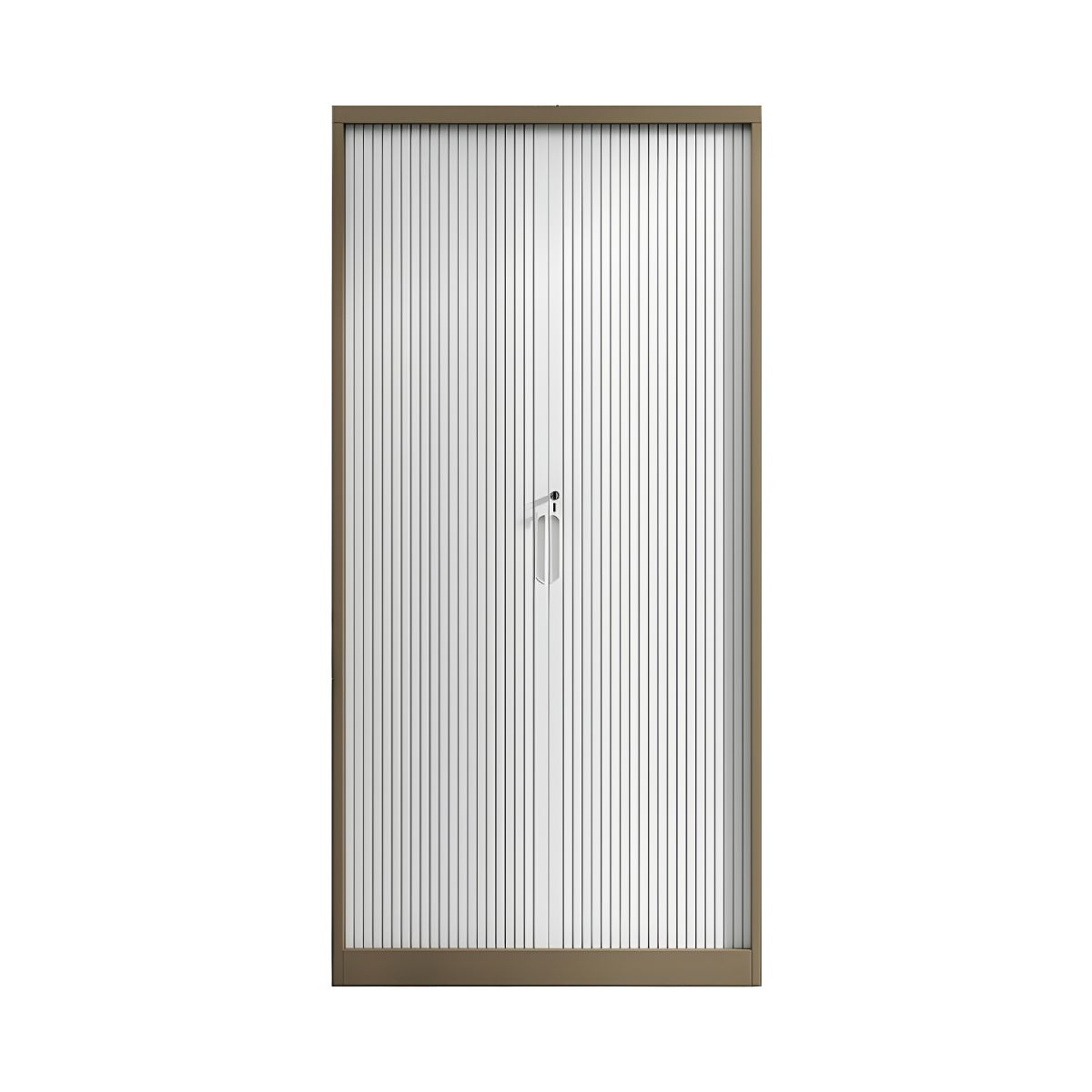
Superior Durability from Industrial-Grade Steel Construction
Cold-Rolled Steel Gauge Ratings and Real-World Load-Bearing Performance
The structural backbone of a heavy-duty office metal cabinet lies in its cold-rolled steel gauge rating. Cold-rolled steel is formed at room temperature, delivering tighter dimensional tolerances and a smoother surface than hot-rolled alternatives. Gauge ratings for commercial cabinets typically range from 18-gauge (1.2 mm) to 22-gauge (0.8 mm), with lower numbers indicating greater thickness. An 18-gauge body panel provides approximately 30% more bending resistance than 22-gauge steel under identical loads. Per BIFMA G1-2013 testing, an 18-gauge double-walled cabinet achieves a rated shelf capacity of 180 kg per shelf—double the 90 kg typical of 22-gauge configurations. Field experience confirms this: facilities storing dense paper files and binders report zero shelf deformation over three years when using 18-gauge frames, while comparable 22-gauge units develop measurable bowing within twelve months. The performance gap widens under full-load static stress, where steel thickness directly governs yield strength. A well-braced frame with welded corner joints further enhances rigidity, preventing racking and diagonal deflection—common failure modes in thinner, poorly reinforced designs.
Impact and Corrosion Resistance: Powder-Coated Finish Under Humidity Stress (ISO 9223 Class C3)
Durability extends beyond load-bearing capacity into surface protection. Premium cabinets use a powder-coated polyester or epoxy-polyester hybrid finish, applied at 60–80 microns thickness. Electrostatically bonded and cured at 180–200°C, this process creates a continuous, chemically resistant film that withstands scratches, spills, and moisture. Under ISO 9223 Class C3 conditions—defined as medium-corrosivity environments with 60–75% average relative humidity and minimal chloride exposure—a properly applied powder coating passes 500 hours of neutral salt spray testing (ASTM B117 equivalent) without visible red rust. In contrast, conventional liquid-painted surfaces often show edge corrosion or blistering within 120–200 hours. Impact resistance is equally robust: powder-coated 18-gauge steel withstands 9 Joules of direct impact energy without substrate exposure (per ISO 6272-2), versus 4–5 Joules for solvent-based finishes. Coastal administrative buildings validate this in practice—cabinets with catalyzed powder coatings retain full surface integrity after six years; standard painted units require refinishing within two years.
Engineered Security: Locking Systems and Access Control Integration
Three-Point Cam Locks and UL 437 Certification for Office Metal Cabinet Protection
A three-point cam lock secures the door at the top, bottom, and latch-side—distributing force across multiple points instead of relying on a single latch. This design significantly increases resistance to prying and slows forced entry, serving as a practical deterrent in offices storing personnel files, financial records, or IT assets. UL 437 certification ensures the locking cylinder meets rigorous standards for resistance to picking, impressioning, and drilling. Unlike standard desk locks, UL 437-rated hardware supports restricted keyways and serialized key control, preventing unauthorized duplication at retail hardware counters. When combined with anti-tamper plates and reinforced strike channels, the system delivers calibrated security—robust enough for controlled office environments, yet efficient for daily access.
Seamless Compatibility with Keypad, RFID, and Biometric Modules
Modern office storage security integrates with broader facility systems—not just keys. Keypad modules support temporary access codes for visitors or contractors; RFID readers leverage existing employee badges; and biometric options add fingerprint or card-plus-PIN verification for high-sensitivity compartments. This compatibility transforms the cabinet into a secure node within the organization’s access control network: events are logged, credentials revoked instantly, and access scheduled by time or role. For multi-department offices, it eliminates the operational burden of replacing entire locksets when keys are lost—administrators simply deactivate one credential and issue new access without touching the hardware. That reduces downtime, maintains consistent security policies, and simplifies long-term management.
Smart Space Optimization: Modular Organization and Weight-Distributed Design
An office metal cabinet with modular internal architecture converts vertical dead space into functional, adaptable storage. Adjustable shelves slide along perforated vertical rails, eliminating wasted gaps between stacked items and enabling rapid reconfiguration.
Adjustable Shelf Configurations and Compartmentalized Load Zones
Compartmentalized load zones distribute weight across reinforced shelf edges and cabinet side panels—reducing point-load stress and minimizing sagging in high-use settings. Shelves can be repositioned to accommodate diverse items, from legal files to equipment: for example, a 36-inch-wide shelf rated for 300 pounds can be divided into two 18-inch zones using integrated dividers and label holders. Grouping similar items by zone improves retrieval speed and inventory accuracy. Modular drawers and trays fit standard openings, allowing the system to evolve with changing needs—no extra floor space required. This flexibility also supports compliance with load-rating labels and routine capacity checks, lowering overloading risk during workspace reorganization and enhancing long-term stability.
Enhanced Structural Stability: Anti-Tip Engineering and Floor Anchoring
Compliance with ANSI/BIFMA X5.9 Stability Standards and Integrated Anchoring Kits
Anti-tip engineering ensures office metal cabinets meet ANSI/BIFMA X5.9 stability requirements—significantly reducing forward-fall risk even when multiple drawers are fully extended. Integrated anchoring kits include wedge anchors for concrete floors or lag bolts for wood subfloors, securing the base plate directly to the substrate rather than relying solely on mass. For tall cabinets, optional wall anchoring at the top adds a second restraint point. This standardized, compliance-focused approach enables safer storage deployment without custom fabrication or engineering review.
Proven Long-Term Integrity: Lifecycle Performance and Industry-Leading Warranty
20-Year Frame Integrity Guarantee vs. Standard 5-Year Benchmarks for Office Metal Cabinets
A 20-year frame integrity guarantee reflects a design life four times longer than the industry-standard 5-year warranty for office metal cabinets. This extended coverage stems from accelerated lifecycle testing of welded joints, hinges, and shelf supports under repeated load cycles—validating sustained performance over decades. Over ten years, it lowers total cost of ownership by reducing replacement frequency, minimizing repair interventions, and preserving precise door alignment and smooth locking action. Buyers should evaluate warranty terms by component—frame, finish, and locking mechanism—rather than headline duration alone. That granular comparison helps facilities forecast total cost of ownership, avoid premature disposal of structurally sound assets, and mitigate procurement risk as teams scale.
FAQ
What is the benefit of using 18-gauge steel for office metal cabinets?
18-gauge steel offers superior durability and bending resistance compared to thinner 22-gauge steel. It enables higher load-bearing capacities, minimizes deformation under stress, and enhances long-term structural integrity.
How does a powder-coated finish enhance the durability of office cabinets?
A powder-coated finish provides a chemically resistant layer that protects against scratches, spills, and moisture. It withstands corrosive environments and maintains surface integrity longer than traditional liquid-painted finishes.
What are the advantages of three-point cam locks over single-latch systems?
Three-point cam locks distribute force across multiple sections of the cabinet door, offering higher resistance to forced entry and prying. They also enable a more secure locking mechanism, especially for sensitive office items.
Can office cabinets integrate with electronic access control systems?
Yes, modern office cabinets can be equipped with keypad modules, RFID readers, and biometric locks to seamlessly integrate into broader access control systems for enhanced security and operational efficiency.
Why is anti-tip engineering important for office metal cabinets?
Anti-tip engineering ensures stability, especially when drawers are fully extended. It significantly reduces the risk of forward tipping and enhances user safety. Anchoring kits further secure the cabinet to floors or walls.
Table of Contents
- Superior Durability from Industrial-Grade Steel Construction
- Engineered Security: Locking Systems and Access Control Integration
- Smart Space Optimization: Modular Organization and Weight-Distributed Design
- Enhanced Structural Stability: Anti-Tip Engineering and Floor Anchoring
- Proven Long-Term Integrity: Lifecycle Performance and Industry-Leading Warranty
-
FAQ
- What is the benefit of using 18-gauge steel for office metal cabinets?
- How does a powder-coated finish enhance the durability of office cabinets?
- What are the advantages of three-point cam locks over single-latch systems?
- Can office cabinets integrate with electronic access control systems?
- Why is anti-tip engineering important for office metal cabinets?