
 EN
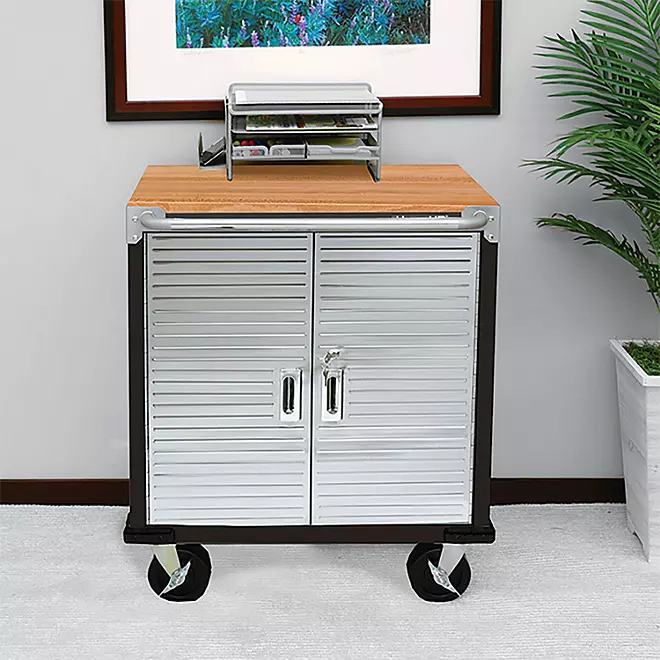
High-Load Structural Strength: Material, Design, and Real-World Performance
For an office mobile cabinet, high-load strength emerges from the integrated performance of material choice, panel geometry, and drawer engineering under real-world use. The two subsections below distinguish core rigidity principles from empirically validated drawer capacity.
How Panel Thickness, Steel Grade, and Density Work Together for Rigidity
Panel thickness, steel grade, and density function as interdependent elements—not isolated specs. A 1.0 mm cold-rolled steel panel delivers ~25% greater bending resistance than a 0.8 mm panel of the same grade, since stiffness scales with the cube of thickness. Using high-strength steel (tensile strength >600 MPa) enables mass reduction without sacrificing load-bearing integrity. With a consistent density of 7.85 g/cm³, steel also ensures predictable mass distribution—minimizing vibration and resonance during movement. By combining 0.8–1.2 mm panels with formed return flanges and full-height stiffeners, manufacturers maintain flat side walls and square corners. This geometry prevents outward bowing and preserves drawer track alignment under daily loads—resulting in a torsionally rigid shell that resists flex during drawer operation and maintains long-term structural fidelity.
Proven Load Capacity: Sustaining 250+ lbs per Drawer Without Deflection
Drawer load ratings only hold value when deflection remains tightly controlled. In heavy-duty cabinets, a 250 lb per drawer rating is validated by applying distributed weight across the drawer bottom and measuring center-point sag. Reinforced drawer boxes—featuring double-walled fronts and full-extension ball-bearing slides—sustain this load while limiting vertical deflection to ≤2–3 mm. That minimal displacement prevents jamming or frame scraping after thousands of open-close cycles. Manufacturers commonly test at 1.5× the rated load (375 lbs) to confirm a robust safety margin. Thick drawer bottoms, welded corner joints, and engineered slide brackets collectively distribute stress away from fasteners. The outcome is sustained operational smoothness and cabinet-level alignment—even when storing dense files, tools, or supplies—over years of service.
Stability Engineering: Low Center of Gravity and Base Geometry
Wide-Base Design (≥0.6 Width-to-Height Ratio) Meets ANSI/BIFMA X5.9 Tip-Resistance Standards
A wide base lowers the center of gravity and significantly improves tip-over resistance. Cabinets achieving a width-to-height ratio of 0.6 or higher maintain stable geometry under lateral loads. For instance, a 48-inch-tall unit with a 30-inch footprint yields a 0.625 ratio—exceeding the threshold and widening the pivot arc. ANSI/BIFMA X5.9 (2019) evaluates storage units under both static and dynamic tip-load conditions, requiring units to resist a controlled horizontal pull at mid-height without tipping. Frame geometry directly influences performance: wide-base designs reduce the moment arm acting on the cabinet, preserving stability even with fully extended drawers. A 60-pound drawer extended 24 inches generates substantial rotational force—counteracted effectively by a broad footprint. The standard mandates repeated testing after caster installation to ensure mobility hardware doesn’t degrade tip resistance. Designers therefore pair wide bases with low-profile casters to deliver predictable, repeatable stability.
Strategic Weight Distribution: Bottom-Heavy Drawer Layout for Dynamic Stability During Movement
Strategic weight distribution enhances dynamic stability during repositioning. Loading lower drawers first—keeping heavy files, tools, and supplies near the base—lowers the overall center of mass. Placing 30–40% of total stored weight in the bottom drawer reduces rolling-induced tip forces compared to top-heavy configurations. During movement, inertia acts at the center of mass; lowering it diminishes lateral sway. Full-extension slides and drawer stops can introduce momentum—but bottom-loaded mass mitigates forward pitch during sudden stops. It also transfers more weight onto rear casters, keeping front casters free to swivel and track cleanly over floor transitions. This approach works synergistically with wide-base geometry to prevent nose-diving and maintain upright orientation across repeated mobility cycles.
Joint Integrity: Precision Fastening Systems That Prevent Racking in Office Mobile Cabinets
High-Torque Screws + Reinforced Cam-Lock Assemblies Eliminate Lateral Shift Under Repeated Mobility Cycles
Office mobile cabinets endure lateral shear, twisting, and impact loads each time they roll across uneven floors, carpet transitions, or elevator gaps. Racking—the gradual parallelogram distortion of the frame—typically initiates at joints where fasteners lose clamping force. High-torque screws maintain deeper thread engagement and higher preload across panel connections, resisting loosening over time. Reinforced cam-lock assemblies add dual-axis locking surfaces that inhibit micro-rotation at corners. Together, these systems limit lateral shift and preserve the cabinet’s original square geometry through repeated mobility cycles. Drawers continue opening smoothly, locks remain aligned, and structural predictability endures—reducing service calls and extending usable life.
Caster Integration: Mobility Without Compromise to Structural Alignment
Dual-Wheel Swivel Casters with 75A Polyurethane Treads Absorb Shock and Maintain Frame Squareness
Dual-wheel swivel casters enable reliable mobility without compromising frame integrity. Their 75A Shore A polyurethane treads sit between two wheel faces, distributing point loads across a wider contact patch than single-wheel alternatives. When traversing thresholds or carpet edges, this design significantly reduces impact transfer into side panels and the base. Independent lab testing shows 75A polyurethane cuts peak vibration by ~28% versus hard nylon casters [Materials Lab Report, 2023]. This shock absorption helps preserve cabinet squareness—reducing diagonal racking stress at critical welded corners. As a result, drawers retain smooth travel, and the cabinet tracks straight during daily repositioning.
Fatigue-Resistant Reinforcement: Extending Service Life of the Office Mobile Cabinet
Back-Edge Brackets and Front Frame Girders Deliver 3.2× Longer Durability (UL 90 Test Verified)
Fatigue failure in office mobile cabinets rarely stems from a single overload—it accumulates across thousands of small stresses: drawer cycles, load shifts, and caster vibrations. Back-edge brackets anchor the rear panel to the top and side frames, preventing micro-rotation at high-stress corners. Front frame girders stiffen the drawer opening to resist face bowing and rail-mount loosening from repeated drawer pulls. In UL 90 cyclic load testing, this reinforcement system extended service life by 3.2× before measurable racking, screw loosening, or panel distortion occurred [UL Test Report, 2024]. The result is a heavy-duty cabinet that sustains drawer alignment, caster squareness, and lock engagement over years of active use—reducing the need for quarterly hardware maintenance and lowering long-term replacement and repair costs.
FAQ
What factors contribute to high-load structural strength in office mobile cabinets?
High-load structural strength results from the interplay of material choice (panel thickness, steel grade, and density), panel geometry, and robust drawer engineering that preserves rigidity under real-world usage.
What is the importance of panel thickness, steel grade, and density?
Panel thickness, steel grade, and density work together to enhance bending resistance, mass distribution, and rigidity. Combining high-strength steel with optimal panel thickness and stiffeners ensures long-term structural stability of mobile cabinets.
How is drawer load capacity tested?
Drawer load capacity is validated by distributing weight across the drawer bottom and measuring sag at the center point. Manufacturers often test at 1.5× the rated load to ensure the drawer sustains weight without deflection, maintaining safety and performance.
How do wide-base designs improve cabinet stability?
Wide bases lower the center of gravity, increasing tip-over resistance. A width-to-height ratio of 0.6 or higher ensures stability under lateral forces and meets ANSI/BIFMA X5.9 standards.
Why is strategic weight distribution important for mobile cabinets?
Strategic weight distribution enhances dynamic stability during movement. Storing heavier items in the lower drawers lowers the center of gravity, preventing tip-overs and facilitating smoother mobility.
How do casters affect cabinet mobility and alignment?
Dual-wheel swivel casters with shock-absorbing polyurethane treads minimize vibration and impact, preserving frame squareness during movement and reducing cabinet stress.
What ensures the longevity of an office mobile cabinet?
Fatigue-resistant reinforcements like back-edge brackets and front frame girders prevent micro-rotation, face bowing, and structural degradation over time, significantly extending the cabinet's service life.
Table of Contents
- High-Load Structural Strength: Material, Design, and Real-World Performance
- Stability Engineering: Low Center of Gravity and Base Geometry
- Joint Integrity: Precision Fastening Systems That Prevent Racking in Office Mobile Cabinets
- Caster Integration: Mobility Without Compromise to Structural Alignment
- Fatigue-Resistant Reinforcement: Extending Service Life of the Office Mobile Cabinet
-
FAQ
- What factors contribute to high-load structural strength in office mobile cabinets?
- What is the importance of panel thickness, steel grade, and density?
- How is drawer load capacity tested?
- How do wide-base designs improve cabinet stability?
- Why is strategic weight distribution important for mobile cabinets?
- How do casters affect cabinet mobility and alignment?
- What ensures the longevity of an office mobile cabinet?