
 EN
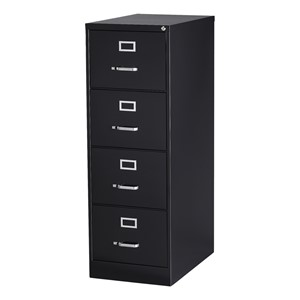
Key Structural & Performance Specifications for Office Mobile Cabinets
Selecting the right office mobile cabinet begins with matching duty-tier construction to daily load, movement frequency, and floor conditions. Commercial and industrial tiers differ in steel gauge, frame welding, and caster hardware—so a clear specification prevents premature failure.
Duty-tier classification: commercial vs. industrial steel construction for office mobile cabinets
Commercial-duty office mobile cabinets are built for general office use under desks and in personal workspaces. They typically use lighter-gauge cold-rolled steel (0.8–1.0 mm), single-wall drawer bodies, and compact footprints that fit under standard work surfaces. Common features include one or two file drawers, lockable casters, and integrated central locks. These models prioritize smooth rolling on carpet or tile, space efficiency, and easy access to files.
Industrial-duty office mobile cabinets are designed for tool storage, heavy supplies, and repeated movement across warehouse, shop, or hybrid floors. This tier commonly uses 18–20 gauge (1.0–1.2 mm) steel, reinforced doors, and fully welded frames. Heavy-duty ball-bearing drawer slides support smoother operation under heavier loads. Braking swivel casters, anti-tip bases, or fifth-wheel stabilizers help maintain stability when drawers are open. Buyers should confirm whether the cabinet will carry office files or industrial tools before selecting a duty tier.
Critical performance metrics: load capacity, caster durability, and shelf adjustability in office mobile cabinets
Load capacity is the first metric to verify. Commercial rolling pedestals may support around 15 kg per drawer, while professional-grade industrial mobile cabinets often handle 25 kg to 80 kg per drawer depending on slide rating. Total cabinet capacity must account for frame and caster limits—not just drawer ratings.
Caster durability directly affects safety and floor protection. Polyurethane casters roll smoothly and resist marking; lockable wheels prevent drift during use. For units expected to move over thresholds, carpet, or concrete, select at least two locking casters and verify load ratings match the unit’s total weight—including contents.
Shelf adjustability supports evolving storage needs. Many office mobile cabinets offer height-adjustable shelves in standard increments, allowing reconfiguration for binders, equipment, or supplies. Confirm that shelf clips or pins can be repositioned without tools—and that loaded shelves remain stable when the cabinet is rolled.
B2B Procurement Criteria: Quality Assurance and Customization Options
Material and finish standards: cold-rolled steel gauge, weld integrity, and powder-coating compliance for long-term office mobile cabinet use
Procurement teams should verify structural inputs before approving a supplier. Cold-rolled steel in 0.8–1.2 mm gauge offers the best balance of rigidity and mobility; thinner gauges risk deflection during repeated drawer cycling. Frame joints and caster plates should use continuous MIG welds—not tack welds—to resist racking under daily movement. Powder-coating should reach 60–80 µm dry film thickness and pass adhesion testing per ASTM D3359 and 500-hour neutral salt spray exposure per ASTM B117. Request mill certificates, batch-level weld inspection records, and ISO 9001 process audits. Also confirm edges are deburred and coatings are low-VOC for hybrid workspace air quality. These controls help extend service life beyond ten years.
OEM/ODM flexibility: branding, dimension customization, and modular integration for enterprise office mobile cabinet deployments
Enterprises often require cabinet dimensions, drawer layouts, caster types, and lock systems tailored to specific workspace layouts. Suppliers should offer OEM/ODM support covering height and width adjustments, color matching to RAL or Pantone standards, and logo placement without extended tooling delays. Confirm that technical drawings can be approved within 48 hours and pilot samples delivered in 10–15 working days. Modular integration is also critical: units should align under sit-stand desks, connect with existing steel storage systems, and accept interchangeable drawer fronts. Ask for CAD documentation, tolerance limits of ±1–2 mm, and SKU mapping that supports ERP procurement workflows. A small-batch pilot order validates fit, finish, and caster durability before full-scale deployment—lowering total cost of ownership and supporting consistent multi-site standardization.
Real-World Applications Across Office, Industrial, and Hybrid Workspaces
Mobile steel cabinet units perform different primary functions depending on the workspace. A single office mobile cabinet can transition from secure file storage in an administrative suite to a tool-ready station on a light industrial floor—but only if the specification matches the most demanding environment.
| Workspace type | Typical stored items | Key cabinet requirements |
|---|---|---|
| Office | Active files, laptops, supplies | Locking drawers, low-noise casters, cable cutouts |
| Industrial | Tools, spare parts, PPE, manuals | Heavy-gauge steel, high-capacity casters, reinforced shelves |
| Hybrid | Shared team kits, hot-desking supplies, AV accessories | Modular interiors, simple relocking, moderate load rating |
This versatility supports real estate flexibility: many organizations now redesign fixed rooms into multipurpose zones rather than adding duplicate storage. Movable cabinets reduce the need for built-in millwork and allow teams to reconfigure touchdown areas or collaboration corners within minutes. Buyers should therefore evaluate casters on the worst-case floor surface—not only the intended smooth carpet—and confirm drawer interlocks if the unit will move loaded across thresholds. When office, industrial, and hybrid functions coexist, steel mobile cabinet storage becomes a shared infrastructure asset rather than a single-department purchase.
Global Sourcing Logistics: Export-Ready Packaging and Cross-Border Compliance
ISTA-certified packaging, ISPM-15 fumigation, and customs-ready documentation for international office mobile cabinet procurement
For international office mobile cabinet procurement, export-ready packaging starts with ISTA (International Safe Transit Association) certification. ISTA 3A test protocols simulate parcel delivery shocks, vibration, and compression; certified packaging can reduce transit damage claims by up to 60%. Because steel units weigh 40–80 kg and have protruding casters, packaging must include foam corner blocks, double-wall corrugated cartons, and steel strapping or pallet wrap. ISPM-15 applies to any solid wood pallets or crates used for export. Wood must be heat-treated or methyl bromide fumigated and stamped with the IPPC mark; non-compliant wood is rejected or quarantined at most destination ports. Customs-ready documentation should include a commercial invoice with HS code 9403.10 (or equivalent metal furniture codes), packing list, bill of lading, certificate of origin, and any buyer-specific test reports. Incomplete or inconsistent HS classification triggers duty overpayment or customs holds. B2B buyers should require suppliers to provide pre-shipment document packages and digital scans 48–72 hours before vessel departure. This reduces demurrage and keeps cross-border lead times predictable for enterprise deployments. For high-volume orders, consolidated palletization by SKU and destination port reduces handling fees. Aligning packaging test reports with the destination country’s import permits prevents last-minute clearance delays and protects landed-cost calculations.
FAQ
What is the main difference between commercial and industrial office mobile cabinets?
Commercial office mobile cabinets are designed for general office use with lighter-gauge steel and simpler features, while industrial units are built for heavy tool storage and include reinforced frames, heavy-duty casters, and higher load capacities.
What load capacity is recommended for office mobile cabinets?
Load capacity may vary by type; commercial-grade cabinets typically support up to 15 kg per drawer, while industrial-grade models can handle between 25–80 kg per drawer.
How can I ensure shelf stability for adjustable shelving in mobile cabinets?
Shelves should include tool-free adjustable pins or clips that secure the shelf in place even when the cabinet is rolled. Verify the clips’ quality and test their stability with load weights.
What packaging specifications are important for exporting office mobile cabinets internationally?
Export packaging must meet ISTA certification for safe transit, and wooden pallets/crates should comply with ISPM-15 fumigation standards. Required documentation includes commercial invoices, HS codes, packing lists, and bills of lading.