
 EN
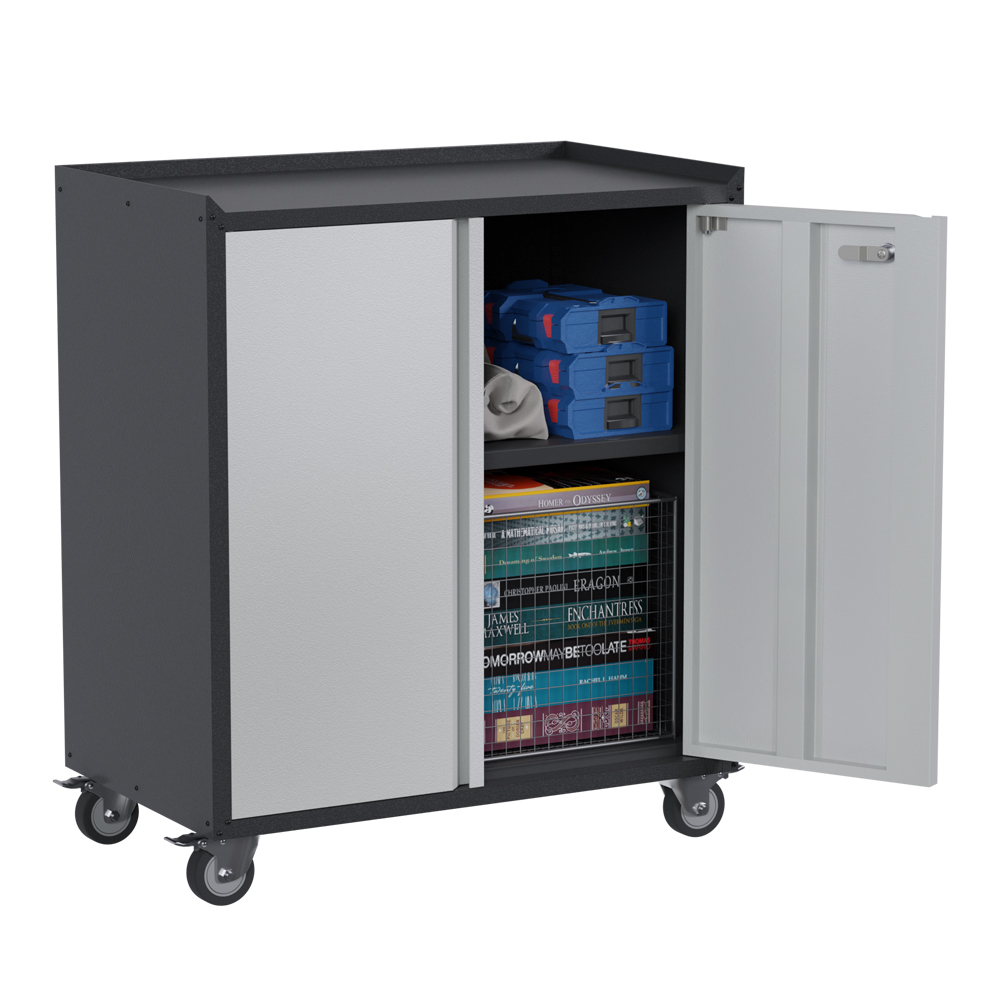
An office move prompted a slow walk along a bank of storage units near the copy point, where a facilities officer was logging which doors no longer latched on the first try. A straightedge laid across one shelf showed a shallow bow in the middle, and two lower doors had settled until the catch sat visibly below the strike. Nobody had abused the cabinets; years of ordinary loading had simply worked on the hinges and the shelf spans. A steel cupboard for office use lives or fails on such small structural details. The inspection notes below trace what was measured and what was adjusted.
Inspectors Found Door Sag Along A Corridor
Door Gaps, Latch Alignment, And Hinge Screws
The log began with measurements that anyone can repeat. On the affected cabinets, the gap between the two door leaves widened from top to bottom, and the latch tongue no longer lined up with the strike plate. Hinge screws on the upper knuckle had loosened enough to let the leaf drop by a visible margin. The officer closed each door gently, noted which ones needed a second push, and marked the hinge positions.
What A Loaded Shelf Does Over Time
Office steel cupboards are usually loaded unevenly, with reams of paper and archived binders pushed toward the back. A shelf that starts flat does not fail suddenly; it creeps, and the middle span takes the most of it. Laying a straightedge across the shelf during the walk made the bow obvious even where the eye missed it. The same units with a front return fold and a rib underneath showed far less movement.
Shelf Deflection Is Not A Cosmetic Issue
Where Bowing Starts On Wide Shelves
Bowing starts where the span is longest and the support is weakest, typically at the center of a wide shelf with no intermediate stiffener. Once the sheet yields, the load shifts toward the two side panels, and the door frame begins to rack out of square. Treating a sagging shelf as a cosmetic complaint misses the chain: a deflected shelf, a racked frame, a misaligned catch, and eventually a door that will not stay closed.
The Risk Of Overloaded Middle Spans
A common site habit is to stack the heaviest boxes in the middle of a bay because that space is easiest to reach. On an unribbed shelf the practice concentrates load exactly where bending moment peaks. Buyers who specify a steel cupboard for office use rarely state an acceptable deflection limit, so a shelf can pass a simple load check yet still dip under everyday use.
What Keeps A Door Flat Under Daily Use
Folding Return Edges To Resist Twist
Cold-rolled steel sheet gains rigidity from geometry. A bending machine folds the door perimeter into a return, forming a shallow box section that resists the twisting a flat leaf cannot. A reinforcement rib pressed or welded across the inner face adds a second axis of stiffness. Laser cutting and hydraulic punching place the hinge and lock holes before forming, so the fold does not pull them out of alignment.
Hinge Count Versus Leaf Height
Hinge count is a quiet structural decision. A tall, heavy door on two short knuckles concentrates every opening cycle into a small area, and the screws gradually work loose in the sheet. Adding a third hinge, or using a continuous piano hinge, spreads that load and slows the settlement seen along the corridor. Degreasing and phosphating before electrostatic powder coating, followed by a curing oven, protect the fold edges where chipping starts. Leveling feet matter too, since a cabinet set on an uneven floor carries a permanent twist into the frame before any shelf is loaded.
For Procurement Teams: Standards And Checkpoints
ANSI, ISO, OSHA, And NFPA In One Specification
Structural claims become verifiable when a specification points to named references. ANSI/BIFMA X5.9 sets strength and durability tests for storage units, the relevant basis for shelf load, door cycle, and stability. ISO 9001 describes the quality management system that keeps successive batches consistent, and ISO 45001 addresses occupational health and safety in the plant. OSHA 1910.37 covers exit routes, relevant where a bank of cabinets narrows a corridor, while OSHA 1910.176 deals with material storage and tipping. NFPA 101 addresses egress width. ANSI Z535.4 guides the safety labels fixed to each unit.
Buying a steel cupboard for office use: Ask for the hinge count, the door return fold, the shelf rib detail, and the gauge in writing, and request a sample from the intended production run. A specification that names ANSI/BIFMA X5.9 for cycle and load testing is easier to check than one built on adjectives. A maker that works from a drawing can set the leaf height and shelf spacing to match a fixed bay before the tooling is cut.
Inspecting an office steel cupboard on arrival: Lay a straightedge across each shelf and sight the door gap from top to bottom. Open each leaf halfway and watch for drift, then check that the latch meets the strike without a second push. Confirm the leveling feet sit flat and that the coating is even along the hinge fold. A unit that is square on a level floor at delivery is far likelier to stay square in service.
Using an office steel cupboard: Spread stored weight toward the side panels, keep the heaviest binders on lower shelves, and avoid hanging loads on the door. Set leveling feet so the frame carries no twist, and anchor tall units where a corridor is busy. Train staff to close doors by the handle rather than pushing on the panel, since a steady lateral push is what works hinge screws loose over time.
Maintaining a steel cupboard: Re-tighten hinge screws and recheck leveling feet at each office move, and log any door that needs a second push. Wipe powder-coated faces with a mild cleaner and touch up chips at the fold edge before corrosion spreads under the film. Cycle the locks, clear dust from the vent slots, and re-verify anchors after any floor or partition work. A short adjustment record makes the next inspection faster and shows which bays are drifting.
Frequently Asked Questions
Q: Why does an office steel cupboard door start to sag?
A: Door sag usually begins at the hinge side, where repeated opening works the screws loose in a thin sheet and lets the leaf drop at the latch corner. Uneven floors add a twist to the frame, and a heavy load hung on the door speeds the process. A cabinet with a folded return edge, a reinforcement rib, and a third hinge resists it far longer than a flat leaf on two short knuckles.
Q: What causes a shelf to bow in the middle?
A: A shelf bows when its longest unsupported span carries more load than the sheet can hold elastically, and the effect concentrates at the center. Concentrating heavy boxes there rather than near the side supports raises the bending moment. A front return hem or a welded rib underneath stiffens the same sheet considerably. Specifying a deflection limit at the quote stage helps avoid a shelf that passes a basic load check yet dips in daily use.
Q: How many hinges should a tall cabinet door have?
A: Tall or heavy doors benefit from a third hinge, and some designs use a continuous piano hinge to spread the opening load along the full leaf height. Two short knuckles concentrate every cycle into a small area, which is where screws gradually loosen. The right count depends on leaf height, gauge, and how often the door is used, so it is worth asking the maker to state the hinge layout in the specification.
Q: Can a sagging door be adjusted on site?
A: Minor sag can often be corrected on site by re-seating the hinge screws, shimming a leveling foot, and re-aligning the strike plate so the latch meets cleanly. The cabinet should first be set on a level floor, because a twisted frame will mimic a hinge problem. If the door leaf itself has taken a permanent set, adjustment will only mask it, and the panel or the whole unit is due for replacement.
Q: Does coating thickness prevent structural wear?
A: Coating protects the steel from corrosion; it does not add the stiffness that prevents sag or deflection. That stiffness comes from gauge, folds, ribs, and hinge layout. Degreasing and phosphating before electrostatic powder coating, then a proper cure, help the finish bond at the fold edges where chipping begins. A sound coating keeps those structural edges intact, but geometry, not film thickness, is what holds a door flat.
Q: When should leveling feet be rechecked?
A: Leveling feet should be rechecked whenever an office is rearranged, after any floor work, and at routine inspections where door alignment is logged. A cabinet that sits on an uneven floor carries a permanent twist into the frame before a single shelf is loaded, so correcting the feet often clears a latch problem that looked like hinge wear. Re-tightening the feet alongside the hinge screws keeps the whole unit square.