
 EN
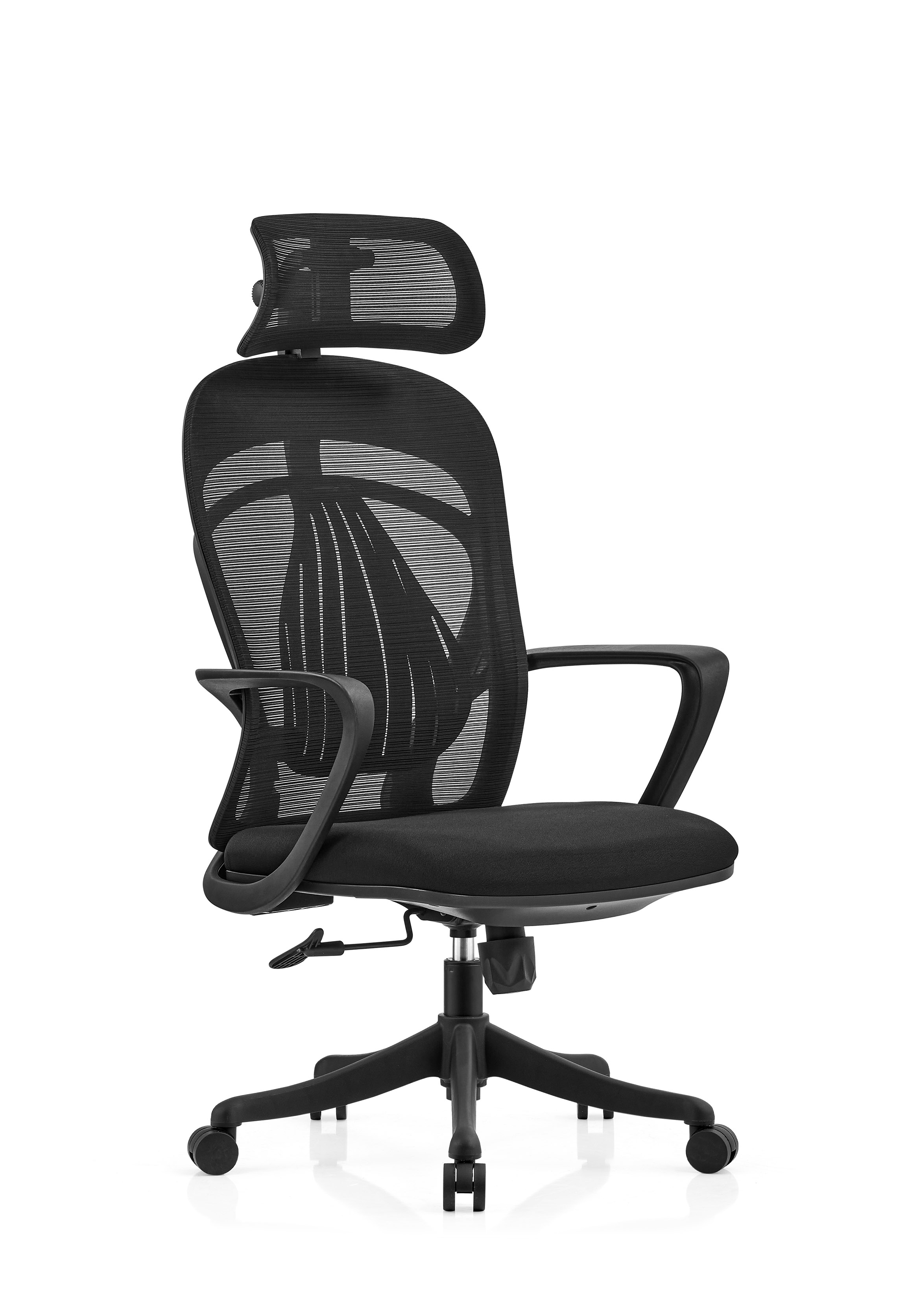
Why Steel Mobile Office Chairs Are the B2B Standard for Durability and Scalability
Steel remains the default structural choice for B2B buyers who need mobile office chairs that survive multi-shift, high-turnover environments. Unlike aluminum frames—which trade tensile strength for lighter weight—steel resists wear, deformation, and repeated impact over long service cycles. Heavy-gauge steel frames also support higher weight capacities without flexing, supporting inclusive workplaces with diverse user profiles.
This durability directly enables scalability: procurement teams can standardize one spec across regional offices, training rooms, and hot-desking hubs without replacing units every few years. Independent seating standards reinforce this logic—ANSI/BIFMA X5.1 tests structural adequacy under varied user weights and repetitive movement, while ISO 9241-5:2024 and EN 1335-1:2020 set dimensional and stability benchmarks for workstation seating. Steel’s lower center of gravity reduces tip-over risk when workers roll between desks or conference spaces—critical for 24/7 operations where stability outweighs portability.
From a lifecycle cost perspective, steel-based mobile seating minimizes churn and warranty claims. Buyers gain predictable replacement cycles, simplified spare-parts management, and consistent ergonomic geometry across large fleets. In short, steel transforms a mobile chair from a consumable into a scalable workplace asset.
Ergonomic Performance: Non-Negotiable Adjustability in Mobile Office Chair Units
A mobile office chair must adapt to each user—not force a single fixed posture. Without precise adjustability, even a durable steel frame adds little long-term value.
Critical adjustability features: seat height/depth range, dynamic lumbar support, and synchro-tilt calibration
Look for these controls before specifying any chair fleet:
- Seat height range (16–21 inches) ensures feet rest flat and knees remain at ~90 degrees.
- Seat depth (17–20 inches) leaves 2–3 inches of clearance behind the knee to protect circulation.
- Dynamic lumbar support moves vertically and horizontally to match varying spine curvatures.
- Synchro-tilt calibration links backrest recline to seat pan movement, maintaining screen alignment and reducing lumbar pressure during recline.
A fixed lumbar shell may suit a 5’8” user but fails a 5’2” colleague. Specify 100–110° of backrest recline with adjustable tension matched to body weight—key to preventing shoulder and lower-back strain in high-use settings.
Evidence-based ROI: How ergonomic mobile office chairs reduce absenteeism and boost productivity (UK HSE & OSHA-aligned data)
Poor adjustability is more than a comfort issue. The UK Health and Safety Executive links non-neutral postures to higher rates of work-related musculoskeletal disorders (MSDs) (HSE, 2022), while OSHA attributes roughly one-third of workers’ compensation spending to MSDs (OSHA, 2023). Chairs with dynamic lumbar support and synchro-tilt help users maintain natural posture—reducing stiffness-related interruptions and low-back pain.
Procurement teams report measurable outcomes within the first year: fewer absenteeism days and reduced requests for workstation reconfiguration. These metrics position ergonomic specification as a budget-driven decision—not just a wellness initiative.
Customization Options That Ensure Fit Across Workspaces and Workforces
A standard mobile office chair order often fails when it ignores differences in floor surfaces, body dimensions, and cleaning protocols. Modular configuration lets procurement teams adapt one steel platform across departments and building types—eliminating the need for multiple chair models.
Modular upgrades for mobility and hygiene: dual-surface casters, 3D armrests, and antimicrobial/recycled upholstery
Three upgrades deliver the largest operational impact:
| Upgrade | Workplace benefit | Long-term value |
|---|---|---|
| Dual-surface casters | Smooth movement on carpet and hard flooring without changing chairs | Avoid caster swaps during floor renovations |
| 3D armrests | Height, width, and depth adjustment for varied reach zones | Fit more users without requiring a second chair spec |
| Antimicrobial or recycled upholstery | Supports infection control or sustainability targets | Keeps chairs usable in healthcare, education, and green-building projects |
Dual-surface casters combine a hard outer layer for carpet with a soft inner layer for hard floors—enabling safe movement between meeting rooms, focus booths, and desks. 3D armrests adjust in three planes and reduce shoulder strain across reach extremes. Antimicrobial or recycled upholstery helps facilities meet hygiene and ESG goals while extending chair life and diverting worn units from landfills. When specified upfront, the same chair transitions seamlessly from private offices to training rooms—without compromising fit or safety. Later updates involve swapping casters or upholstery, not full-unit replacements—lowering total cost of ownership and minimizing reconfiguration downtime.
Streamlining B2B Procurement: Channels, Lead Times, and Regional Support for Mobile Office Chair Units
Efficient sourcing starts with matching order size to the right channel. Factory-direct contracts typically offer the lowest per-unit cost—12–18% below regional wholesale—but require 30–60 day lead times and larger minimum order quantities. Managed B2B marketplaces add trade assurance and supplier comparison tools, yet charge 5–10% in transaction or escrow fees. Regional distributors provide the fastest turnaround and local spare parts, albeit at a higher unit price. The optimal channel depends on cash-flow timing, warehouse capacity, and need for rapid reordering.
| Procurement channel | Typical lead time | Cost characteristics | Regional support strength |
|---|---|---|---|
| Factory-direct | 30–60 days | Lowest unit cost; higher MOQ | Direct engineering support; slower local parts |
| Managed B2B marketplace | 15–45 days | 5–10% platform fee | Escrow, dispute resolution, freight coordination |
| Regional distributor | 5–20 days | Higher unit cost | Fast warranty and replacement parts |
For multi-site deployments, a hybrid plan works well: order 60–70% of volume from stocked regional lines for immediate delivery and 30–40% factory-direct for cost control and custom specifications. Confirm whether the supplier pre-clears regional compliance—including ANSI/BIFMA X5.1 for North America, EN 1335 for the EU, or local fire-code documentation—as incomplete paperwork can delay customs clearance by 5–7 business days. Request port-to-door or DDP terms to avoid hidden charges. In 2024, peak-season ocean freight from Southeast Asia saw 10–15 day delays, making clear incoterms and buffer stock essential. Finally, require a single point of contact for warranty claims and replacement components—casters, gas lifts, or armrests—especially when units ship across multiple regional offices.
FAQ
Why are steel frames popular for mobile office chairs?
Steel frames are durable and can withstand wear, deformation, and repeated impact over long service cycles. They also support higher weight capacities and reduce tip-over risks, making them ideal for diverse and demanding environments.
What are critical ergonomic features for mobile office chairs?
Important features include a seat height range of 16-21 inches, seat depth of 17-20 inches, dynamic lumbar support, and synchro-tilt mechanisms. These features ensure user comfort and reduce the risk of musculoskeletal disorders.
How do modular customization options benefit businesses?
Modular options like dual-surface casters, 3D armrests, and antimicrobial/recycled upholstery enhance adaptability, hygiene, and sustainability. They allow transitions across various workspaces without requiring full-unit replacements.
What are the advantages of factory-direct procurement versus other channels?
Factory-direct purchasing offers the lowest unit cost and customization opportunities but requires longer lead times and higher minimum order quantities. Other channels, like regional distributors, offer faster delivery and local support but at a higher cost.
What compliance standards are essential for mobile office chairs?
Key standards include ANSI/BIFMA X5.1 for structural adequacy, ISO 9241-5 for workstation seating, and EN 1335 for dimensional and stability benchmarks. Compliance ensures safety and minimizes delays in customs clearance.
Table of Contents
- Why Steel Mobile Office Chairs Are the B2B Standard for Durability and Scalability
- Ergonomic Performance: Non-Negotiable Adjustability in Mobile Office Chair Units
- Customization Options That Ensure Fit Across Workspaces and Workforces
- Streamlining B2B Procurement: Channels, Lead Times, and Regional Support for Mobile Office Chair Units
-
FAQ
- Why are steel frames popular for mobile office chairs?
- What are critical ergonomic features for mobile office chairs?
- How do modular customization options benefit businesses?
- What are the advantages of factory-direct procurement versus other channels?
- What compliance standards are essential for mobile office chairs?