
 EN
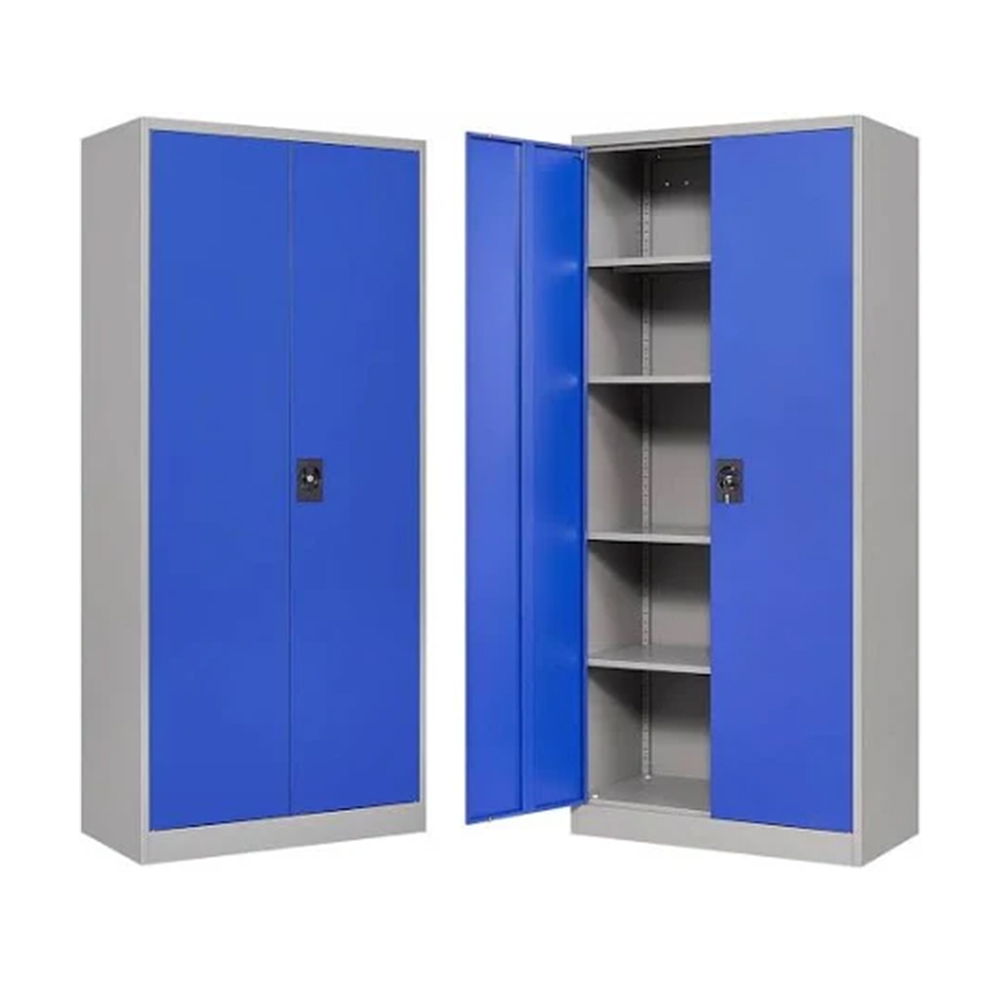
A tall unit came off a records floor after a long stretch of fully loaded use, each drawer packed with hanging files. On a level bay the structure reads like a logbook. The plinth sits square, the carcase still holds its rectangle, and drawers track without a wobble, yet small clues show where load travelled: a polished slide race, a shine on the front fold, a compressed mark under one leveling foot. Watching a steel file cabinet after real cycling beats any static load sheet. The useful question is not how much it held on day one, but which joints kept their geometry after thousands of loaded pulls.
Cycling Full Drawers Until the Frame Speaks
Repeated Pulls Expose Cabinet Settlement
A static load sheet describes a cabinet at rest; long cycling describes it in motion. Open a fully loaded drawer thousands of times and the carcase settles in small, telling ways. A steel file cabinet with a rigid welded box keeps its rectangle, while a loosely bolted knock-down frame may rack a fraction out of square. The signal is subtle: a drawer that once glided now needs a sideways nudge, or a door that no longer meets its stop evenly. Technicians log these changes rather than weighing the unit again, because geometry drift, not lost capacity, is what ends service life in a busy records room.
Where Leverage Builds at the Drawer Front
Leverage is the quiet enemy of a tall unit. A fully extended, loaded drawer shifts its center of mass well past the cabinet footprint, multiplying the moment on the top hinge area and the lower plinth. Add a user who leans on the open drawer while sorting files and the front fold sees more force than any shelf ever will. That is why reinforcement is concentrated around the drawer opening and the base rather than spread evenly. Reading where a steel file cabinet flexes under an open, loaded drawer tells an inspector more than a flat load rating printed on a tag.
What Fatigue Looks Like After Long Service
Spot Welds That Either Hold or Let Go
Spot welds join folded panels cheaply and cleanly, but their number and pitch decide how a carcase ages. Each weld is a small fused nugget; under repeated drawer cycling, a sparse pattern lets panels micro-slip, the nuggets fatigue, and a seam starts to tick or creak. A dense, consistent pattern on clean cold-rolled steel sheet spreads that load. CO2 welding may replace spots on high-stress corners. Inspectors checking a returned unit listen for a seam that has gone quiet after being noisy, and look for halo marks around nuggets. A steel file cabinet usually betrays weld fatigue at the rear panel before the drawer face.
Slide Failure Rarely Announces Itself Early
Drawer slides degrade quietly. A lost ball or dry race adds drag so gradually that users adapt, pulling a little harder each week. By the time a drawer binds, the added side load has already stressed the cabinet frame and the mounting screws. Cycle testing catches this by counting pulls to a defined resistance, but a floor inspection rarely does. New stiffness in one drawer deserves attention, since it transfers load unevenly into the carcase.
How CNC Bending Ribs Resist Drawer Sag
CNC Bending Ribs Add Stiffness Without Mass
CNC bending turns a flat cold-rolled steel sheet into a shaped section that resists bending far better than the same gauge left flat. A folded reinforcement rib along the drawer opening, the plinth, and the rear panel adds a second moment of inertia without adding much material. That is why a steel file cabinet can stay light enough to ship yet hold its rectangle under repeated loading. Bend radius and rib pitch are set on the machine, so a consistent program reproduces the same stiffness across a whole run. Sag at the drawer front usually traces back to a missing or shallow rib, not to weak steel.
Ball-Bearing Slides, Anchoring, and Leveling Feet
Three details decide how a loaded unit behaves on a real floor. Full-extension ball-bearing slides keep drawers tracking straight because hardened balls run in ground races; their mount into a folded rib matters more than their load rating. Anti-tip anchoring at the rear stops the cabinet rotating forward when a fully extended drawer becomes a lever. Leveling feet at the front remove floor twist so the carcase is not pre-loaded. Confusing feet with anchors leaves a steel file cabinet standing level yet free to tip, so a tall unit needs both fitted before service.
From ANSI Tests to Daily Checks: A Structural Path
Standards Behind a Structural Claim
Structural claims become verifiable when tied to published documents. ANSI/BIFMA X5.9 defines strength and cycle tests for storage units, so loaded-drawer endurance and stability have a common benchmark. ISO 9001 covers the process control that keeps weld pitch and bend angles consistent across a production run, the kind of discipline expected at a Luoyang plant founded in 1992 with a 30,000 square meter site and monthly output of 10,000 pcs. OSHA 29 CFR 1910.176 addresses material storage and tip-over prevention, the exact risk a fully extended drawer creates. NFPA 101, the Life Safety Code, governs egress width, so an anchored steel file cabinet must also leave the aisle clear.
Buying a steel file cabinet: ask for the cycle-test result on loaded drawers, the weld pattern at high-stress corners, and the bend detail on reinforcement ribs. Confirm that anti-tip anchoring hardware ships with the unit, since a level floor alone does not stop a forward overturn.
Inspecting a steel file cabinet on arrival: set it on a known flat bay, check that the carcase sits without rocking after feet are adjusted, and open every loaded drawer to full extension. Listen for seam ticks and watch whether any drawer drifts sideways.
Using a steel file cabinet: load heavy files in the lower drawers, extend one drawer at a time, and fit the rear anchors before the unit enters service. Avoid leaning on an open drawer, which adds leverage the frame was not built to carry.
Maintaining a steel file cabinet: recheck foot adjustment after any floor work, wipe slide races and relubricate lightly, and log any new drawer stiffness. Tighten anchor bolts on a schedule, since a loosened anchor hides the same tip risk as no anchor at all.
Frequently Asked Questions
Q: What changes first after thousands of loaded drawer cycles?
A: Geometry, not capacity, tends to shift first. A welded carcase keeps its rectangle, while a loosely bolted frame may rack slightly out of square, so a drawer that once glided needs a sideways nudge. Slides grow stiff on one side and door stops meet unevenly. Technicians log these drifts during walkthroughs because they predict the end of service life far better than reweighing a steel file cabinet that still holds its rated load.
Q: Why do spot welds matter more than sheet thickness alone?
A: Thickness sets raw stiffness, but welds decide whether panels share load or slip against each other. Under repeated cycling, a sparse spot pattern lets each nugget fatigue, producing creaks and halo marks at the rear seam. Clean cold-rolled steel sheet and a consistent weld pitch spread that stress. A thicker panel with few welds can still loosen, so the joint pattern is as important as the gauge on any welded cabinet.
Q: How do leveling feet differ from anti-tip anchoring?
A: Leveling feet remove floor twist so the carcase is not pre-loaded before a drawer opens; they keep slides aligned. Anchoring prevents the whole unit rotating forward when a fully extended, loaded drawer becomes a lever. A cabinet can stand level and still tip. On a steel file cabinet, feet and rear anchors are complementary: feet handle twist, anchors handle overturning, and a tall unit in a records room needs both.
Q: When should a drawer slide be replaced rather than adjusted?
A: Replace rather than adjust when a race is pitted, a ball is missing, or the slide channel has wallowed in its screw holes. Added drag that grows week by week usually means internal wear, not a simple alignment error; repeated adjustment then hides damage while side load keeps stressing the frame. Cycle-test data helps set the threshold. A stiff drawer should be diagnosed, not forced, because forcing transfers load into the carcase.
Q: Which standards apply to a cabinet placed in a records aisle?
A: Placement in a records aisle brings several documents together. OSHA 29 CFR 1910.176 covers material storage and tip-over prevention, NFPA 101 governs egress width, and ANSI/BIFMA X5.9 sets strength and cycle benchmarks for storage units. ISO 9001 addresses the process control behind consistent welds and bends. Together they give a purchaser concrete conditions to write into a bid for a steel file cabinet rather than trusting appearance alone, without promising any service life.
Q: Can a knock-down frame match a welded carcase over time?
A: A knock-down frame ships flat and assembles with bolts, which suits mail order packing and tight site access, while a welded carcase arrives rigid from the factory. Over long cycling, bolted joints can relax and rack slightly, especially if bolts are not retorqued. A well-designed knock-down unit with gussets and locked fasteners performs well, but a welded box keeps geometry with less upkeep. The choice is a trade between transport efficiency and long-term alignment.