
 EN
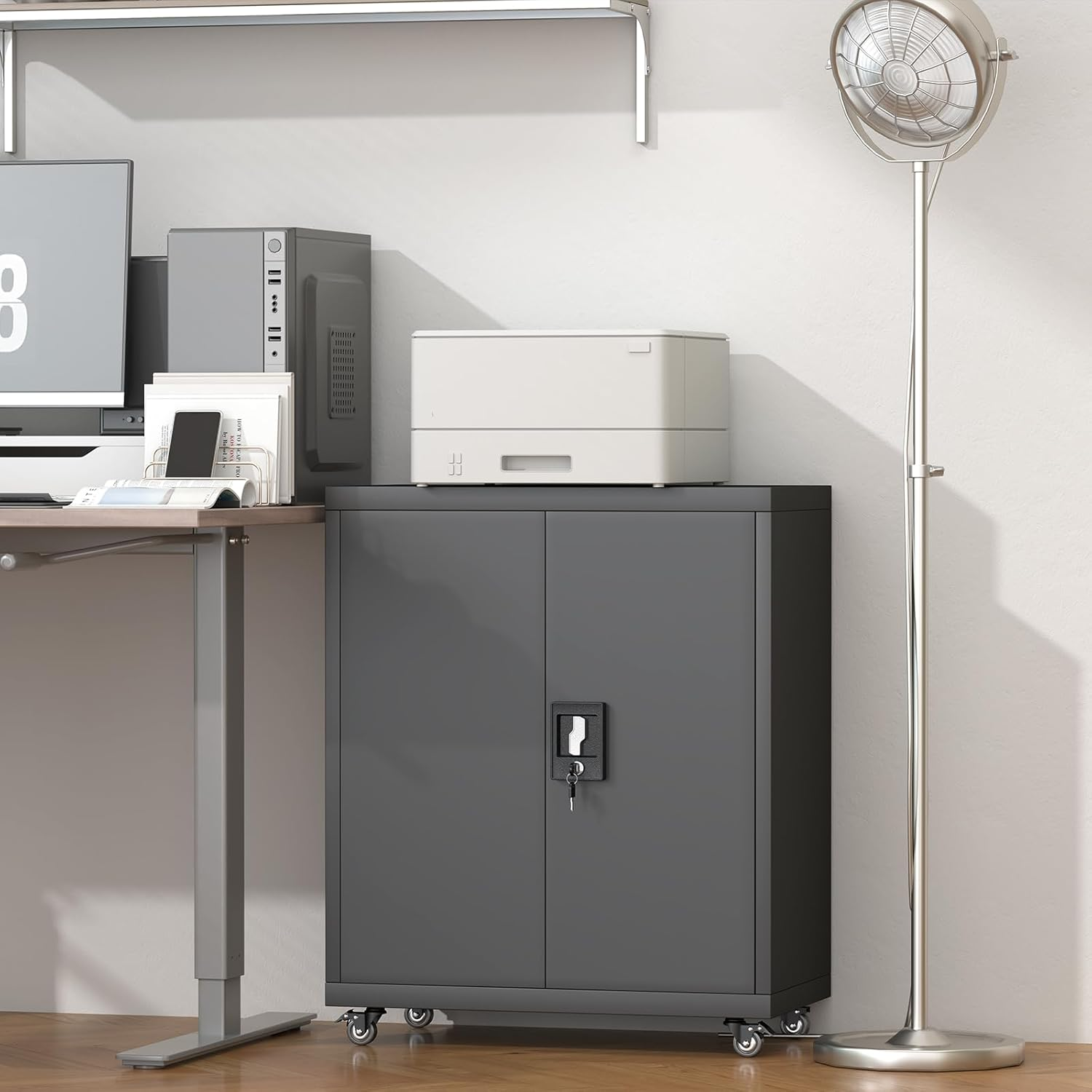
By mid-morning the copy room is a queue of staff stacking reams and swinging loaded folders into drawers. A cabinet beside the copier takes that traffic: cart corners graze the lower edge, knuckles ring the handle, and paper dust settles into every seam. The story shows up on the finish, not on a spec sheet. Edge corners lose their sheen first, handle paint thins where palms land, and a hairline chip near a hinge invites rust. A metal file cabinet meant for such a zone is judged by how it ages, so pretreatment and edge design outrank a catalog photo. Reading wear teaches more than brochures.
Beside the Copier: A Week of Surface Readings
Where Handle Paint Thins Under Palms
A handle is the most touched part of any metal file cabinet. Palms, key rings, and sleeve cuffs rub the same patch of coating thousands of times. The first sign is not a scratch but a change in gloss: a polished spot where textured powder has been burnished flat. Keep watching and the burnished area loses colour, then opens to bare steel. That progression is a coating adhesion problem, not a cleaning problem. Wiping away paper dust never restores the sheen, because the loss is mechanical wear through a thin finish, not dirt on top of it.
Edges and Corners Age Faster Than Flat Panels
Flat door panels stay close to new while the perimeter of a metal file cabinet tells another story. Sharp right-angle edges concentrate impact from cart bumpers, and powder coating pulls thin at a knife-edge corner during curing. Once that thin lip is struck, the chip spreads along the fold line. Rounded edges behave differently: the coating wraps a radius, so a knock dents metal rather than flaking paint. A de-identified field log from one print zone repeated that pattern, worn corners and intact centers. Specifying generous bend radii early reduces this contrast.
Why Small Chips Escalate Into Procurement Risk
Tracing a Chip Back to Weak Pretreatment
Chips rarely begin where they appear. Lift a flake near a hinge and the steel beneath often looks clean rather than rusty, pointing upstream to pretreatment. Cold-rolled steel sheet arrives with mill oil and a faint oxide skin. If the degreasing and phosphating line does not strip that layer, the phosphate conversion coating cannot grip uniformly, and the powder film sits on a weak interface. Adhesion then depends on luck rather than chemistry. Edge chipping in the first season usually means a skipped bath or tired pretreatment chemistry, not a rough user. Asking how the line monitors its phosphating stage separates a durable metal file cabinet from a cosmetic one.
A Hairline Chip Does Not Stay Cosmetic
A single chip is a small event with a long tail. Moisture from mopping and humid air reaches bare steel, and rust creeps under the surrounding film, lifting more coating as it goes. In a copy area the process is faster because paper dust holds dampness against the surface. For a B2B buyer ordering dozens of units, scattered chips turn into inconsistent appearance across one floor, then into replacement requests and labour hours. Treating surface prep as a first-order specification, checked on a sample before the full run, costs far less than refinishing cabinets already bolted into place.
What Phosphating Actually Does to Cold-Rolled Steel
The Degreasing Stage That Removes Mill Oil
Pretreatment is a sequence, and each stage earns the next one. Alkaline degreasing lifts rolling oil and handling grease from the cold-rolled steel sheet; a clean water rinse follows so no surfactant film remains. Only then does the phosphating bath react with the metal to grow a microcrystalline conversion layer. It is an insoluble phosphate skin that increases surface area for keying and slows under-film corrosion. Skip the rinse or rush the bath and the layer turns patchy, which no amount of powder hides. Understanding the chain helps a buyer ask how the surface of a metal file cabinet was prepared before the booth, rather than whether it was painted.
How Electrostatic Powder Cures Into a Shell
Spraying comes last. Electrostatic powder coating charges dry particles so they wrap edges and corners evenly, then a curing oven melts and cross-links the film into a continuous shell. Oven time and temperature determine whether that shell reaches full adhesion or stays brittle and chalky. A properly cured finish resists handle burnishing; an under-cured one powders under a fingernail. Adhesion is verified with cross-cut tape pulls and salt spray, not by eye in a showroom. For a metal file cabinet destined for a copy room, that cured shell is the day-to-day wearing surface, so cure control matters as much as colour matching.
Standards, Egress Rules, and Daily Habits
Independent Standards Define a Measurable Baseline
Durability claims become checkable when mapped to published standards. ANSI/BIFMA X5.9 sets strength and cycle tests for storage units, giving a metal file cabinet a defined bar for loaded drawers and finish endurance. ISO 9001 speaks to process control, the same discipline a Luoyang maker founded in 1992 applies across a 30,000 square meter site with monthly output of 10,000 pcs. OSHA 29 CFR 1910.37 governs exit routes, so a cabinet beside a copier must not narrow a corridor. NFPA 1, the Fire Code, frames clearances around such equipment. Together they turn finish claims into bid requirements.
Buying a metal file cabinet: request a production-line sample, not a showroom piece, and rub the handle edge to feel cure hardness. Confirm the pretreatment sequence in writing, including degreasing, rinsing, and phosphating, and call out bend radius on the drawing.
Inspecting a metal file cabinet on arrival: check corner radii and folded hems for thin coverage, run a tape pull on a hidden edge, and compare colour across the pallet. Reject units where edge gloss differs from flat panels, since that mismatch signals uneven powder wrap.
Using a metal file cabinet: position it clear of the copier exit path, keep cart traffic off the lower edge, and avoid slamming drawers, which shocks the coating at hinge and handle contact points.
Maintaining a metal file cabinet: wipe paper dust with a dry, soft cloth rather than wet solvents, touch up any chip with a matched pen promptly, and log recurring wear spots so the next order can specify a thicker finish there.
Frequently Asked Questions
Q: Why does the handle lose its finish before the door panel?
A: A handle takes concentrated sliding contact from palms, rings, and cuffs thousands of times a day, while a flat door panel mostly faces still air. Textured powder first burnishes to a polished gloss, then thins, then opens to bare steel. That is mechanical wear through the finish, not dirt. Specifying a harder cure and a rounded grip slows the change but never removes contact, so handles always age first on any metal file cabinet in a busy zone.
Q: Can a small chip near a hinge be ignored until the next order?
A: Ignoring a chip lets moisture and paper dust reach bare steel, and rust then travels under the surrounding film, lifting more coating over following weeks. In a humid copy area the stain spreads faster than on a dry panel. Touch up the spot with a matched coating pen as soon as it appears, then note the location. A logged chip pattern tells the next order where to ask for extra film build before the full run is produced.
Q: What does phosphating pretreatment actually add to a cabinet?
A: Phosphating grows a thin, insoluble conversion layer on cleaned cold-rolled steel after degreasing removes mill oil. That microcrystalline skin gives powder a larger surface to key into and slows corrosion if the film is later breached. Without it, adhesion depends on a bare, slightly oily surface and fails early under handling. It is not paint and adds no colour, yet it largely decides whether a metal file cabinet keeps its finish through daily use.
Q: How should a buyer verify coating adhesion before a bulk order?
A: Ask for a sample pulled from the real production run, then run a cross-cut tape pull on a hidden edge and a fingernail rub on the handle. Compare gloss between flat panels and corners, since a mismatch suggests uneven powder wrap. Request the written pretreatment sequence and cure parameters. A supplier confident in its degreasing, phosphating, and curing stages will share them, while a vague answer usually points to a line that skips steps.
Q: Does a powder-coated unit need different care in a copy room?
A: Powder film tolerates dry wiping well but dislikes standing dampness and solvent cleaners that soften the surface. In a copy room, paper dust holds moisture against edges, so a soft dry cloth used often beats an occasional wet scrub. Keep carts off the lower edge and avoid slamming drawers, which shocks the coating at contact points. These habits preserve the cured shell far longer than any later refinishing of a metal file cabinet.
Q: Which standards help when a cabinet sits near an exit route?
A: Placement near an exit route brings OSHA 29 CFR 1910.37 into the discussion because stored units must not narrow a corridor. NFPA 1, the Fire Code, guides clearances and combustible loading around copier equipment. ANSI/BIFMA X5.9 covers storage unit strength and cycle testing, and ISO 9001 covers repeatable process control during finishing. Together they give a purchaser concrete points to place in a bid rather than relying on appearance alone.